Christopher Columbus Departs on His Fourth and Final Voyage
1502 · Cadiz, Spain
Christopher Columbus departs on his fourth and final voyage to the Americas.
November 19, 1493
Christopher Columbus discovered Puerto Rico during his second voyage to the Americas.
Puerto Rico, Spain | Spanish Crown
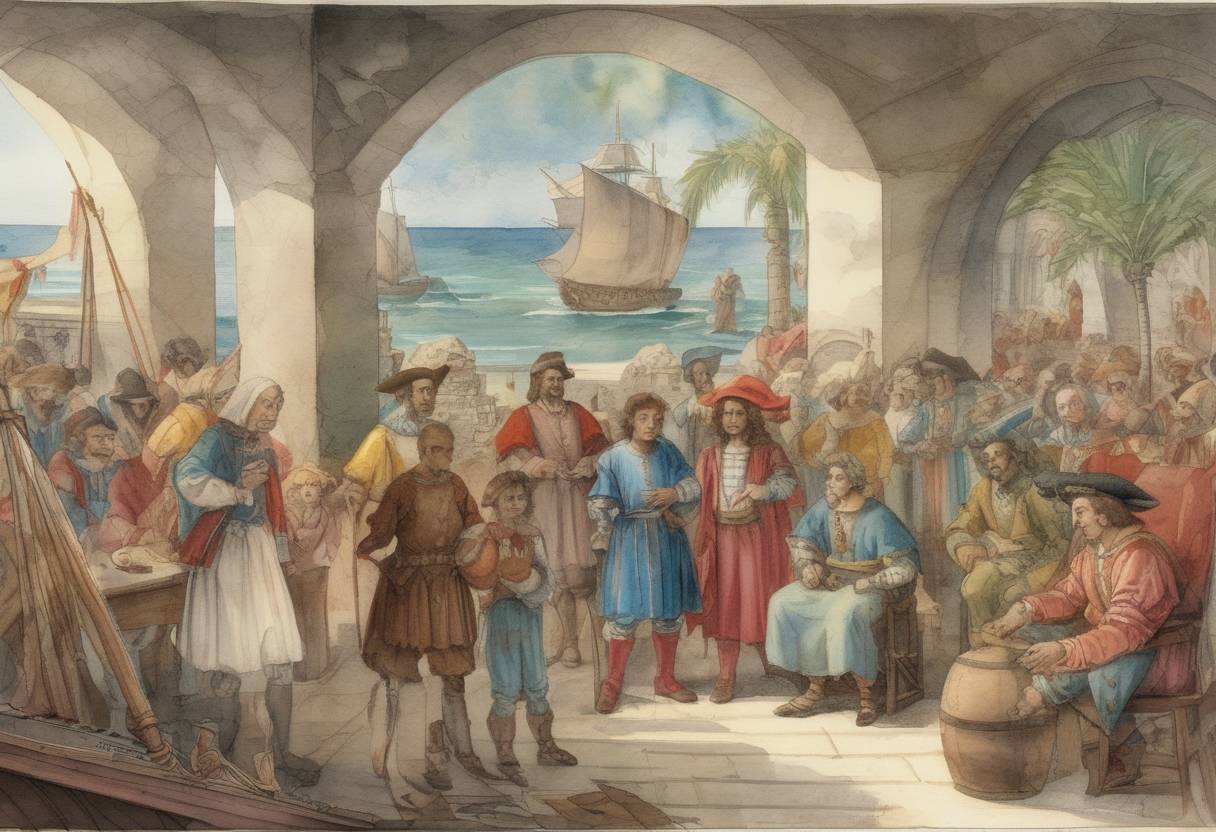
On November 19, 1493, during his second voyage to the Americas, Christopher Columbus arrived at an island in the Caribbean, which he named San Juan Bautista, in honor of Saint John the Baptist. This island is known today as Puerto Rico. This event marked the first recorded European encounter with the island.
Second Voyage: Columbus’s second voyage was significantly larger than his first, consisting of 17 ships and approximately 1,200 men. The expedition aimed to establish Spanish colonies in the New World and further explore the territories Columbus had encountered during his first voyage in 1492.
Objective: The primary goals of this voyage were to establish a permanent Spanish presence in the Caribbean, find new trade routes, and continue the search for riches, including gold.
Departure: Columbus set sail from Cádiz, Spain, on September 25, 1493. The fleet first made landfall in the Caribbean at Dominica on November 3, 1493.
Exploration: After reaching Dominica, Columbus and his fleet explored several islands in the Lesser Antilles, including Guadeloupe and Antigua, before heading northwest.
Arrival at Puerto Rico: On November 19, 1493, Columbus and his crew arrived at the island of Puerto Rico. They anchored in what is now known as Aguadilla Bay on the island’s western coast.
Naming: Columbus named the island San Juan Bautista. The name Puerto Rico, meaning “Rich Port,” was later attributed to the island due to its natural resources and strategic location.
Indigenous People: At the time of Columbus’s arrival, the island was inhabited by the Taíno people, who had a well-established society and culture. The encounter with Europeans would eventually lead to significant changes and challenges for the indigenous population.
Colonization: The discovery of Puerto Rico paved the way for Spanish colonization. The island became an important military outpost and a hub for Spanish expeditions in the Caribbean.
Spanish Settlement: The first Spanish settlement on the island, Caparra, was established in 1508 by Juan Ponce de León, who became the island’s first governor.
Cultural Impact: The arrival of Europeans led to the introduction of new technologies, animals, and crops, but also brought diseases that devastated the indigenous population.
Strategic Importance: Puerto Rico’s location made it a crucial point for Spanish trade and military operations in the Caribbean, influencing the island’s development and its role in the Spanish Empire.
The discovery of Puerto Rico by Columbus was a significant event in the Age of Exploration, marking the beginning of European influence in the region and shaping the island’s future as part of the Spanish colonial empire.
Source: en.wikipedia.org