Exile of Leon Trotsky: A Turning Point in Soviet History
1929 · Moscow, Soviet Union
The Soviet Union exiled Leon Trotsky, a key figure in the Russian Revolution, marking a critical point in Joseph Stalin's consolidation of power.
June 11, 1937
The Soviet Union executes eight army leaders as part of Joseph Stalin's Great Purge, reflecting the intense political repression of the era.
Moscow, Soviet Union | Soviet Government
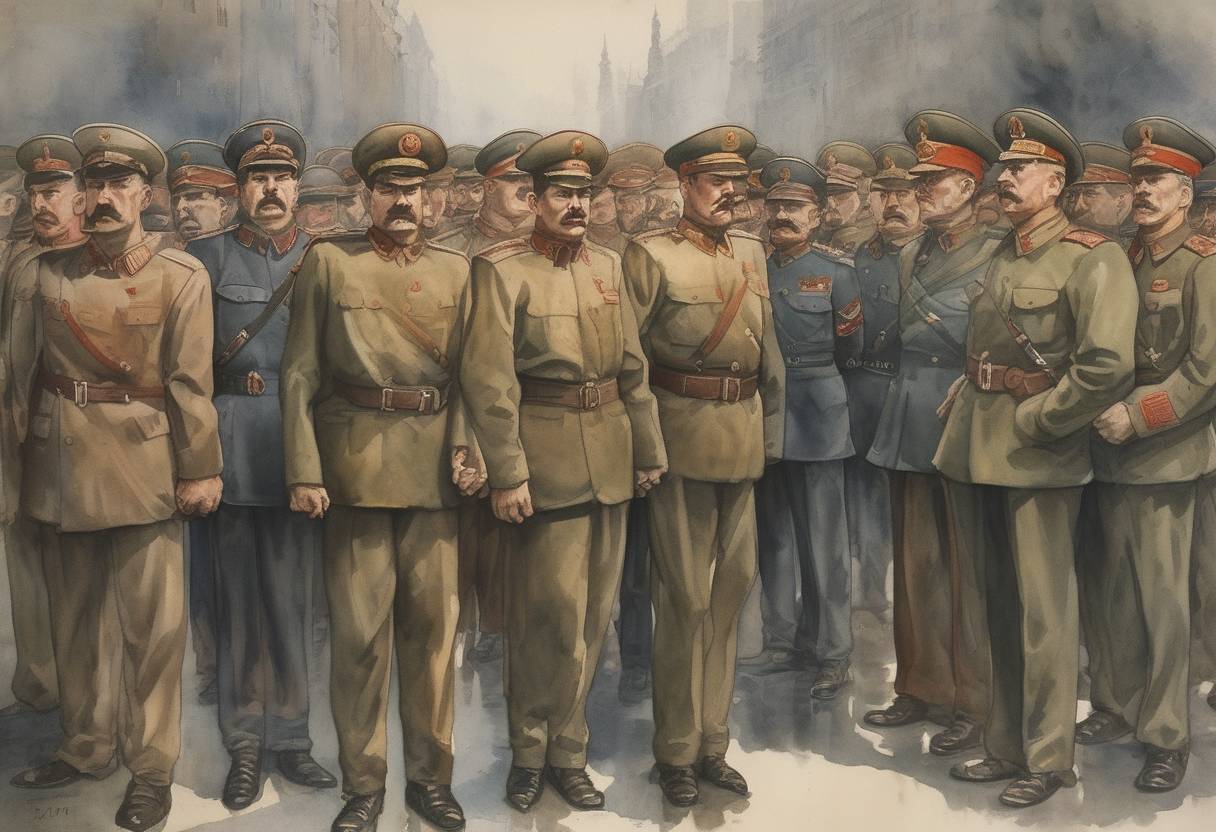
On June 11, 1937, the Soviet Union executed eight high-ranking military leaders as part of Joseph Stalin’s Great Purge, a campaign of political repression that profoundly impacted Soviet society and governance. This event marked a significant moment in the broader context of Stalin’s efforts to consolidate power and eliminate perceived threats to his regime.
The Great Purge: Initiated in the mid-1930s, the Great Purge was a period of intense political repression in the Soviet Union. It targeted a wide range of individuals, including Communist Party members, government officials, military leaders, and ordinary citizens. The purges were characterized by widespread arrests, show trials, executions, and forced labor camps.
Stalin’s Motives: Joseph Stalin sought to eliminate any potential rivals and consolidate his control over the Soviet Union. The purges were partly motivated by Stalin’s paranoia and desire to remove those he viewed as threats to his authority.
The eight military leaders executed on June 11, 1937, were prominent figures within the Red Army. They were accused of participating in a conspiracy to overthrow Stalin’s government. The most notable among them was Marshal Mikhail Tukhachevsky, a highly respected and innovative military strategist.
Mikhail Tukhachevsky: Known for his role in modernizing the Soviet military, Tukhachevsky was a key figure in the development of Soviet military doctrine. His execution sent shockwaves through the military establishment.
Other Executed Leaders: Alongside Tukhachevsky, other senior officers, including Iona Yakir, Ieronim Uborevich, and August Kork, were also executed. These leaders were accused of treason and espionage, charges that were largely fabricated.
Impact on the Red Army: The execution of these leaders severely weakened the Red Army’s command structure. Many experienced and capable officers were removed, leading to a period of instability and reduced military effectiveness.
Broader Repression: The purge of the military was part of a larger campaign that affected millions of Soviet citizens. It instilled fear across the nation and reinforced Stalin’s totalitarian control.
Historical Significance: The purges had long-lasting effects on the Soviet Union, contributing to a climate of fear and suspicion. They also had strategic implications, as the weakened military leadership was a factor in the Soviet Union’s initial struggles during World War II.
In summary, the execution of these eight army leaders on June 11, 1937, was a pivotal event in the Great Purge, reflecting the extent of Stalin’s political repression and its profound impact on Soviet society and the military.
Source: en.wikipedia.org