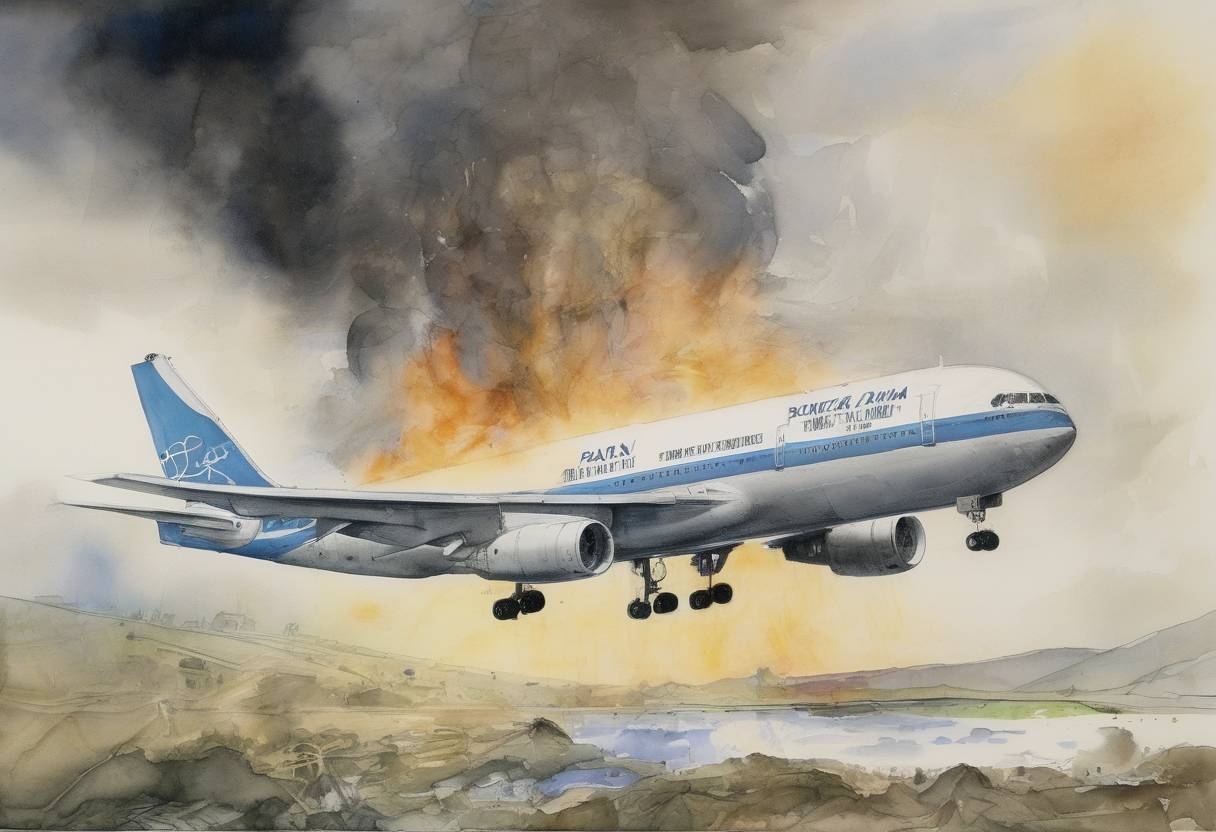
Indictments Announced for Pan Am Flight 103 Bombing
On November 14, 1991, American and British authorities made a significant announcement regarding the tragic bombing of Pan Am Flight 103 over Lockerbie, Scotland. This event marked a pivotal moment in the pursuit of justice for the victims of the bombing, which occurred on December 21, 1988.
Background
Pan Am Flight 103 was a transatlantic flight from Frankfurt to Detroit via London and New York. On December 21, 1988, the aircraft, a Boeing 747, was destroyed by a bomb, killing all 259 passengers and crew on board, along with 11 residents of Lockerbie, Scotland, where the wreckage fell.
The Investigation
The investigation into the bombing was one of the most extensive and complex in aviation history. It involved cooperation between multiple international agencies, including the Federal Bureau of Investigation (FBI) and Scotland Yard. The investigation focused on forensic evidence, including fragments of a suitcase and a timing device, which eventually led authorities to suspect Libyan involvement.
The Indictments
On November 14, 1991, after nearly three years of meticulous investigation, the United States and the United Kingdom announced indictments against two Libyan intelligence agents: Abdelbaset al-Megrahi and Lamin Khalifah Fhimah. The indictments accused them of planting the bomb that destroyed Pan Am Flight 103.
- Abdelbaset al-Megrahi: A Libyan intelligence officer, he was accused of being the principal architect of the bombing.
- Lamin Khalifah Fhimah: He was alleged to have assisted al-Megrahi in executing the plot.
International Response
The indictments led to a significant international diplomatic response. The United Nations imposed sanctions on Libya, demanding that the Libyan government surrender the two suspects for trial. Libya, under the leadership of Muammar Gaddafi, initially refused to extradite the suspects, leading to a prolonged standoff.
Aftermath and Significance
The announcement of the indictments was a crucial step in the long journey toward justice for the victims and their families. It underscored the determination of the international community to hold those responsible for acts of terrorism accountable.
- Trial and Conviction: Eventually, after years of negotiations, al-Megrahi was tried and convicted in a Scottish court sitting in the Netherlands in 2001. Fhimah was acquitted.
- Impact on International Relations: The case strained Libya’s relations with Western nations and highlighted the challenges of international law enforcement cooperation in cases of terrorism.
The indictments of November 14, 1991, remain a significant moment in the history of international justice, illustrating the complexities and challenges of prosecuting acts of terrorism across national borders.