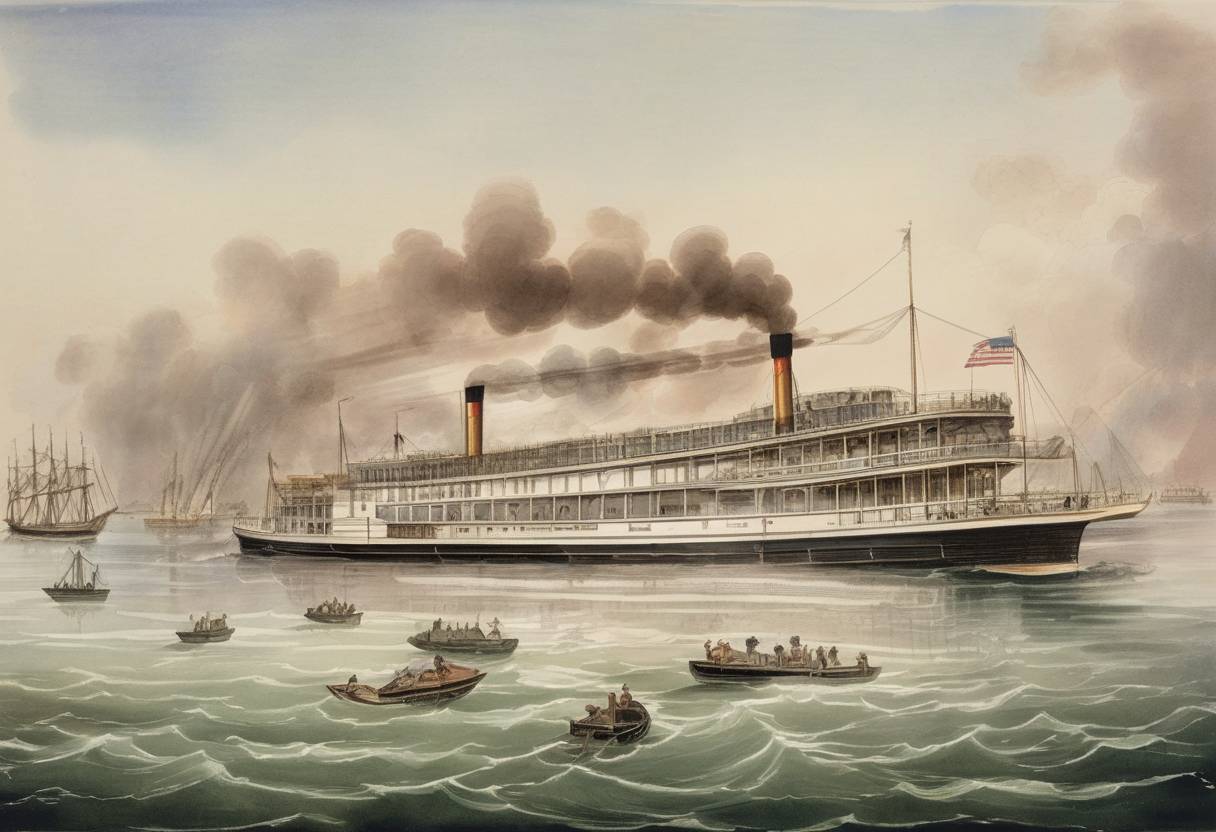
Robert Fulton Patents the Steamboat - February 11, 1809
On February 11, 1809, Robert Fulton, an American engineer and inventor, was granted a patent for his steamboat design. This patent marked a significant milestone in the development of steam-powered transportation, which would eventually revolutionize travel and commerce in the 19th century.
Background
- Early Life and Career: Robert Fulton was born on November 14, 1765, in Pennsylvania. Initially, he pursued a career as an artist but later shifted his focus to engineering and invention.
- Interest in Steam Power: Fulton’s interest in steam power was influenced by his time in Europe, where he met prominent inventors like James Watt and gained exposure to early steam engine technology.
Development of the Steamboat
- Collaboration with Robert Livingston: In 1803, Fulton partnered with Robert R. Livingston, an American diplomat and investor, who held exclusive rights to steam navigation on the Hudson River. This partnership provided Fulton with the financial backing and political support necessary to pursue his steamboat project.
- The Clermont: Fulton’s most famous steamboat, originally named the “North River Steamboat,” but commonly referred to as the “Clermont,” was launched in 1807. It successfully traveled from New York City to Albany, demonstrating the viability of steam-powered river travel.
The 1809 Patent
- Patent Details: Fulton’s patent, granted on February 11, 1809, covered his innovative design for a steamboat, which included improvements in the steam engine and hull design to enhance efficiency and performance.
- Impact of the Patent: This patent helped Fulton secure his position as a pioneer in steam navigation, allowing him to protect his inventions and further develop his steamboat business.
Significance and Aftermath
- Commercial Success: Following the patent, Fulton and Livingston established a successful steamboat service on the Hudson River, which significantly reduced travel time and costs compared to traditional sailing vessels.
- Expansion of Steam Navigation: Fulton’s innovations paved the way for the widespread adoption of steam-powered vessels, facilitating the expansion of trade and transportation networks across the United States and Europe.
- Legacy: Robert Fulton’s work laid the foundation for the modern shipping industry and contributed to the Industrial Revolution by demonstrating the potential of steam power in transportation.
Fulton’s patent on February 11, 1809, represents a pivotal moment in technological history, highlighting the transformative impact of steam power on society and the economy.