Firebombing of Tokyo - March 9-10, 1945
1945 · Tokyo, Japan
The United States conducted a massive firebombing raid on Tokyo, Japan, during World War II, resulting in extensive destruction and loss of life.
November 24, 1944
The first bombing raid against Tokyo by American B-29 Superfortress bombers during World War II.
Tokyo, Japan | United States Army Air Forces
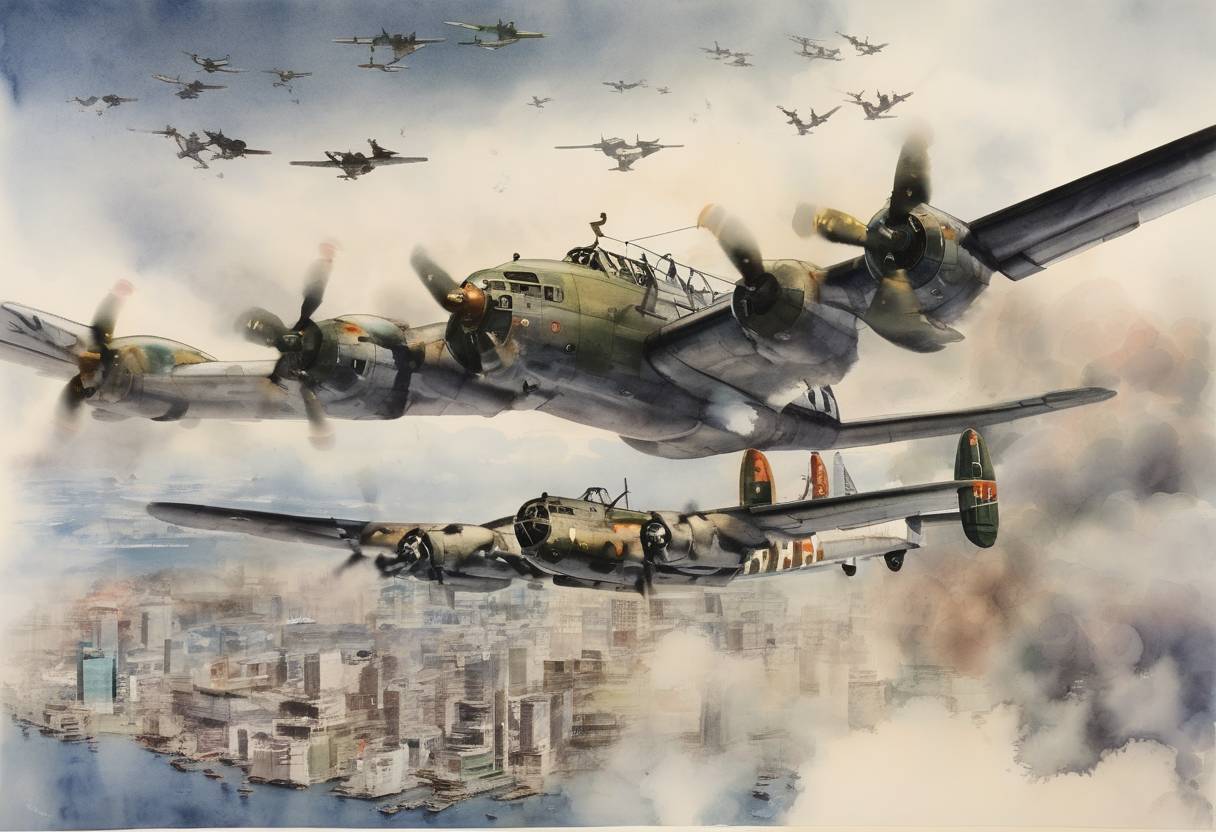
On November 24, 1944, during World War II, the United States launched its first bombing raid against Tokyo using B-29 Superfortress bombers. This marked a significant escalation in the air war against Japan and demonstrated the strategic capabilities of the United States’ long-range bombing efforts.
B-29 Superfortress: The B-29 was a state-of-the-art bomber, known for its long range, high altitude, and large payload capacity. It was specifically designed for the Pacific Theater to reach targets deep within Japan from bases in the Pacific islands.
Strategic Importance: The bombing campaign aimed to cripple Japan’s war production capabilities and weaken its resolve by targeting industrial and military facilities. Tokyo, as the capital and a major industrial hub, was a primary target.
Mariana Islands: The Mariana Islands, particularly Saipan, Tinian, and Guam, had been captured by U.S. forces earlier in 1944. These islands provided the necessary bases for launching B-29 raids on the Japanese mainland.
Operation San Antonio I: The mission was codenamed Operation San Antonio I. It involved 111 B-29 bombers from the 73rd Bombardment Wing, which took off from Saipan.
Target: The primary target was the Musashino aircraft engine plant in the suburbs of Tokyo, a critical facility for Japan’s aircraft production.
Execution: The raid was conducted at high altitude to avoid anti-aircraft fire and fighter interception. However, due to adverse weather conditions and strong winds, only a fraction of the bombs hit the intended target.
Damage and Impact: The raid caused limited damage to the Musashino plant but marked the beginning of a sustained bombing campaign against Japan. It demonstrated the vulnerability of Japanese cities to American air power.
Psychological Effect: The raid had a significant psychological impact, signaling to both Japanese leadership and civilians that the U.S. could strike the Japanese home islands with impunity.
Strategic Shift: The initial raids faced challenges due to weather and accuracy. This led to a strategic shift towards low-altitude incendiary bombing, which would later culminate in the devastating firebombing raids of 1945.
Prelude to Firebombing: The November 24 raid set the stage for more intensive bombing campaigns, including the infamous firebombing of Tokyo in March 1945, which resulted in massive destruction and loss of life.
Impact on War Effort: The sustained bombing campaign contributed to the weakening of Japan’s industrial capacity and morale, playing a crucial role in the eventual Allied victory in the Pacific.
The first B-29 raid on Tokyo was a pivotal moment in the air war over Japan, showcasing the strategic reach of the United States and foreshadowing the intense aerial bombardments that would follow in the final months of World War II.
Source: en.wikipedia.org