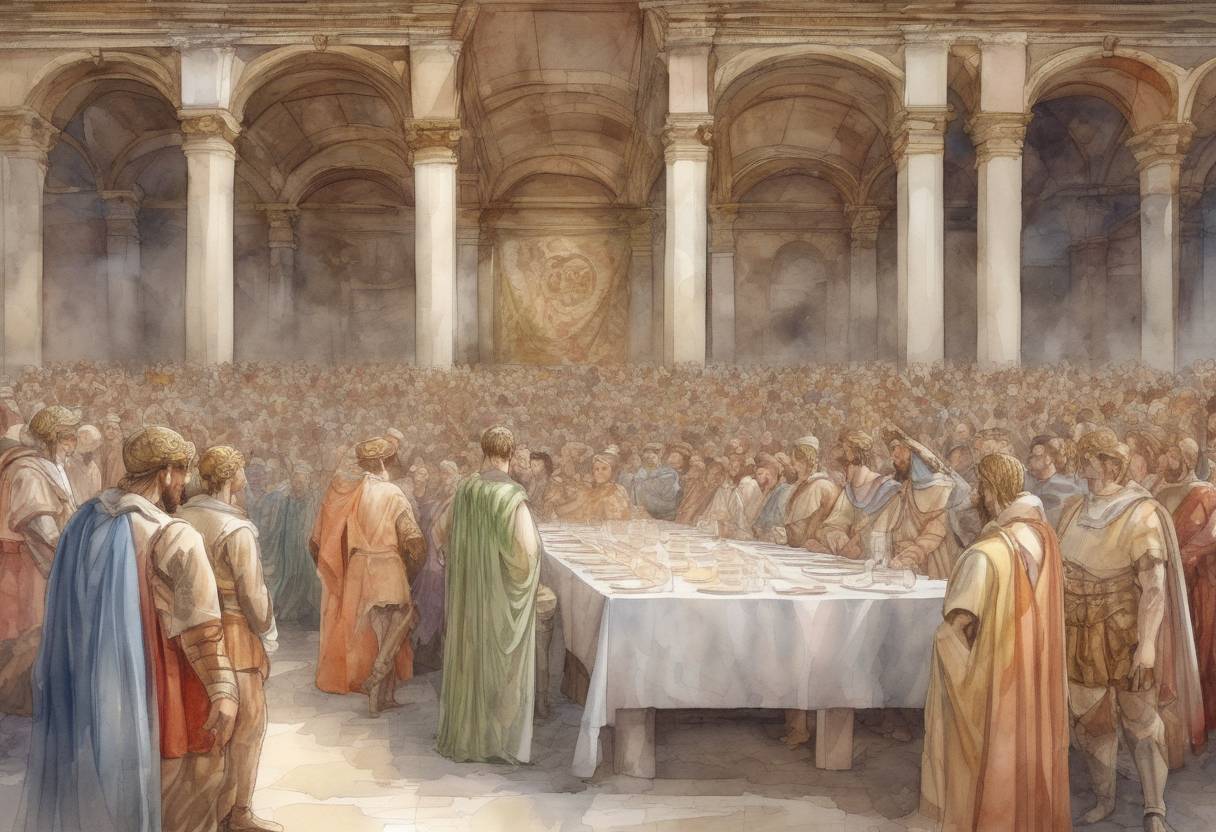
The Assassination of Odoacer: March 15, 493
On March 15, 493, a pivotal event in the history of the late Roman Empire and the early Middle Ages occurred: the assassination of Odoacer, the first King of Italy, by Theodoric the Great, the Ostrogothic king. This event marked a significant shift in power dynamics within the Italian Peninsula and had lasting implications for the region’s political landscape.
Background
Odoacer’s Rise to Power
Odoacer, a Germanic chieftain of uncertain ethnic origin, rose to prominence in the waning years of the Western Roman Empire. In 476, he deposed the last Roman emperor, Romulus Augustulus, an event traditionally considered the end of the Western Roman Empire. Odoacer declared himself King of Italy and ruled as a de facto independent monarch, although he nominally recognized the authority of the Eastern Roman Emperor, Zeno.
Theodoric’s Arrival
Theodoric the Great, leader of the Ostrogoths, was initially sent by Emperor Zeno to depose Odoacer. Theodoric’s Ostrogoths, having been settled in the Eastern Roman Empire as foederati (allied troops), sought new lands and opportunities. Theodoric’s campaign against Odoacer began in 488, leading to several years of conflict.
The Banquet and Assassination
After years of warfare, a peace agreement was brokered between Odoacer and Theodoric, culminating in a banquet intended to celebrate their accord. The banquet was held in Ravenna, the capital of Odoacer’s kingdom. However, the event turned treacherous when Theodoric, seizing the opportunity, assassinated Odoacer. According to historical accounts, Theodoric personally killed Odoacer, striking him down during the feast.
Aftermath and Significance
Theodoric’s Rule
Following Odoacer’s death, Theodoric established himself as the ruler of Italy. He maintained the Roman administrative framework and sought to preserve Roman traditions while integrating his Ostrogothic followers into the existing societal structure. Theodoric’s reign is often noted for its relative stability and efforts to bridge cultural divides between Romans and Goths.
Broader Implications
The assassination of Odoacer and the subsequent rule of Theodoric marked the beginning of the Ostrogothic Kingdom in Italy. This transition exemplified the broader transformation of the Western Roman Empire into a series of Germanic kingdoms. Theodoric’s reign is remembered for its attempts to maintain Roman cultural and administrative practices, influencing the development of medieval European governance.
In summary, the assassination of Odoacer by Theodoric the Great on March 15, 493, was a turning point in the history of Italy and the broader post-Roman world. It underscored the complex interplay of power, culture, and politics during a transformative era in European history.