1878 · Salem, USA
The last witchcraft trial in the United States began with the trial of Lucretia Brown in Salem, Massachusetts.
October 29, 1390
The first trial for witchcraft in Paris took place, marking a significant moment in the history of witch hunts in Europe.
Paris, France
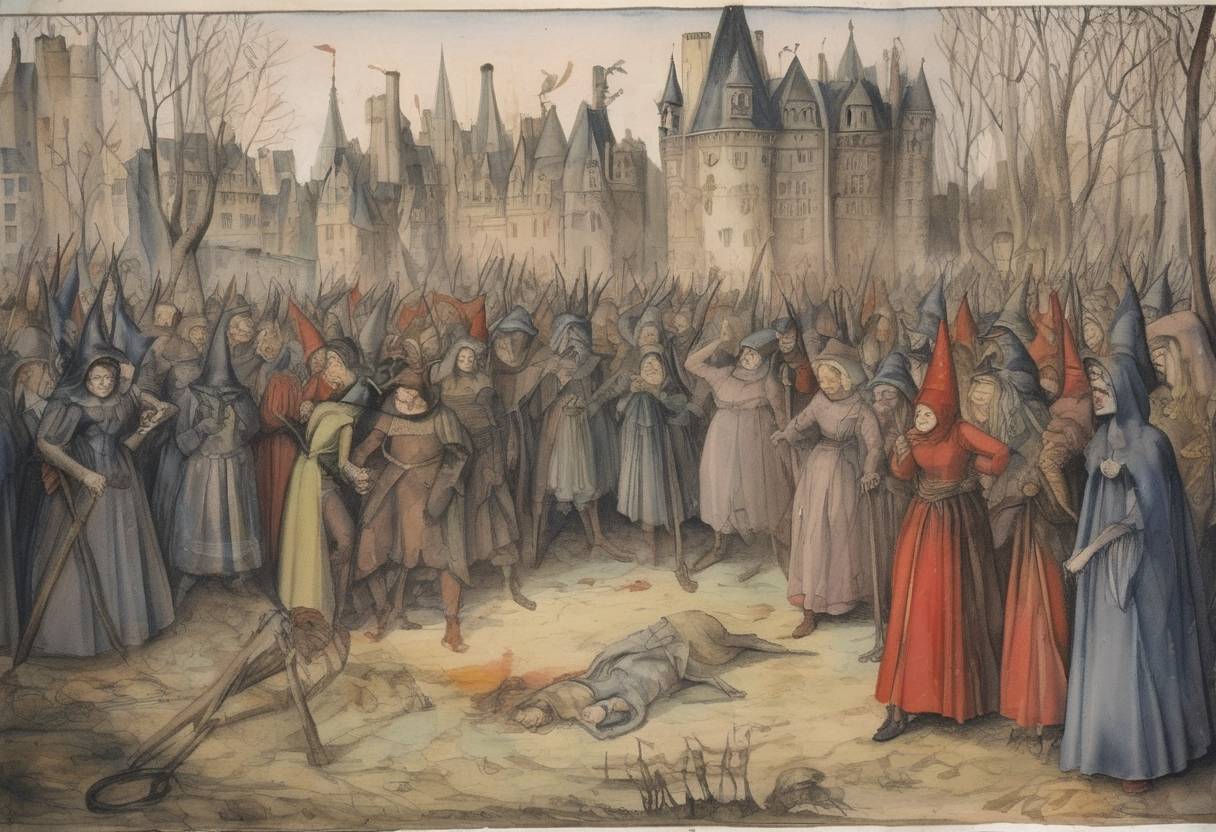
On October 29, 1390, Paris witnessed its first recorded trial for witchcraft, a significant event in the history of European witch hunts. This trial marked the beginning of a period characterized by fear, superstition, and the persecution of individuals accused of practicing witchcraft.
The late 14th century in Europe was a time of social upheaval and religious tension. The Black Death had ravaged the continent, leading to widespread fear and a search for scapegoats. The Catholic Church, which wielded significant influence, often viewed deviations from orthodox religious practices as heretical and dangerous. This environment set the stage for witchcraft trials, where accusations were often based on superstition and fear rather than evidence.
The trial in Paris in 1390 was significant as it was one of the earliest instances of formal legal proceedings against alleged witches in France. The accused were often women, reflecting societal biases and gender dynamics of the time. These trials were typically based on accusations of maleficium, or harmful magic, and pacts with the devil.
The 1390 trial in Paris was a precursor to the more widespread witch hunts that would sweep across Europe in the 16th and 17th centuries. These later hunts were characterized by mass hysteria, leading to thousands of executions. The Paris trial highlighted the growing fear of witchcraft and the willingness of authorities to prosecute based on such fears.
The first witchcraft trial in Paris on October 29, 1390, was a pivotal moment in the history of witch hunts in Europe. It exemplified the intersection of fear, superstition, and legal authority, setting the stage for centuries of persecution. Understanding this event provides insight into the broader social and cultural dynamics of medieval Europe and the enduring impact of witch hunts on European history.
Source: www.britannica.com