Construction of the Hoover Dam Begins
1930 · Boulder City, United States
Construction of the Hoover Dam begins on the Colorado River.
March 1, 1936
The Hoover Dam was completed, providing water and hydroelectric power to the southwestern United States.
Boulder City, United States | U.S. Bureau of Reclamation
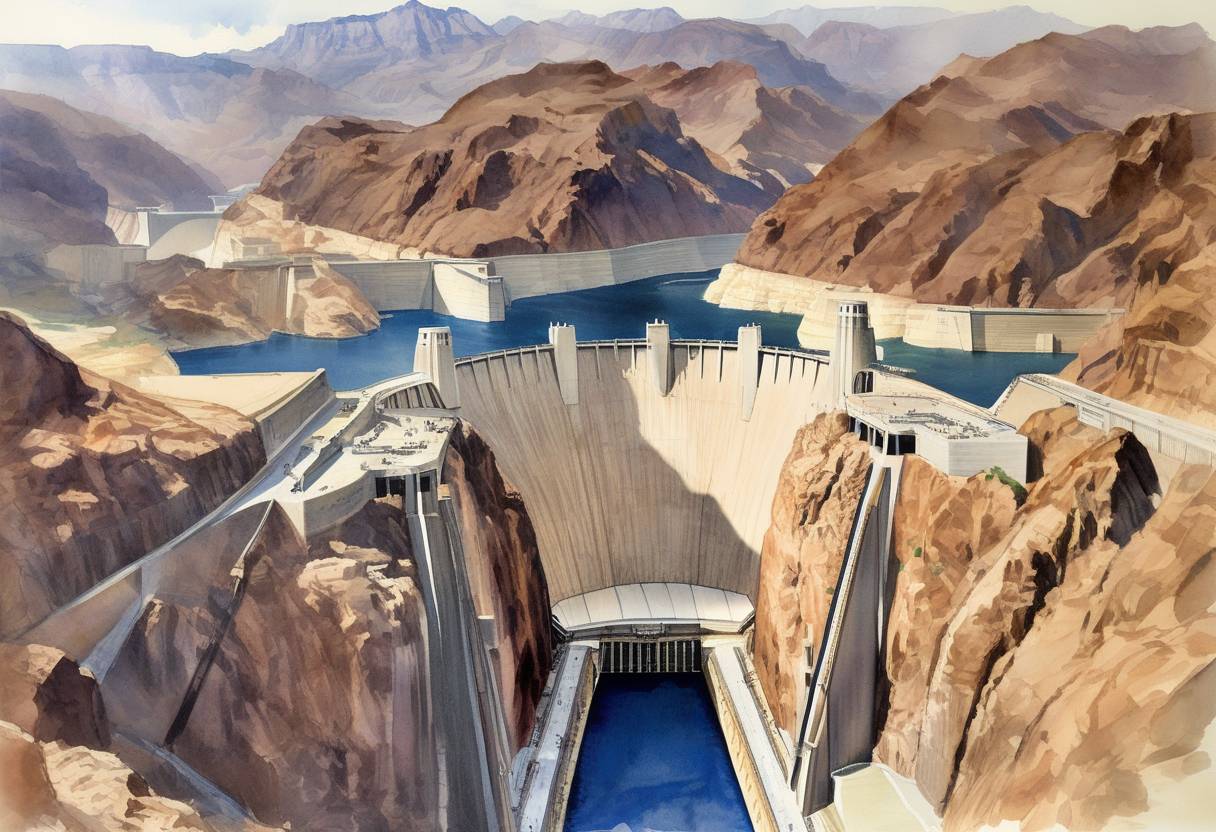
The completion of the Hoover Dam on March 1, 1936, marked a pivotal moment in American engineering and infrastructure development. Situated on the border between Arizona and Nevada, the dam was a monumental project that provided critical water and hydroelectric power to the southwestern United States.
The idea for a dam on the Colorado River was conceived in the early 20th century, as the need for water management and flood control in the arid Southwest became increasingly apparent. The Colorado River Compact of 1922, an agreement among seven U.S. states, laid the groundwork for the dam’s construction by allocating water rights.
Construction of the Hoover Dam began in 1931 during the Great Depression, providing much-needed jobs to thousands of workers. The project was a massive undertaking, involving the diversion of the Colorado River and the construction of a concrete arch-gravity dam. The dam was named after President Herbert Hoover, who played a significant role in its development.
Key figures in the construction included Frank Crowe, the chief engineer, and the Six Companies, Inc., a consortium of construction firms responsible for building the dam. The project faced numerous challenges, including harsh working conditions and the need for innovative engineering solutions.
Upon its completion, the Hoover Dam stood as the tallest dam in the world at 726 feet and was a testament to American ingenuity and determination. It created Lake Mead, the largest reservoir in the United States by volume, which provides water to millions of people across the region.
The dam’s hydroelectric power plant, with a capacity of 2,080 megawatts, became a crucial source of electricity for the burgeoning cities of Los Angeles, Las Vegas, and Phoenix. The power generated supported the growth of industries and urban development in the Southwest.
The Hoover Dam’s completion had far-reaching impacts on the region’s economy and environment. It enabled agricultural expansion, urban growth, and industrial development, transforming the Southwest into a thriving economic hub. However, it also led to significant ecological changes, affecting the natural flow of the Colorado River and the ecosystems dependent on it.
Today, the Hoover Dam remains a symbol of American engineering prowess and a popular tourist destination, attracting millions of visitors each year. Its legacy continues to influence water management and energy production in the United States.
In summary, the completion of the Hoover Dam on March 1, 1936, was a landmark achievement that reshaped the American Southwest, providing essential resources and setting a precedent for future infrastructure projects.
Source: en.wikipedia.org