The Mormon Handcart Pioneers Begin Their Journey
1856 · Iowa City, United States
The Mormon handcart pioneers begin their journey from Iowa City to Salt Lake City.
September 7, 1857
The Mountain Meadows massacre begins in Utah, where a group of Mormon settlers and Paiute Native Americans attack an immigrant wagon train.
Mountain Meadows, United States | Church of Jesus Christ of Latter-day Saints-related group
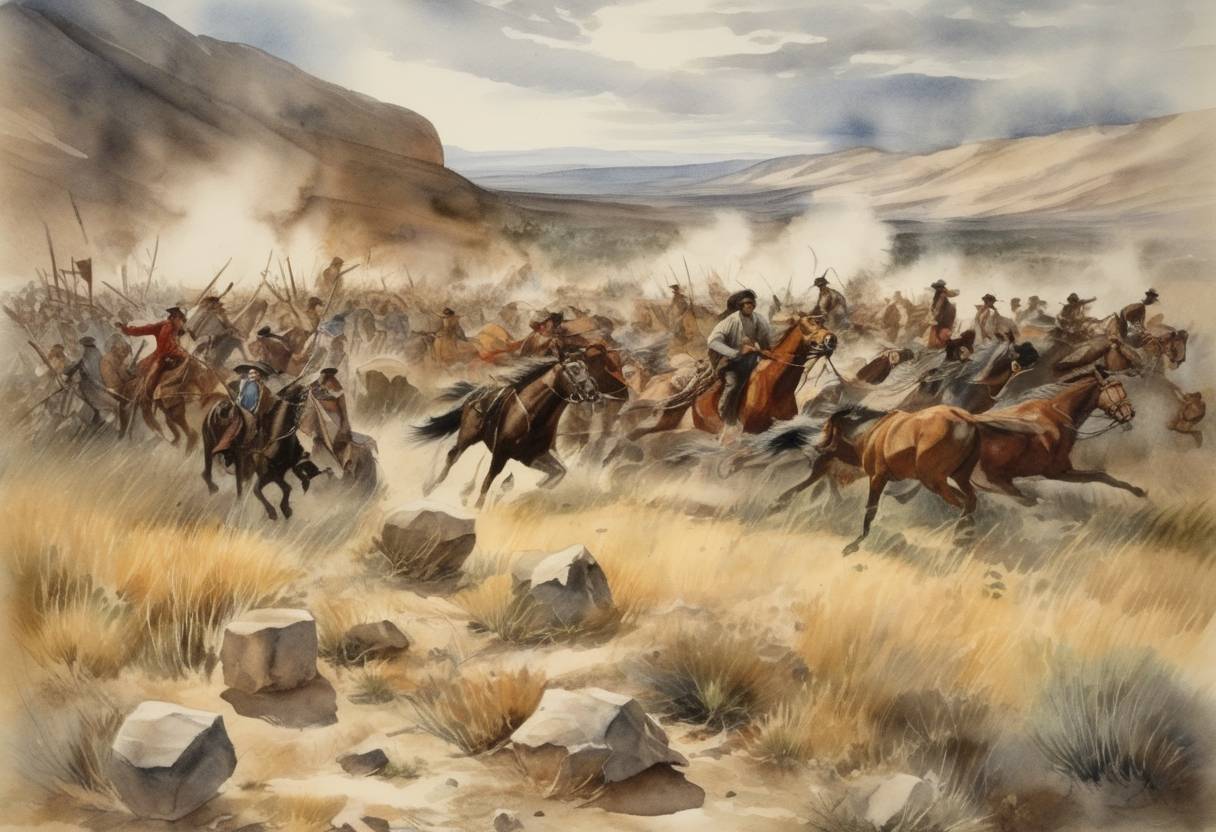
On September 7, 1857, the Mountain Meadows Massacre began, marking one of the darkest episodes in the history of the American West. This tragic event occurred near Mountain Meadows in present-day southwestern Utah, involving a complex and violent conflict. The massacre was the result of rising tensions between local Mormon settlers and a wagon train of emigrants passing through the area, exacerbated by the political and social unrest of the time.
The mid-19th century in the United States was fraught with conflict. The territory of Utah, predominantly inhabited by members of The Church of Jesus Christ of Latter-day Saints (Mormons), had strained relations with the federal government. In 1857, President James Buchanan sent a military expedition—often referred to as “Buchanan’s Blunder”—to suppress what the government perceived as a potential insurrection by the Mormon settlers, due to their resistance to federal oversight.
In this atmosphere of distrust and fear, the Fancher-Baker wagon train, consisting of roughly 120 emigrants from Arkansas and Missouri, traveled toward California. As they reached the Utah Territory, tensions escalated between the emigrants and Mormon settlers. Contributing factors included strained resources, accusations of theft and threats, and heightened fears of incoming federal troops.
On September 7, Mormon militia members from the local Iron County district, disguised as Native Americans, along with actual Southern Paiutes, launched an attack on the wagon train at Mountain Meadows. Initially, the emigrants formed a defensive position and withstood the assault for several days. Communication during the attack was likely influenced by misinformation and fear spread among both the settlers and the Paiutes.
After several days of fighting, under a flag of truce, the emigrants were promised safe passage if they surrendered their weapons. Tragically, on September 11, the settlers turned on the emigrants, leading to the slaughter of most of the wagon train’s members. Of the original group, only 17 children under the age of seven were spared.
The massacre resulted in public outcry and increased tensions between the federal government and Utah’s Mormon communities. Years later, in 1874, John D. Lee, a Mormon militia leader, was tried, convicted, and executed for his role in the massacre, the only individual held legally accountable.
The Mountain Meadows Massacre remains a deeply controversial and tragic event, highlighting the dangerous extremities of religious and regional conflict. It underscores the complexities of frontier life, where fear and misunderstanding often led to violence. The massacre’s legacy continues to influence perceptions of the relationships between pioneers, Native Americans, and the federal presence in the American West.
Source: www.britannica.com