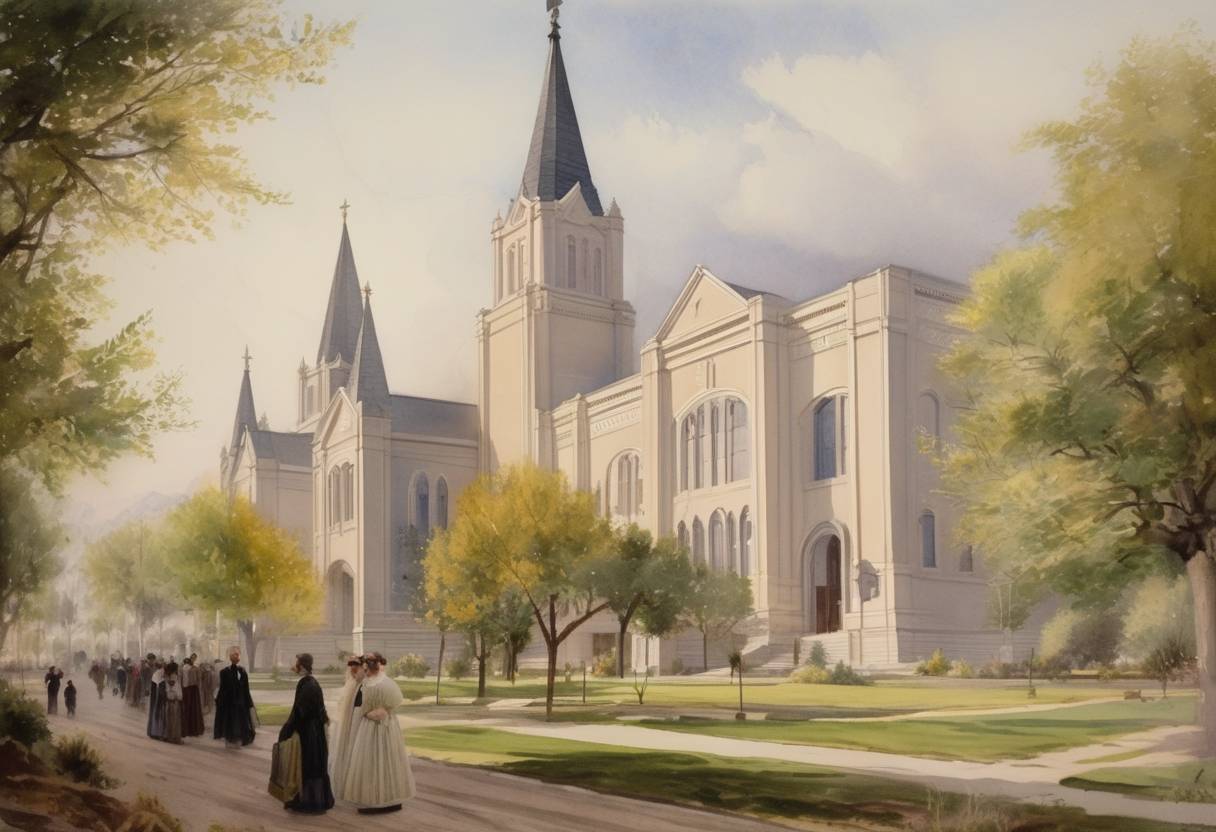
The 1890 Manifesto by Wilford Woodruff
On September 24, 1890, The Church of Jesus Christ of Latter-day Saints (LDS Church) President Wilford Woodruff issued a critical document known as the 1890 Manifesto. This declaration marked a pivotal moment in both religious and political history, as it effectively ended the sanctioned practice of polygamy among members of the LDS Church, also known as Mormons.
Background
The practice of polygamy, or plural marriage, was instituted amongst some members of the LDS Church in the mid-19th century, largely under the direction of church founder Joseph Smith and his successor Brigham Young. This practice, however, faced significant public opposition and legal challenges in the United States. The federal government passed several laws, such as the Edmunds Act of 1882 and the Edmunds-Tucker Act of 1887, targeting polygamy and threatening the dissolution of the church’s corporations, as well as the confiscation of its properties.
The Manifesto
Wilford Woodruff, who became the fourth president of the LDS Church in 1889, was under severe pressure to address the polygamy issue to alleviate government action against the church and its members. The Manifesto he issued publicly declared an end to the practice of polygamy, stating:
“Inasmuch as laws have been enacted by Congress forbidding plural marriages, which laws have been pronounced constitutional by the court of last resort, I hereby declare my intention to submit to those laws, and to use my influence with the members of the Church over which I preside to have them do likewise.”
This statement was a significant shift from previous church teachings, which had defended plural marriage as a religious principle.
Impact and Significance
The 1890 Manifesto paved the way for major developments. Its acceptance by church members marked the beginning of the gradual discontinuation of new plural marriages. Importantly, the Manifesto was a key factor in the eventual admission of Utah as a state. Utah had faced several rejections in its bid for statehood, largely due to the practice of polygamy, so the Manifesto helped to remove a significant barrier.
In 1896, just six years after the Manifesto was issued, Utah was admitted to the Union as the 45th state. The decision to end polygamy was a turning point for the LDS Church as it sought to integrate more fully with mainstream American society.
Consequences
The Manifesto did not immediately eradicate polygamy among all Mormons, and isolated instances of new plural marriages continued for some years. Subsequent church leaders issued clarifications and reaffirmations of the Manifesto, eventually leading to excommunication for members practicing polygamy.
The Manifesto represented a significant shift in LDS Church policies and underscored the broader sociopolitical challenges religious groups can encounter in varying legal contexts. It remains a critical episode in the history of the LDS Church and American religious history.