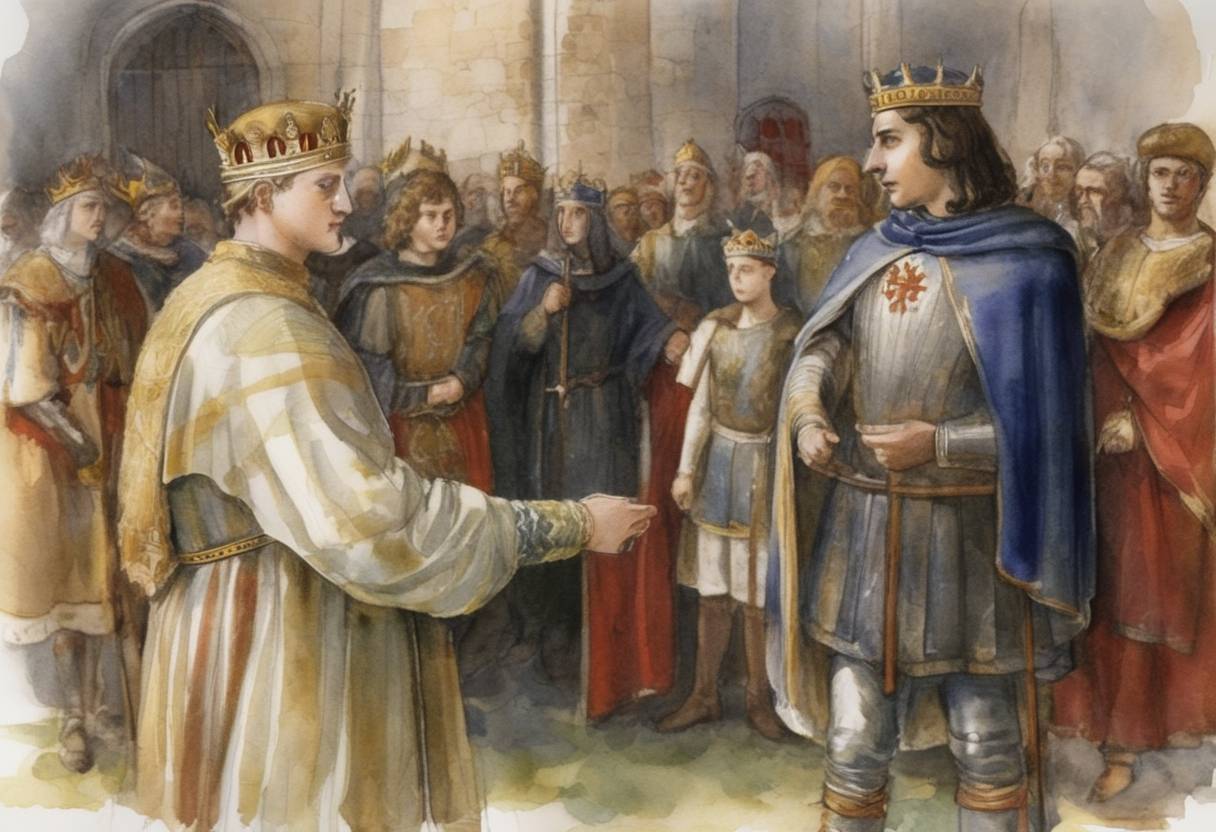
The Pact of 1172: Henry the Young King and Philip of France
On August 27, 1172, a significant diplomatic encounter occurred between the Plantagenet and Capetian dynasties. Henry the Young King, son of King Henry II of England, and Philip, the son of Louis VII of France, met to pledge allegiance to one another. This meeting was orchestrated by their fathers, seeking to establish a temporary truce amid the enduring tensions between the Angevin and Capetian realms.
Context and Background
The late 12th century was marked by the geopolitical rivalry between the Angevin Empire, led by King Henry II, and the Kingdom of France under Louis VII. The roots of this contention lay in the sprawling territorial claims and the complex web of feudal allegiances of the time. The marriage of Henry II to Eleanor of Aquitaine had significantly expanded Angevin holdings, exacerbating tensions with the French crown.
The Meeting of 1172
The meeting on August 27, 1172, was a strategic attempt to ease hostilities and stabilize relations between the two powerful families. Henry the Young King, having been crowned co-regent alongside his father in 1170, sought to reinforce his position and influence. Likewise, Louis VII aimed to secure the future of his dynasty through alliances that would balance the growing power of the Angevins.
Key Aspects of the Pact
Allegiance and Friendship: The accord principally involved mutual pledges of support and friendship. This gesture was designed to bring temporary peace amidst continuous skirmishes and political maneuverings.
Dynastic Considerations: By arranging this meeting, both monarchs demonstrated a commitment to ensuring the stability and continuity of their respective lines. The oath-taking signified a calculated attempt to prevent full-scale conflicts and to lay the groundwork for potential collaborative endeavors.
Aftermath and Historical Significance
Though heralding a brief period of relative peace, the meeting’s lasting impact was limited. The broader animosity between the two dynasties and the ambitious nature of their aspirations ultimately overshadowed the truce. The rivalry continued to shape the political landscape of medieval Europe well into the subsequent decades.
Legacy
The diplomatic initiatives of 1172, including this particular allegiance, highlight the intricate and often transient nature of medieval political alliances. The exchanges between Henry the Young King and Philip illustrate the complex interplay of power, loyalty, and ambition that characterized feudal Europe, with repercussions that influenced the unfolding of the Angevin-Capetian relations for generations.