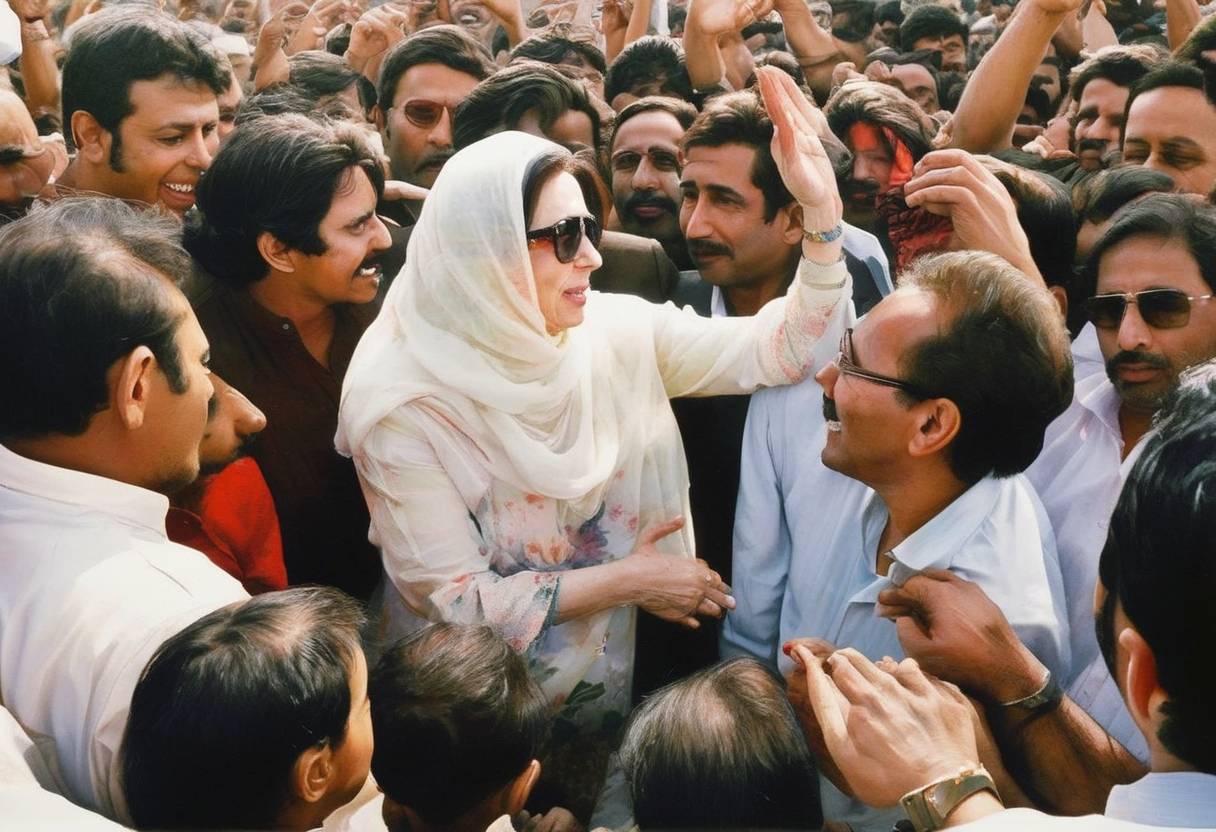
Benazir Bhutto’s Return to Pakistan and the Karachi Bombing on October 19, 2007
On October 19, 2007, former Prime Minister Benazir Bhutto returned to Pakistan after spending eight years in self-imposed exile. Her return was a significant political event, as Bhutto was one of the most influential figures in Pakistani politics, leading the Pakistan Peoples Party (PPP) and being twice elected as Prime Minister in the late 20th century.
Context of Her Return
Benazir Bhutto’s self-exile began in 1999 following charges of corruption and political persecution. Her decision to return in 2007 was prompted by negotiations with then-President Pervez Musharraf, as part of a broader effort to transition Pakistan towards democracy. This political maneuvering included the National Reconciliation Ordinance, which granted amnesty to politicians like Bhutto, enabling her to engage in the country’s political process once more.
The Homecoming Rally
Upon her return, Bhutto planned a large rally in Karachi to greet her supporters and demonstrate her continuing influence and popularity. Thousands of PPP supporters gathered in the streets for what was meant to be a triumphant moment not only for Bhutto but also for the possibility of a democratic transition in Pakistan. Her motorcade procession through the streets of Karachi was both a display of her popular support and a potential target for those opposed to her.
The Tragic Bombing
Tragically, the homecoming rally was targeted by twin bombings. As Bhutto’s convoy made its way through the throngs of supporters, two explosions occurred, resulting in the death of approximately 139 people and injuring over 450 more. Despite the attack, Bhutto herself was unharmed, as she was in an armored truck at the time of the explosions. The bombings were among the deadliest targeting a political rally in Pakistan and highlighted the intense instability and challenges faced by the nation.
Aftermath and Historical Impact
The attack had a chilling effect on the political climate in Pakistan, underscoring the dangers faced by political leaders and those advocating for democratic reforms. Despite the attack, Bhutto remained determined to participate in the upcoming elections, advocating strongly for democracy.
Her return to Pakistan and the subsequent attack marked a critical point in Pakistan’s tumultuous political landscape. Tragically, this event foreshadowed her assassination later that year on December 27, 2007, which had profound implications for Pakistan, affecting its political dynamics and the future trajectory of democracy in the country.
Benazir Bhutto’s legacy remains influential, as her efforts and struggle for democracy continue to inspire many within and beyond Pakistan. Her return and the associated events are pivotal in understanding the complex interplay of politics, security, and democratic processes in Pakistan.