Capture of Barcelona by King Louis the Pious - April 3, 801
801 · Barcelona, Spain
King Louis the Pious captures Barcelona from the Moors, marking a significant expansion of the Carolingian Empire into the Iberian Peninsula.
September 11, 1714
Catalonia was defeated in the War of the Spanish Succession as forces loyal to Philip V of Spain captured Barcelona.
Barcelona, Spain | Philip V of Spain
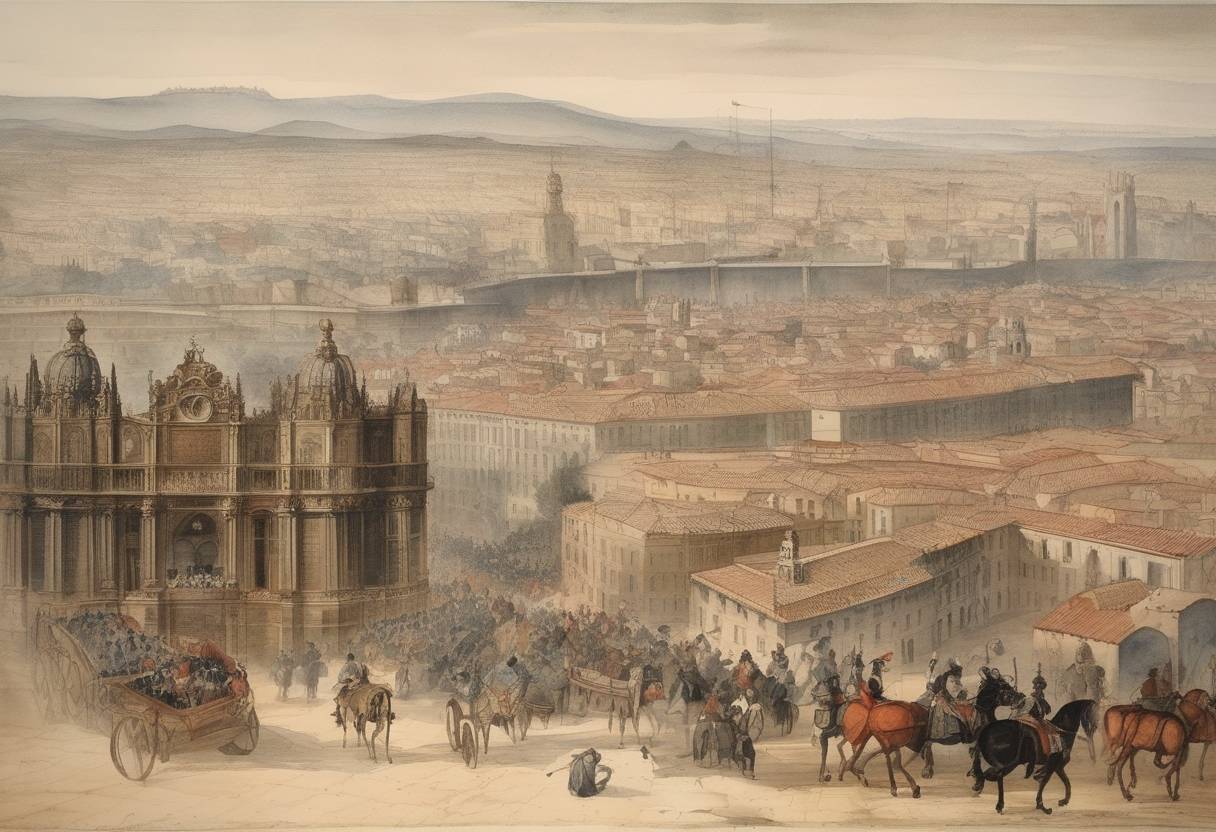
On September 11, 1714, Barcelona, the capital of Catalonia, fell to the forces loyal to King Philip V of Spain, marking a significant conclusion to the War of the Spanish Succession. This event led to the end of Catalan defiance against Philip V and consolidated the Bourbon monarchy’s control over Spain.
The War of the Spanish Succession (1701-1714) was a complex series of conflicts involving various European powers, triggered by the succession of Philip of Anjou, a Bourbon, to the Spanish throne following the death of Charles II of Spain. This development threatened to upset the balance of power in Europe, as it aligned Spain with France, another powerful Bourbon state.
Within this broader conflict, Catalonia, along with other regions of Spain, had supported the Habsburg candidate, Archduke Charles of Austria, recognizing him as Charles III of Spain. This allegiance was part of a broader resistance against centralizing Bourbon policies that threatened traditional regional autonomy.
The Siege of Barcelona began in 1713 after the Treaty of Utrecht, in which the main European powers recognized Philip V as the King of Spain. Nevertheless, refusing to submit, Catalonia continued its resistance. The siege lasted for over a year, involving relentless bombardment and a blockade that severely depleted the city’s resources.
Finally, on September 11, 1714, after a protracted siege, Barcelona capitulated to the Bourbon forces under the command of the Duke of Berwick. The fall of Barcelona effectively ended organized Catalonian resistance. This event is commemorated annually as the National Day of Catalonia, symbolizing both the loss of Catalan autonomy and the enduring spirit of independence.
In the aftermath of the fall of Barcelona, Philip V implemented the Nueva Planta decrees, which abolished many of the region’s historic rights and institutions. This centralization policy aimed to consolidate territorial control and eliminate regional privileges, significantly reshaping the political landscape of Spain.
The war and its resolutions marked the decline of Habsburg influence in Spain and the firm establishment of Bourbon rule, setting the stage for Spain’s transition to a more centralized state. This transformation would have lasting implications for Catalonia and other regions, influencing issues of autonomy and identity that continue to resonate in modern Spain.
The day of Barcelona’s fall remains a potent symbol of resilience and loss, with its commemoration serving as an enduring expression of Catalonian identity and the ongoing dialogue between regional autonomy and national unity.
Source: en.wikipedia.org