The Fall of the Berlin Wall: November 9, 1989
1989 · Berlin, Germany
The Berlin Wall fell, marking a pivotal moment in the collapse of communist regimes in Eastern Europe and symbolizing the end of the Cold War.
October 9, 1989
Thousands of people in Leipzig demonstrated in favor of democratic reforms in East Germany, marking a significant point in the peaceful revolution that led to the fall of the Berlin Wall.
Leipzig, East Germany | Protesters
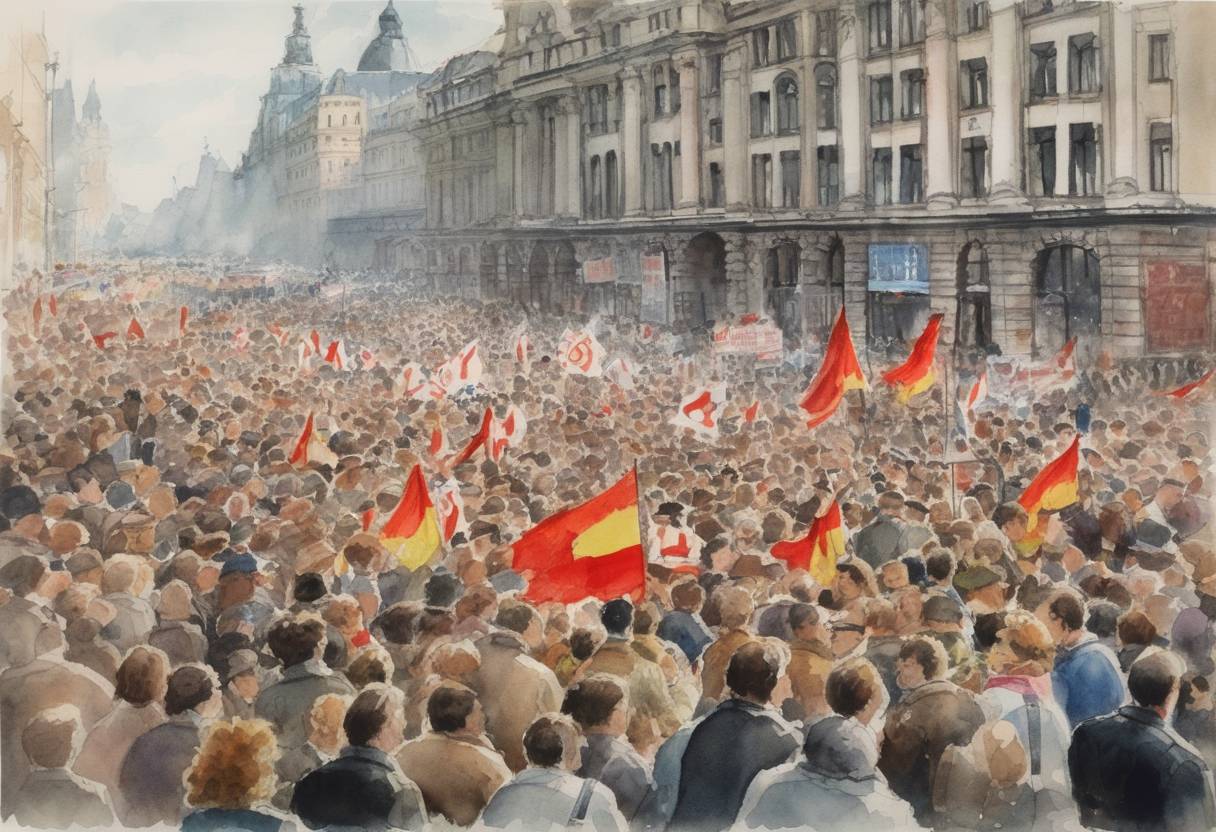
On October 9, 1989, the city of Leipzig, located in East Germany, witnessed a pivotal event during the Peaceful Revolution, contributing significantly to the fall of the Berlin Wall and the eventual reunification of Germany. This day is marked by a massive demonstration involving approximately 70,000 people, who gathered to demand democratic reforms.
Throughout the 1980s, the political and economic situation in East Germany, officially known as the German Democratic Republic (GDR), had been deteriorating. The rigid communist regime faced increasing dissatisfaction due to lack of political freedoms, economic hardships, and suppression of dissent. Influenced by reforms in the Soviet Union under Mikhail Gorbachev and changes in neighboring Eastern European countries, East Germans began to organize for change.
Leipzig’s role became significant as it hosted regular “Monday Demonstrations,” which had started earlier in the year with smaller groups protesting for civil rights and reforms. These gatherings originated after the weekly peace prayers held at St. Nicholas Church, a central venue for discussions on peace and reform.
The protest on October 9 was notable not only for its sheer size but also for its peaceful nature, which was a remarkable feat given the context. Facing the possibility of violent government suppression, similar to the Tiananmen Square Massacre earlier that year, participants were determined to maintain non-violence. Demonstrators carried candles and chanted slogans like “We are the people!” and “No violence!” as they walked through the city center.
The government’s response to the protest was a turning point. Despite military and police presence, which created an atmosphere of potential conflict, the authorities restrained from invoking force. This decision to avoid bloodshed was partially attributed to global media attention and the fear of international condemnation.
The peaceful demonstration on October 9 marked a decisive moment in the Peaceful Revolution. It emboldened further protests across East Germany, leading to an unstoppable wave of public dissent that pressured the government to institute reforms. Within a month, the Berlin Wall fell on November 9, 1989, an event often seen as a symbol of the collapse of the Iron Curtain and the beginning of the end for the division of Germany.
The Leipzig demonstration exemplified the power of peaceful protest in dismantling totalitarian regimes. It showcased the determination of ordinary citizens in shaping their country’s future, contributing not only to the political transformation of East Germany but also to the broader dissolution of Cold War barriers in Europe.
Source: en.wikipedia.org