John is Crowned King of England
1199 · London, England
John is crowned King of England at Westminster Abbey, succeeding his brother Richard I.
April 3, 1043
Edward the Confessor was crowned King of England.
Winchester, England | English Monarchy
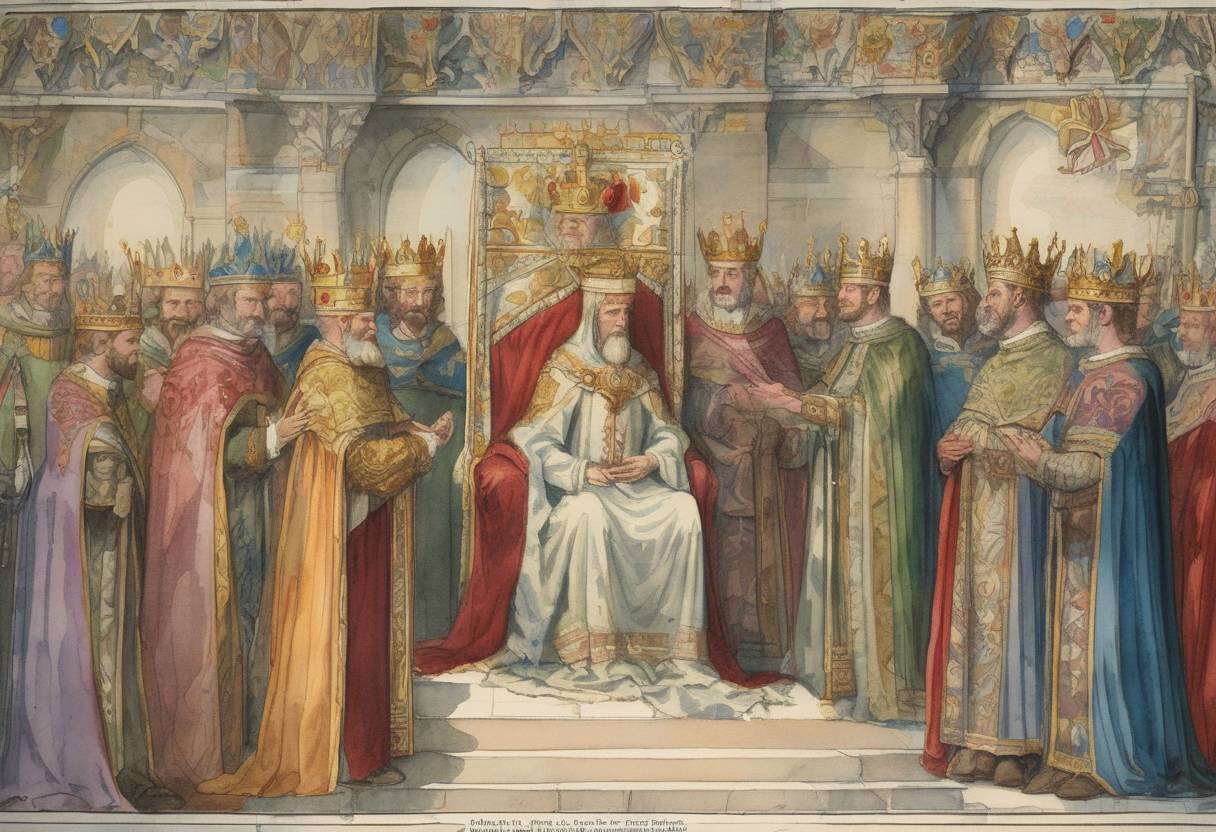
On April 3, 1043, Edward the Confessor was crowned King of England, marking the beginning of a reign that would last until his death in 1066. Edward’s ascension to the throne was a significant event in English history, setting the stage for the Norman Conquest and the end of Anglo-Saxon rule.
Edward was born around 1003, the son of King Æthelred the Unready and Queen Emma of Normandy. His early life was marked by turmoil due to the Danish invasions of England. Following the conquest of England by the Danish King Sweyn Forkbeard and later his son Cnut the Great, Edward spent much of his youth in exile in Normandy.
The death of Cnut in 1035 and the subsequent power struggles among his sons provided an opportunity for Edward to return to England. After the death of Cnut’s son, Harthacnut, in 1042, Edward was invited to take the throne, largely due to his mother’s influence and his own connections to the English nobility.
Edward was crowned at Winchester Cathedral, the traditional coronation site for English kings at the time. His coronation was a significant event, symbolizing the restoration of the native English monarchy after years of Danish rule. The ceremony was attended by many of the kingdom’s leading nobles and clergy, who pledged their allegiance to the new king.
Edward’s reign is often characterized by his piety and his efforts to strengthen the church in England. He was known for his devotion to religious matters, earning him the epithet “the Confessor.” His reign saw the construction of Westminster Abbey, which he commissioned as a royal burial church.
Politically, Edward’s reign was marked by tensions with powerful nobles, particularly the Godwin family. Earl Godwin of Wessex was one of the most influential figures in England, and his family held significant power. Edward’s marriage to Godwin’s daughter, Edith, was a political alliance that helped stabilize his rule, although tensions remained.
Edward the Confessor’s reign ended with his death on January 5, 1066. His lack of a direct heir led to a succession crisis, ultimately resulting in the Norman Conquest later that year. William the Conqueror, Duke of Normandy, claimed the English throne, leading to the Battle of Hastings and the end of Anglo-Saxon rule.
Edward was canonized as a saint in 1161 by Pope Alexander III, and his feast day is celebrated on October 13. His legacy is remembered for his religious devotion and the significant events that followed his reign, shaping the future of England.
Edward’s reign is a pivotal chapter in English history, bridging the gap between the Anglo-Saxon and Norman periods and leaving a lasting impact on the cultural and political landscape of the nation.
Source: www.britannica.com