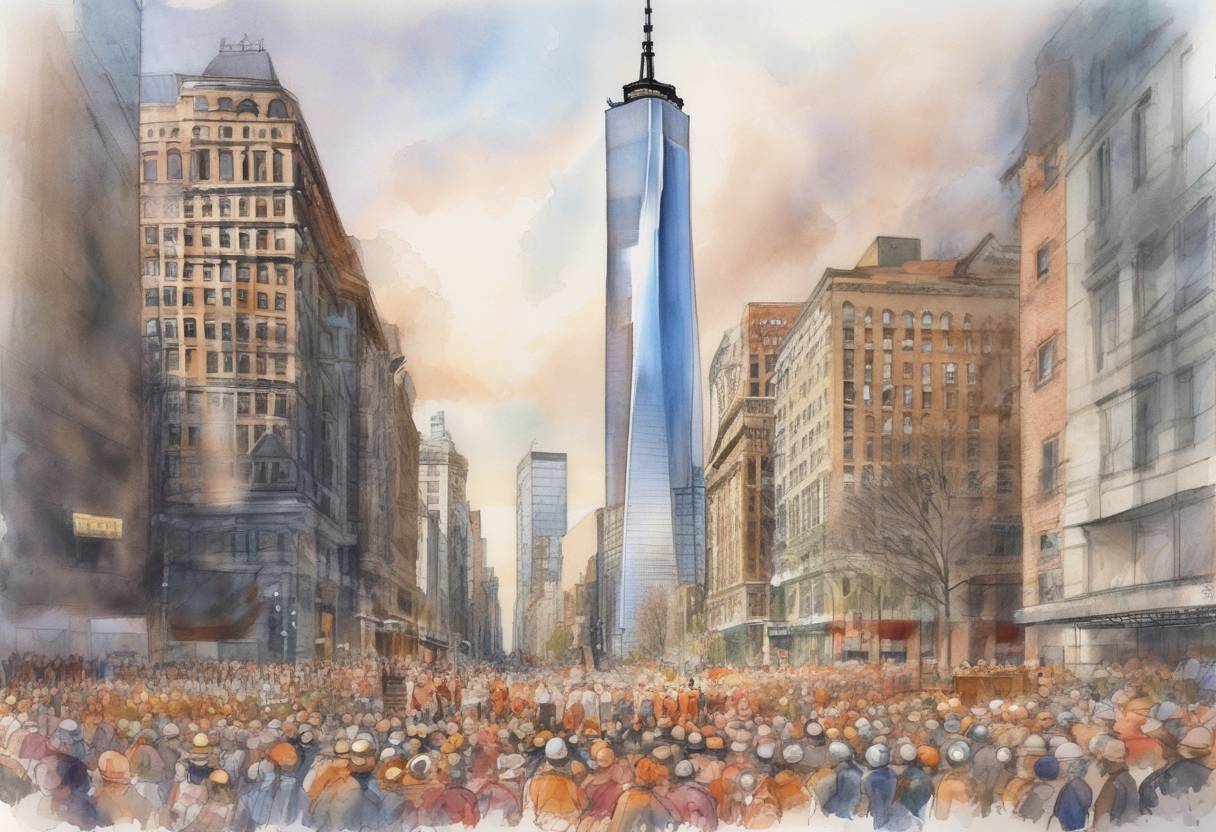
Groundbreaking Ceremony for the Freedom Tower (One World Trade Center)
Date: July 4, 2004
Context and Background
The groundbreaking ceremony for the Freedom Tower, which would later be renamed One World Trade Center, was a pivotal moment in the reconstruction of the World Trade Center site in New York City. This event took place nearly three years after the devastating September 11, 2001, terrorist attacks, which resulted in the collapse of the original Twin Towers and significant loss of life.
Key Events Leading Up to the Ceremony
- September 11, 2001: The attacks on the World Trade Center led to the destruction of the Twin Towers, prompting a national and global outpouring of grief and a commitment to rebuild.
- Planning and Design: In the years following the attacks, extensive discussions and planning took place to determine the future of the site. The design process involved numerous stakeholders, including architects, city planners, and the families of 9⁄11 victims.
- Architectural Design: The initial design for the Freedom Tower was created by architect Daniel Libeskind, who envisioned a structure that would symbolize resilience and hope. The design underwent several revisions before reaching its final form.
The Groundbreaking Ceremony
- Date and Significance: The ceremony was held on July 4, 2004, symbolically aligning with Independence Day to emphasize themes of freedom and national resilience.
- Participants: The event was attended by key figures such as New York Governor George Pataki, New York City Mayor Michael Bloomberg, and other dignitaries. Their presence underscored the importance of the project to both the city and the nation.
- Symbolic Acts: The ceremony included the laying of a cornerstone, a symbolic act representing the foundation of the new building and the broader effort to rebuild and recover from the tragedy.
Aftermath and Consequences
- Construction and Renaming: Construction of the tower faced numerous challenges, including financial, logistical, and security concerns. The building was eventually renamed One World Trade Center to better reflect its role as a symbol of unity and renewal.
- Completion: One World Trade Center was completed and opened to the public on November 3, 2014. Standing at 1,776 feet, its height is a deliberate reference to the year of American independence.
- Symbolic Importance: The tower now serves as a powerful symbol of resilience and recovery, honoring those who lost their lives on September 11, 2001, and representing the enduring spirit of New York City and the United States.
Broader Historical Significance
The groundbreaking of the Freedom Tower marked a significant step in the healing process for a nation still grappling with the aftermath of the 9⁄11 attacks. It demonstrated a commitment to rebuilding not just physical structures, but also the collective spirit and identity of a city and a country determined to overcome adversity.