The Treaty of Edinburgh-Northampton: May 1, 1328
1328 · Edinburgh, Scotland
The Treaty of Edinburgh-Northampton is signed, ending the First War of Scottish Independence and recognizing Scotland's independence from England.
June 23, 1314
The Battle of Bannockburn began, a significant Scottish victory in the First War of Scottish Independence against England.
Bannockburn, Scotland | Kingdom of Scotland
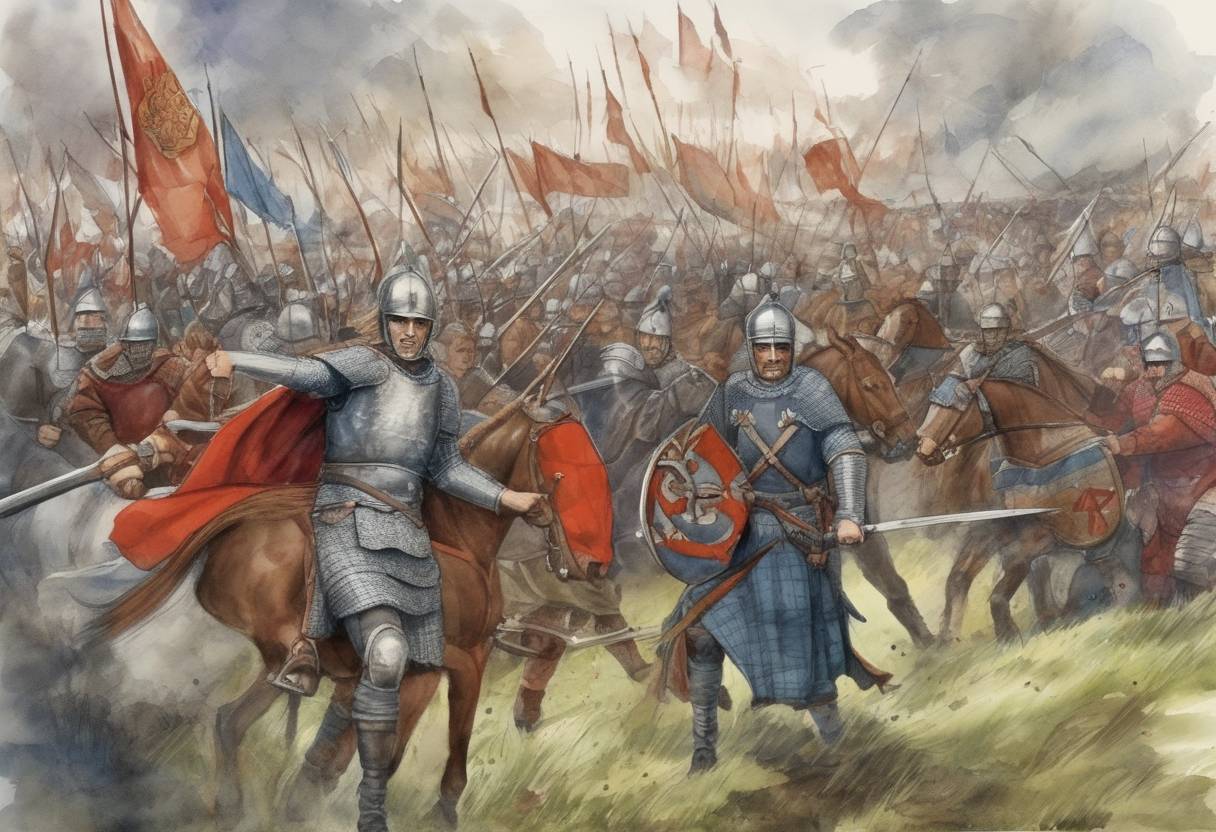
The Battle of Bannockburn, which began on June 23, 1314, stands as a pivotal moment in the First War of Scottish Independence. This significant Scottish victory against England was instrumental in securing Scotland’s status as an independent nation during the medieval period.
The First War of Scottish Independence was a series of military campaigns fought between the Kingdom of Scotland and the Kingdom of England. The conflict was sparked by the death of the Scottish king, Alexander III, in 1286, and the subsequent succession crisis. The English king, Edward I, sought to assert dominance over Scotland, leading to a prolonged struggle for sovereignty.
By 1314, Robert the Bruce had emerged as a key figure in the Scottish resistance. Crowned King of Scots in 1306, Bruce had been engaged in a guerrilla campaign against English forces, gradually consolidating his power and reclaiming Scottish territory.
The Battle of Bannockburn took place near Stirling Castle, a strategic stronghold that was under English control. The castle was besieged by Scottish forces, and the English, led by King Edward II, marched north to relieve it.
The battle continued into the following day, culminating in a decisive Scottish victory. The English army, unable to maneuver effectively in the constrained battlefield, suffered heavy losses and retreated in disarray.
The Battle of Bannockburn remains a testament to the strategic acumen of Robert the Bruce and the enduring spirit of the Scottish people in their quest for independence.
Source: en.wikipedia.org