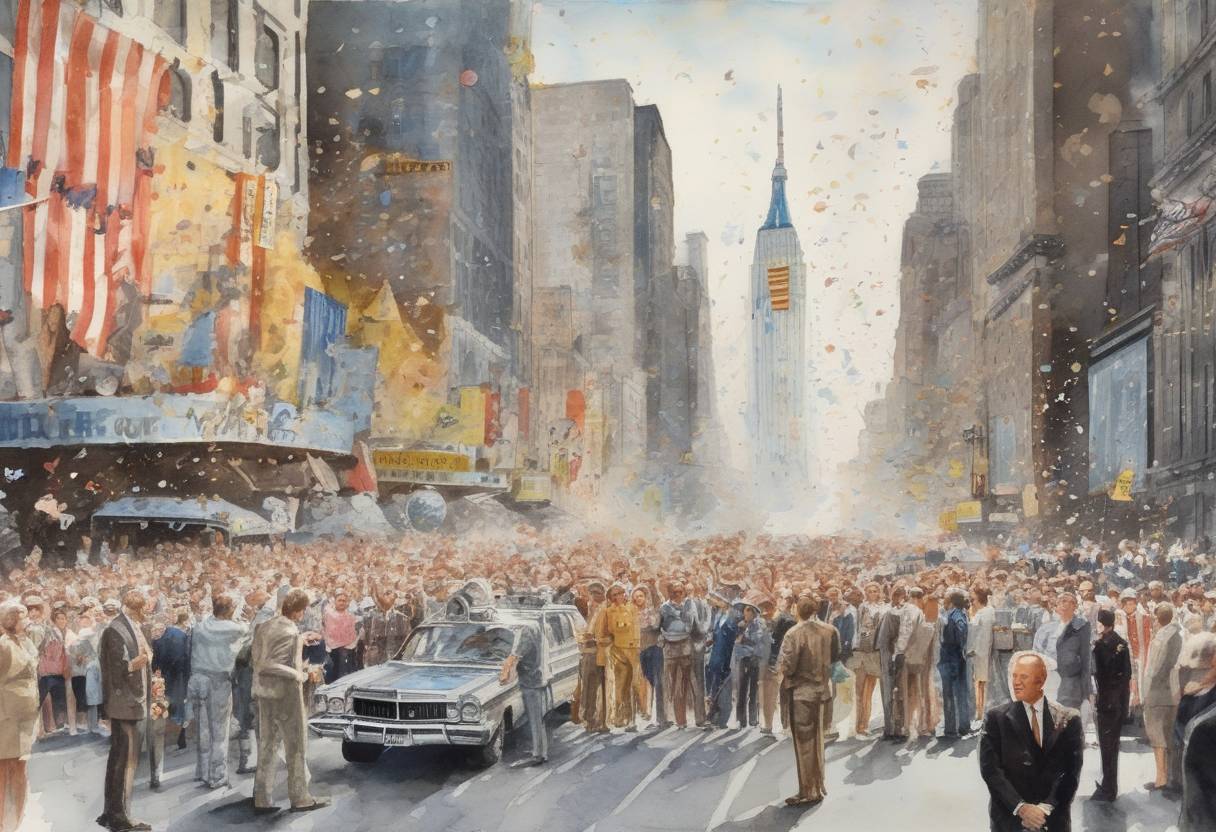
Apollo 11 Astronauts Honored with Ticker-Tape Parade
On August 13, 1969, the Apollo 11 astronauts—Neil Armstrong, Buzz Aldrin, and Michael Collins—were celebrated with a grand ticker-tape parade in New York City. This event marked a significant moment in history, as it honored the astronauts’ successful mission to the moon, a monumental achievement in human space exploration.
Context and Background
- Apollo 11 Mission: Launched on July 16, 1969, Apollo 11 was the first manned mission to land on the moon. On July 20, 1969, Neil Armstrong and Buzz Aldrin became the first and second humans to walk on the lunar surface, while Michael Collins piloted the command module in lunar orbit.
- Historical Significance: The mission fulfilled President John F. Kennedy’s 1961 goal of landing a man on the moon and returning him safely to Earth before the decade’s end. It was a pivotal moment in the Space Race, showcasing American technological prowess during the Cold War.
The Ticker-Tape Parade
- Location and Route: The parade took place in New York City, following a traditional route through the city’s “Canyon of Heroes” along Broadway. This area is renowned for hosting parades celebrating significant achievements and figures.
- Public Reception: An estimated four million people lined the streets to witness the parade, demonstrating the immense public interest and pride in the astronauts’ accomplishments.
- Symbolism: The ticker-tape parade symbolized national unity and celebration, as people from all walks of life came together to honor the astronauts’ bravery and the success of the Apollo 11 mission.
Aftermath and Consequences
- Global Tour: Following the parade in New York, the astronauts embarked on a 38-day world tour, visiting 24 countries to share their experiences and promote goodwill.
- Legacy: The success of Apollo 11 paved the way for subsequent lunar missions and contributed to advancements in science and technology. It remains a defining moment in space exploration history.
Broader Historical Impact
- Space Exploration: The Apollo 11 mission inspired future generations of scientists, engineers, and explorers. It demonstrated the potential of human ingenuity and the possibilities of space exploration.
- Cultural Influence: The mission and its celebration became iconic, influencing popular culture and becoming a symbol of human achievement.
The ticker-tape parade for the Apollo 11 astronauts was not just a celebration of their individual accomplishments but a recognition of a collective human endeavor that expanded the boundaries of what was possible.