Battle of Marton: Æthelred of Wessex vs. Danish Vikings
871 · Marton, England
Battle of Marton: Æthelred of Wessex fights against a Danish Viking army.
January 8, 0871
The Battle of Ashdown took place, where King Æthelred of Wessex and his brother Alfred the Great defeated the invading Danish Viking army.
Berkshire, England | Wessex Kingdom
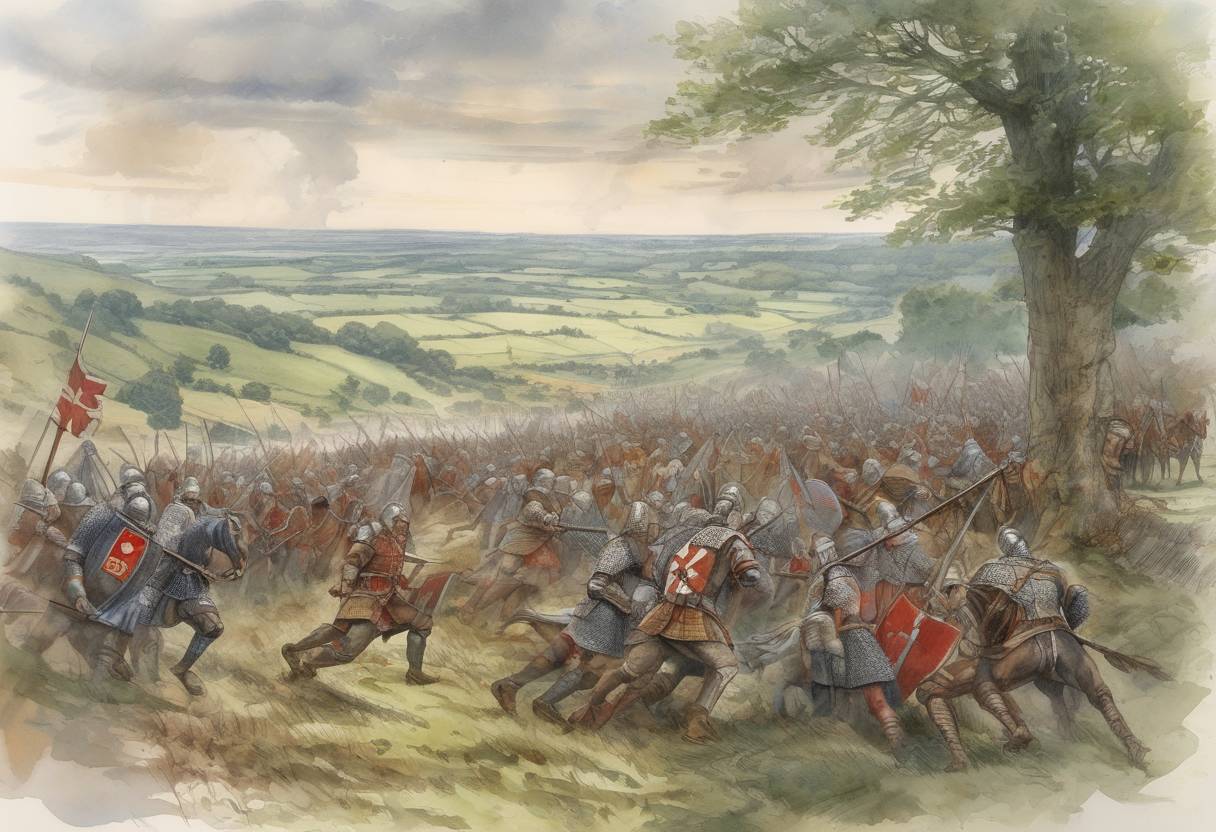
The Battle of Ashdown, fought on January 8, 871, was a significant conflict during the Viking invasions of England. This battle saw the forces of Wessex, led by King Æthelred and his younger brother Alfred, later known as Alfred the Great, achieve a crucial victory against the Danish Viking army.
The late 9th century was a tumultuous period for the Anglo-Saxon kingdoms of England, as they faced repeated incursions by Viking forces. The Great Heathen Army, a coalition of Norse warriors, had been campaigning in England since 865, capturing several key territories and threatening the stability of the Anglo-Saxon kingdoms.
By 870, the Vikings had turned their attention to Wessex, one of the last strongholds resisting their advance. King Æthelred and his brother Alfred were tasked with defending their realm against this formidable threat.
The Battle of Ashdown took place in the Berkshire Downs, though the exact location remains uncertain. The Anglo-Saxon Chronicle, a primary source for this period, provides a vivid account of the battle. According to the Chronicle, the Viking forces were divided into two contingents, each led by a king and several earls.
King Æthelred and Alfred also divided their forces. Æthelred commanded one division, while Alfred led the other. As the battle commenced, Æthelred was reportedly delayed in prayer, leaving Alfred to engage the Vikings first. Demonstrating remarkable leadership and courage, Alfred launched a fierce attack against the Viking lines.
Despite being initially outnumbered, the Anglo-Saxon forces managed to break through the Viking ranks. Æthelred eventually joined the fray, and together, the brothers led their troops to a decisive victory. The Vikings suffered significant casualties, including several of their leaders.
The victory at Ashdown was a pivotal moment in the struggle against the Viking invasions. It marked the first major defeat of the Great Heathen Army in Wessex and demonstrated the resilience and military acumen of Alfred, who would later become one of England’s most celebrated monarchs.
Although the Vikings continued their campaigns in Wessex, the Battle of Ashdown provided a much-needed morale boost to the Anglo-Saxon forces. It also set the stage for Alfred’s eventual rise to power and his subsequent efforts to unify and fortify England against future invasions.
The battle is remembered not only for its immediate impact but also for its role in shaping the legacy of Alfred the Great, who is credited with laying the foundations for a unified English kingdom.
The Battle of Ashdown stands as a testament to the determination and strategic prowess of the Anglo-Saxon leaders in the face of overwhelming odds. It remains a significant event in English history, symbolizing the enduring struggle against Viking incursions and the resilience of the Wessex kingdom.
Source: en.wikipedia.org