Execution of Catherine Howard: February 13, 1542
1542 · London, England
Catherine Howard, the fifth wife of King Henry VIII of England, was executed for adultery.
May 15, 1536
Anne Boleyn, the second wife of King Henry VIII of England, was tried and convicted of treason, adultery, and incest.
London, England | English Crown
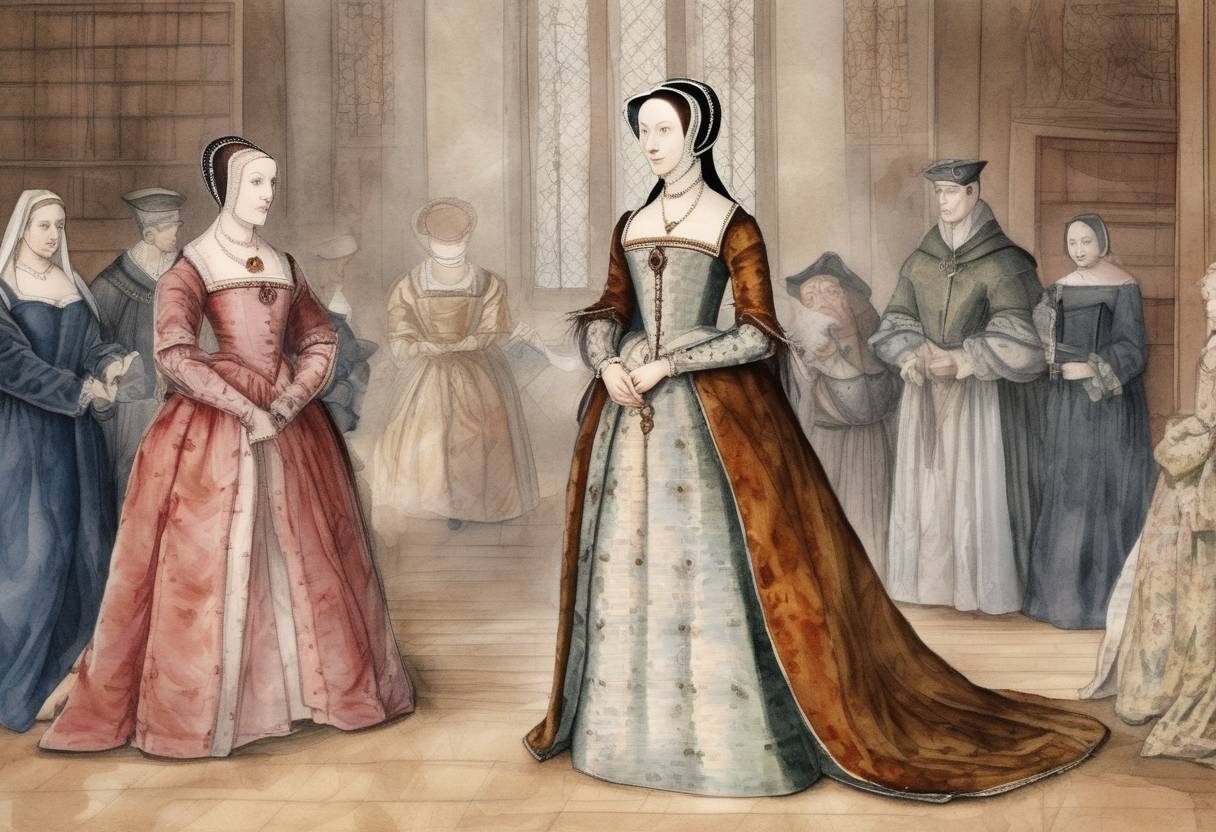
Anne Boleyn, the second wife of King Henry VIII of England, faced trial on May 15, 1536, marking a pivotal moment in English history. Her trial was held at the Tower of London, and it was a significant event that led to her execution and had lasting implications for the English monarchy and the Reformation.
Anne Boleyn’s marriage to Henry VIII was a catalyst for the English Reformation. Henry’s desire to annul his first marriage to Catherine of Aragon and marry Anne led to England’s break from the Catholic Church and the establishment of the Church of England. Anne was crowned queen in 1533, and in September of that year, she gave birth to Elizabeth, the future Elizabeth I. However, Anne’s failure to produce a male heir and her increasingly strained relationship with Henry contributed to her downfall.
Anne was arrested on May 2, 1536, and charged with treason, adultery, and incest. The charges were based on accusations that she had engaged in extramarital affairs with several men, including her own brother, George Boleyn, Viscount Rochford. The trial was presided over by her uncle, Thomas Howard, the Duke of Norfolk, and was attended by a jury of peers, including many who had personal or political motives against her.
Anne Boleyn was executed on May 19, 1536, just four days after her trial. Her death marked the first execution of an English queen and had significant repercussions:
Anne Boleyn’s trial and execution remain subjects of historical debate and intrigue, symbolizing the complex interplay of power, politics, and personal relationships in Tudor England.
Source: en.wikipedia.org