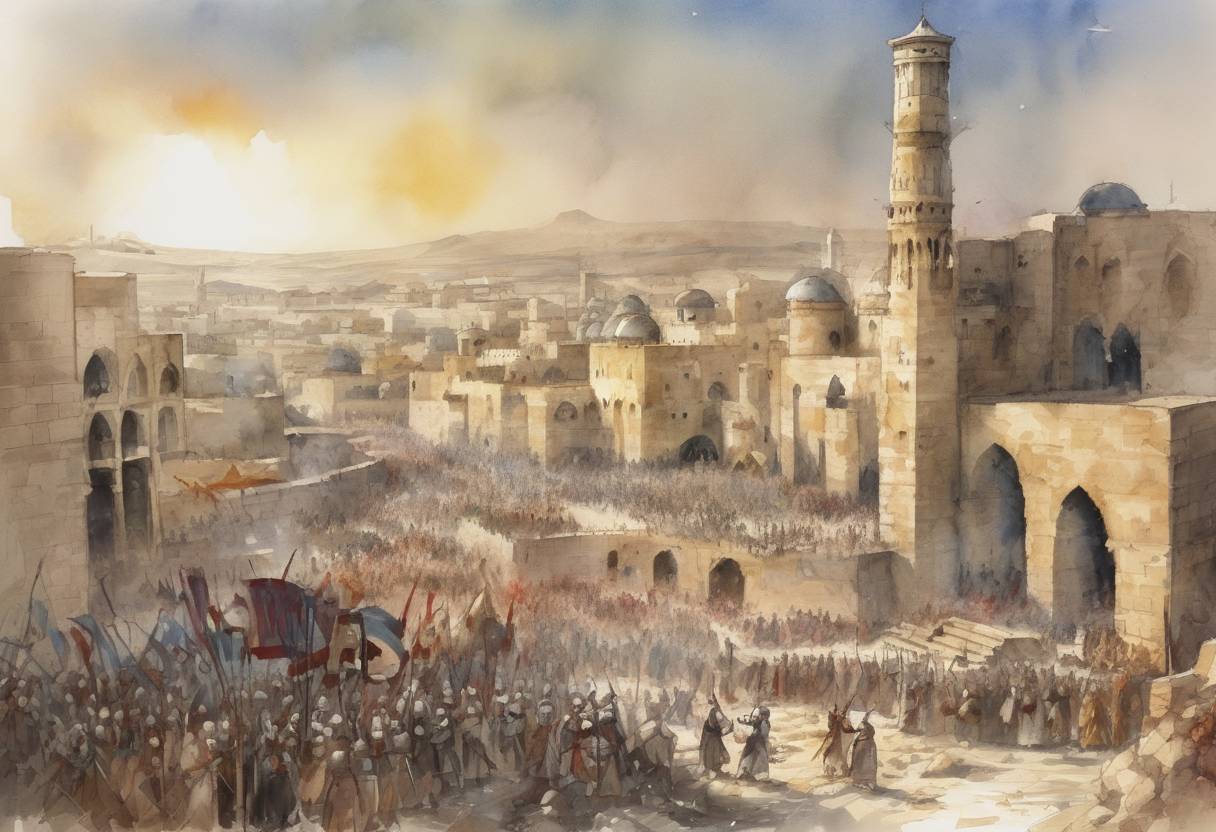
The Capture of Ma’arrat al-Numan: December 12, 1098
On December 12, 1098, during the First Crusade, the city of Ma’arrat al-Numan, located in present-day Syria, fell to the Crusader forces. This event is particularly notorious due to the massacre of its inhabitants and the subsequent reports of cannibalism among the Crusaders, which have left a dark mark on the history of the Crusades.
Context and Prelude
The First Crusade was launched in 1096, following Pope Urban II’s call to aid the Byzantine Empire and reclaim Jerusalem from Muslim control. By late 1098, the Crusaders had already achieved significant victories, including the capture of Antioch. However, the campaign was marked by logistical challenges, including shortages of food and supplies, which contributed to the desperation and extreme actions taken by the Crusaders.
The Siege and Capture
Ma’arrat al-Numan was a strategically located city that the Crusaders targeted as they moved southward toward Jerusalem. The siege began in late November 1098, and after a few weeks of intense fighting, the Crusaders breached the city’s defenses on December 12. The capture was brutal; contemporary accounts describe a massacre of the city’s Muslim inhabitants, with thousands reportedly killed.
Notorious Aftermath
The aftermath of the siege is infamous for reports of cannibalism among the Crusader forces. Chroniclers of the time, such as the monk Radulph of Caen, documented that some Crusaders resorted to eating the flesh of the dead due to severe food shortages. These accounts, while debated among historians, highlight the extreme conditions and desperation faced by the Crusaders.
Historical Significance
The capture of Ma’arrat al-Numan and the events that followed had several implications:
- Moral and Ethical Impact: The massacre and reports of cannibalism shocked contemporaries and have been subjects of historical scrutiny, reflecting the brutal nature of the Crusades.
- Military Strategy: The capture of the city was a tactical victory that allowed the Crusaders to continue their march toward Jerusalem, which they would eventually capture in 1099.
- Cultural and Religious Tensions: The events at Ma’arrat al-Numan exemplified the deep-seated animosities and cultural misunderstandings between the Christian and Muslim worlds during the Crusades.
In summary, the capture of Ma’arrat al-Numan on December 12, 1098, stands as a grim episode in the history of the First Crusade, illustrating the harsh realities of medieval warfare and the complex interplay of faith, survival, and morality.