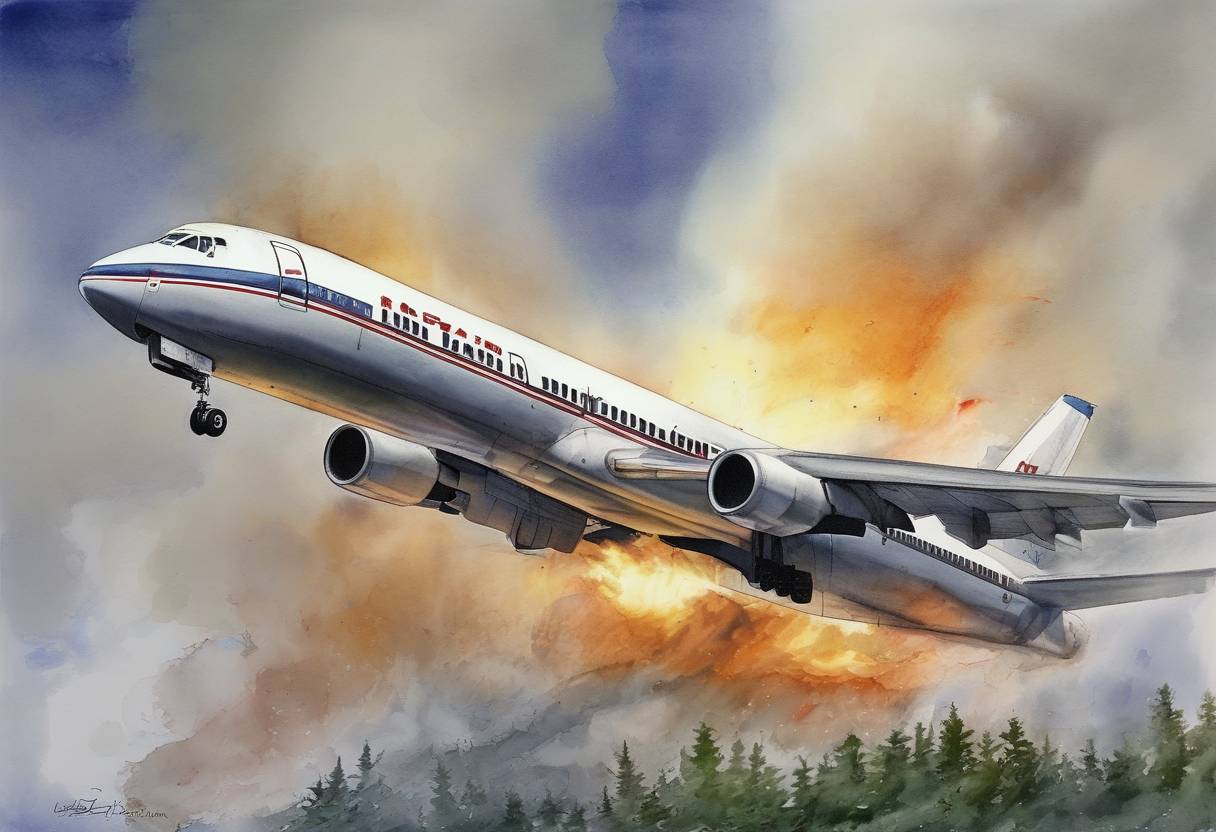
USAir Flight 427 Crash - September 8, 1994
On September 8, 1994, USAir Flight 427, a scheduled domestic passenger flight from Chicago O’Hare International Airport to West Palm Beach, Florida, with a stopover in Pittsburgh, Pennsylvania, tragically crashed on approach to Pittsburgh International Airport. The crash resulted in the deaths of all 132 people on board, including 127 passengers and 5 crew members.
Background
- Aircraft: The flight was operated using a Boeing 737-3B7, a popular model in commercial aviation known for its reliability.
- Crew: The flight crew consisted of experienced pilots, with Captain Peter Germano and First Officer Charles B. Emmett III at the controls.
The Crash
- Time and Location: The crash occurred at approximately 7:03 PM EDT, as the aircraft was descending towards Pittsburgh International Airport.
- Circumstances: During the final approach, the aircraft suddenly went out of control, rolling to the left and entering a steep dive. Despite the crew’s efforts to regain control, the plane crashed into a wooded area near Hopewell Township, Pennsylvania.
Investigation
- NTSB Involvement: The National Transportation Safety Board (NTSB) launched an extensive investigation into the crash, which became one of the longest and most complex in the agency’s history.
- Rudder Malfunction: The investigation revealed that a malfunction in the aircraft’s rudder system caused an uncommanded deflection, leading to the loss of control. This was linked to a design flaw in the rudder power control unit (PCU).
- Boeing 737 Rudder Issues: The crash of Flight 427, along with other similar incidents, prompted a broader examination of the Boeing 737’s rudder system, leading to significant design changes and increased scrutiny of the aircraft’s safety features.
Aftermath and Impact
- Safety Improvements: The findings from the investigation led to major changes in pilot training, aircraft design, and maintenance procedures, particularly concerning the rudder systems of Boeing 737 aircraft.
- Regulatory Changes: The crash underscored the importance of rigorous safety standards and prompted the Federal Aviation Administration (FAA) to implement stricter regulations and oversight.
- Legacy: The tragedy of USAir Flight 427 remains a pivotal moment in aviation safety history, highlighting the critical need for continuous improvement in aircraft design and operational protocols to prevent similar accidents in the future.
The crash of USAir Flight 427 serves as a somber reminder of the complexities and challenges in ensuring aviation safety, and it has had a lasting impact on the industry, contributing to advancements that continue to protect passengers and crew today.