The Execution of the Knights Templar on May 11, 1310
1310 · Paris, France
54 members of the Knights Templar are burned at the stake in France as heretics.
October 13, 1307
King Philip IV of France ordered the arrest of the Knights Templar, leading to the eventual dissolution of the order.
Paris, France | Knights Templar
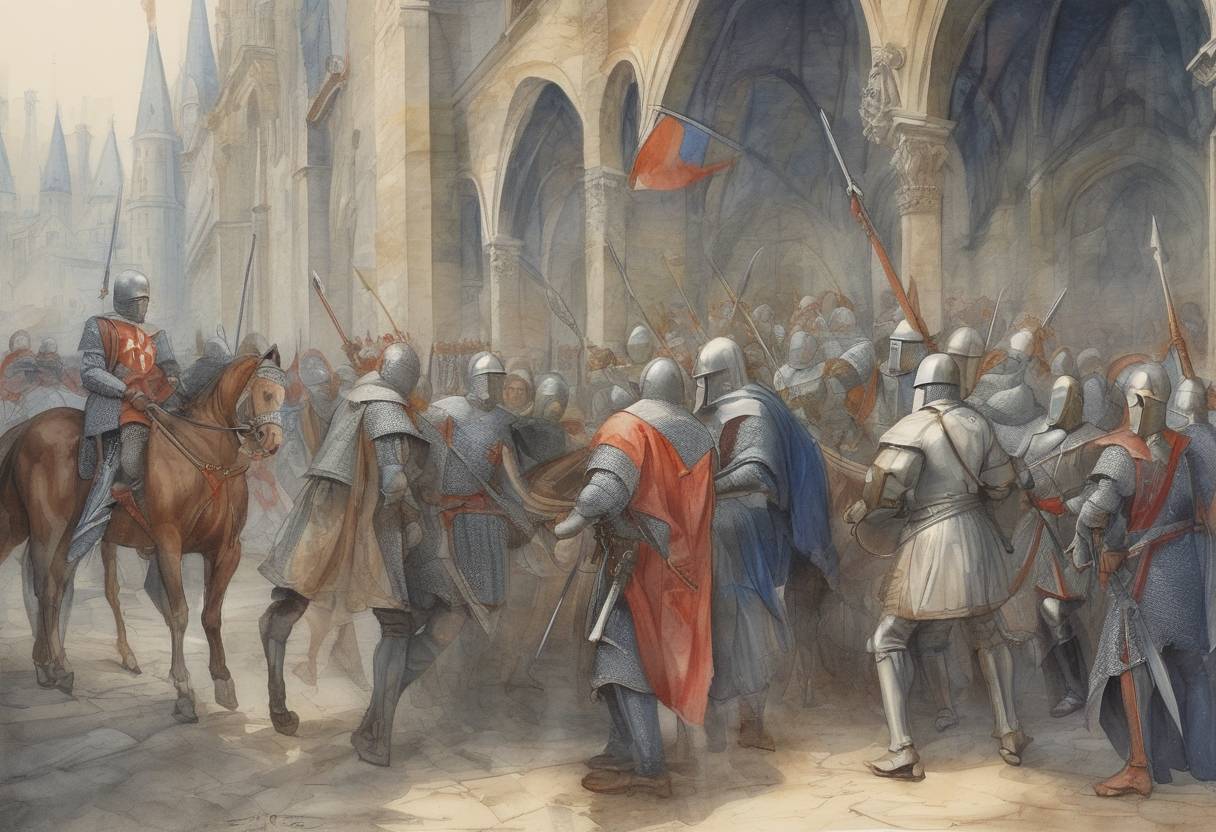
On October 13, 1307, a dramatic and pivotal event unfolded in medieval Europe when King Philip IV of France ordered the arrest of the Knights Templar. This marked the beginning of the end for the once-powerful and influential military order.
The Knights Templar was a Catholic military order founded around 1119, during the time of the Crusades. Initially established to protect Christian pilgrims traveling to the Holy Land, the Templars quickly grew in power and wealth. They became known not only for their military prowess but also for their financial acumen, establishing an early form of banking that allowed them to amass significant wealth and property across Europe.
By the early 14th century, the Templars had become a formidable force, which began to attract the envy and suspicion of secular and religious authorities. King Philip IV of France, known as “Philip the Fair,” was particularly indebted to the Templars due to his costly military campaigns and extravagant lifestyle. Facing financial difficulties, Philip saw an opportunity to eliminate his debts and consolidate power by targeting the Templars.
Philip’s relationship with the papacy was also strained, as he sought to exert influence over the Church. The Templars, with their allegiance to the Pope, represented a challenge to his authority. In 1305, Philip managed to have his ally, Clement V, elected as Pope, which set the stage for his actions against the Templars.
On the morning of Friday, October 13, 1307, Philip ordered the arrest of hundreds of Templars across France. The operation was meticulously planned and executed with secrecy, ensuring that the Templars were caught off guard. The charges against them were severe, including heresy, blasphemy, idolatry, and various other moral and financial crimes.
The Templars were subjected to brutal interrogations and torture, leading many to confess to the charges under duress. These confessions were later used to justify the dissolution of the order.
The arrest of the Templars in France set off a chain reaction across Europe. Pope Clement V, initially hesitant, eventually issued the papal bull Vox in excelso in 1312, formally dissolving the order. The Templars’ assets were largely transferred to the Knights Hospitaller, another military order, although much of their wealth was absorbed by the French crown.
The last Grand Master of the Templars, Jacques de Molay, was burned at the stake in 1314 after recanting his earlier confessions. His execution marked the symbolic end of the Knights Templar.
The fall of the Knights Templar had significant implications for medieval Europe. It highlighted the growing power struggles between monarchies and the Church, as well as the vulnerability of even the most powerful institutions to political machinations. The Templars’ dissolution also contributed to the mythos surrounding the order, fueling legends and conspiracy theories that persist to this day.
In summary, the events of October 13, 1307, were a turning point in medieval history, illustrating the complex interplay of power, wealth, and religion during the era.
Source: en.wikipedia.org