The Spitak Earthquake: December 7, 1988
1988 · Spitak, Armenia
A magnitude 6.8 earthquake strikes Spitak, Armenia, killing tens of thousands of people and leaving many more homeless.
December 27, 0893
An earthquake strikes the Dvin region in Armenia, causing significant destruction.
Dvin, Armenia | N/A
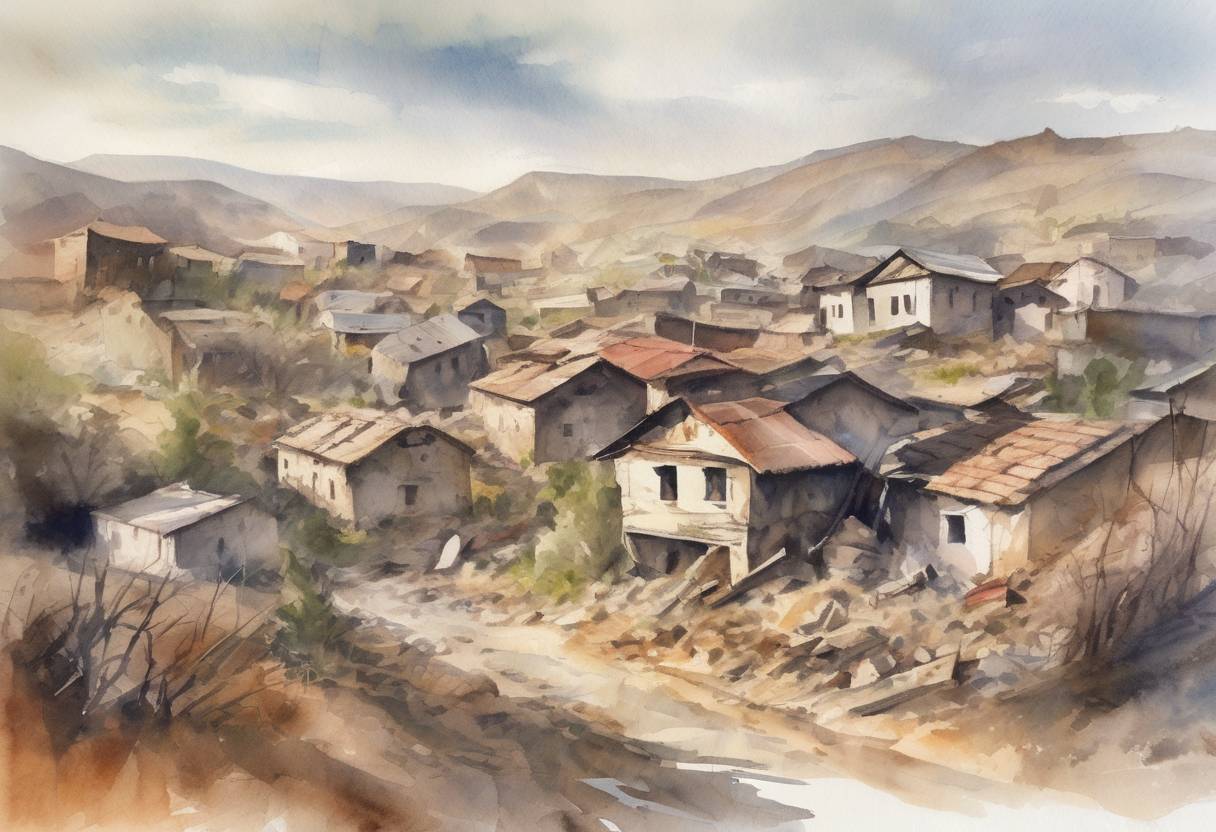
On December 27, 893, a catastrophic earthquake struck the region of Dvin in Armenia, a significant event in the history of the region due to its devastating impact. Dvin, at the time, was a major city and the capital of early medieval Armenia, serving as a crucial political, economic, and cultural center.
Dvin was founded in the 4th century by King Khosrov III of Armenia and quickly grew into a bustling metropolis. By the 9th century, it was a vital hub for trade and governance, boasting a diverse population and a rich cultural heritage. The city was strategically located on the Silk Road, which facilitated its prosperity and importance.
The earthquake that struck on December 27, 893, was one of the most severe natural disasters to hit the region during the medieval period. Although precise measurements of the earthquake’s magnitude are not available, historical accounts describe it as causing widespread destruction.
Structural Damage: The earthquake led to the collapse of numerous buildings, including homes, markets, and possibly parts of the city’s fortifications. The destruction of infrastructure severely disrupted daily life and the city’s economy.
Casualties: While exact numbers are not recorded, it is believed that the earthquake resulted in a significant loss of life. The densely populated nature of Dvin would have contributed to the high casualty rate.
Cultural Loss: The earthquake likely caused the loss of invaluable cultural and historical artifacts, as Dvin was home to many churches, monasteries, and libraries.
The aftermath of the earthquake saw Dvin struggling to recover from the extensive damage. The city’s ability to function as a trade and administrative center was severely impaired, leading to economic decline. The disaster also contributed to the weakening of the region’s political stability, making it more vulnerable to external threats and invasions.
The earthquake of 893 is a poignant reminder of the vulnerability of ancient cities to natural disasters. It highlights the challenges faced by medieval societies in rebuilding and recovering from such events. The decline of Dvin following the earthquake marked a shift in the region’s power dynamics, influencing the historical trajectory of Armenia in the subsequent centuries.
In summary, the earthquake that struck Dvin on December 27, 893, was a pivotal event in Armenian history, underscoring the fragility of human settlements in the face of natural calamities and its long-term impact on the region’s socio-economic and political landscape.
Source: en.wikipedia.org