Occupy Wall Street Day of Action - November 17, 2011
2011 · New York City, United States
The Occupy Wall Street movement held a day of action in New York City, marking two months since the movement began.
October 17, 2011
The Occupy Wall Street movement, which began in New York City, spread to cities across the United States and around the world, with protests occurring in places like London, Rome, and Sydney.
New York City, United States | Occupy Wall Street
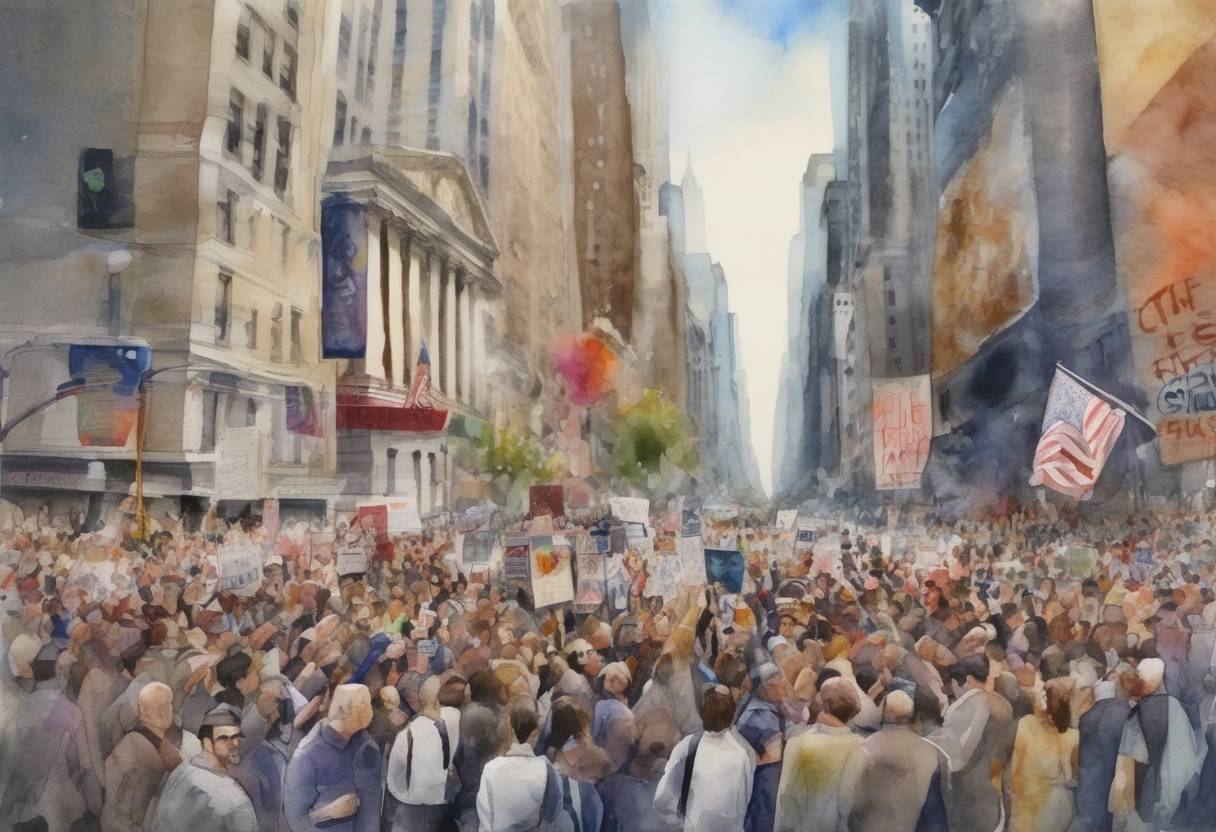
The Occupy Wall Street (OWS) movement, which began on September 17, 2011, in New York City’s Zuccotti Park, had by October 17, 2011, grown into a global phenomenon. This grassroots protest movement aimed to address economic inequality, corporate influence in politics, and the perceived greed of the financial sector. The slogan “We are the 99%” encapsulated the movement’s focus on income disparity and the concentration of wealth among the top 1% of earners.
Economic Backdrop: The movement emerged in the wake of the 2008 financial crisis, which had severe global economic repercussions. Many people were frustrated with the government’s bailout of large financial institutions while ordinary citizens faced unemployment, foreclosures, and austerity measures.
Inspiration: OWS was inspired by earlier protests, such as the Arab Spring and the anti-austerity movements in Europe. The initial call to action was made by the Canadian activist group Adbusters, which proposed a peaceful occupation of Wall Street.
Initial Occupation: On September 17, 2011, protesters gathered in Zuccotti Park, near Wall Street, to voice their discontent. The occupation quickly gained media attention and support from various activist groups.
Growth and Spread: By October 2011, the movement had spread to numerous cities across the United States, including Los Angeles, Chicago, and Boston. Internationally, similar protests were organized in cities such as London, Rome, and Sydney.
October 15 Global Day of Action: Just two days before October 17, a coordinated day of protests took place in over 950 cities across 82 countries, demonstrating the movement’s widespread appeal and the global resonance of its message.
On October 17, 2011, the Occupy Wall Street movement was at its peak in terms of global participation and media coverage. Protests were characterized by their non-hierarchical structure, with decisions made through general assemblies and consensus. The movement’s decentralized nature allowed it to adapt and spread rapidly.
Public Discourse: OWS succeeded in bringing issues of economic inequality and corporate influence into the public discourse, influencing political debates and policy discussions.
Legacy: While the physical occupations eventually dwindled, the movement left a lasting impact on activism and political engagement, inspiring future movements such as the Fight for $15 and influencing the rhetoric of political figures advocating for economic reform.
Criticism and Challenges: The movement faced criticism for its lack of clear leadership and specific policy goals, which some argued hindered its effectiveness in achieving tangible change.
In conclusion, by October 17, 2011, the Occupy Wall Street movement had become a symbol of global discontent with economic inequality and corporate power, leaving a legacy that continued to influence social and political movements worldwide.
Source: www.nytimes.com