Muhammad's Farewell Sermon - March 6, 632
632 · Mecca, Arabian Peninsula
Muhammad, the founder of Islam, delivered his Farewell Sermon during his final pilgrimage to Mecca, outlining key principles of the faith.
March 27, 0632
The Prophet Muhammad delivers his Farewell Sermon during his final pilgrimage to Mecca, which is considered a pivotal moment in Islamic history as it outlines key principles of the faith.
Mecca, Arabian Peninsula | Islamic community
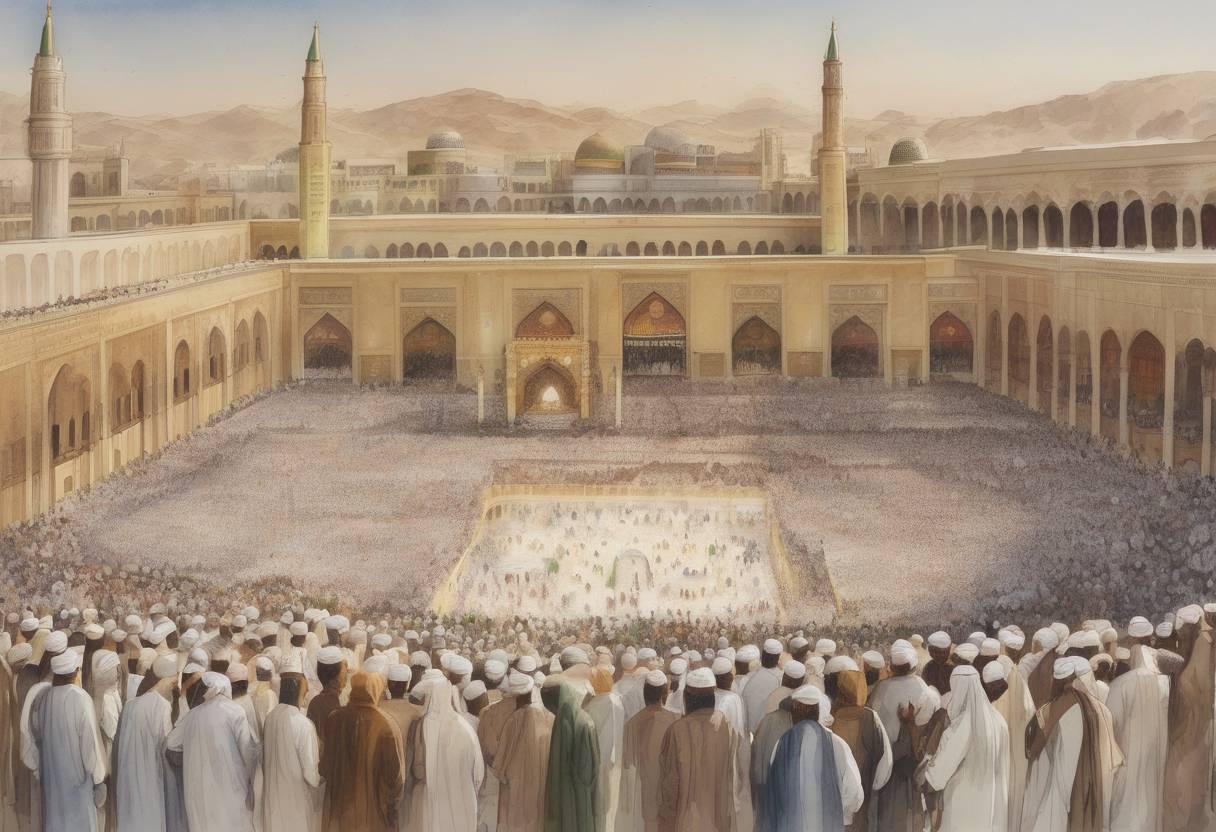
On March 27, 632 CE, during his final pilgrimage to Mecca, Prophet Muhammad delivered what is known as the Farewell Sermon. This event is a cornerstone in Islamic history, as it encapsulates key principles and ethical guidelines for Muslims. The sermon was delivered on the 9th day of Dhu al-Hijjah, the 10th year of the Islamic calendar, at Mount Arafat, a significant location in the Hajj pilgrimage.
Prophet Muhammad’s Farewell Pilgrimage, also known as the Hajj, was the only Hajj he performed after the Hijra (migration from Mecca to Medina). This pilgrimage was significant as it marked the culmination of his prophetic mission. The sermon was delivered to a large gathering of Muslims, estimated to be over 100,000, who had come to perform the pilgrimage rites.
The Farewell Sermon addressed several fundamental aspects of Islamic faith and practice:
Equality and Brotherhood: Muhammad emphasized the equality of all Muslims, regardless of race or ethnicity, stating, “All mankind is from Adam and Eve. An Arab has no superiority over a non-Arab, nor does a non-Arab have any superiority over an Arab; a white has no superiority over a black, nor does a black have any superiority over a white; none have superiority over another except by piety and good action.”
Sanctity of Life and Property: He declared the sanctity of life, property, and honor, urging Muslims to treat each other with respect and justice. “Your blood, your property, and your honor are as sacred as this day of yours, in this month of yours, in this city of yours.”
Rights and Obligations: The sermon reinforced the rights of women, urging men to treat their wives with kindness and respect. It also reminded Muslims of their obligations towards one another and the importance of fulfilling trusts and contracts.
Prohibition of Usury: Muhammad abolished all forms of usury, emphasizing the importance of fairness in financial dealings.
Adherence to the Quran and Sunnah: He urged Muslims to hold fast to the Quran and his teachings (Sunnah) as the guiding principles for their lives.
Finality of His Message: The sermon reiterated that Muhammad had completed his mission of delivering God’s message to humanity.
The Farewell Sermon is considered a pivotal moment in Islamic history as it laid down the ethical and moral framework for the Muslim community. It reinforced the unity and equality of all Muslims and established principles that continue to guide Islamic thought and practice.
Prophet Muhammad passed away a few months after delivering this sermon, on June 8, 632 CE. His words during the Farewell Sermon remain a testament to his leadership and the enduring values of Islam. The sermon is frequently cited in discussions on human rights, social justice, and interfaith relations, highlighting its timeless relevance.
Source: en.wikipedia.org