The Fourth Council of Constantinople Closes - February 8, 870
870 · Constantinople, Byzantine Empire
The Fourth Council of Constantinople closes, which was the eighth ecumenical council of the Christian Church.
February 21, 0870
The Fourth Council of Constantinople ended, which was the eighth ecumenical council of the Christian Church. It was convened by Emperor Basil I and Pope Adrian II and addressed the Photian schism.
Constantinople, Byzantine Empire | Christian Church
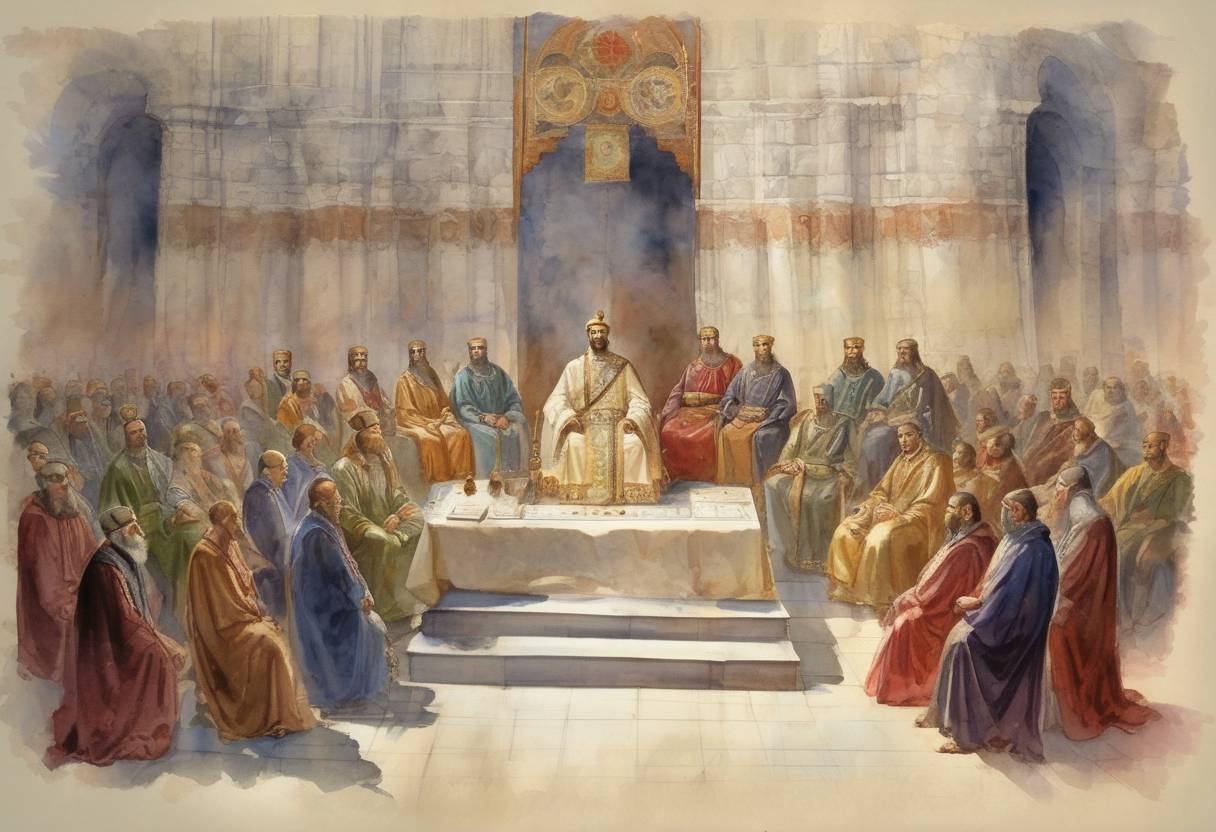
The Fourth Council of Constantinople, recognized as the eighth ecumenical council by the Roman Catholic Church, concluded on February 21, 870. This significant ecclesiastical assembly was convened by Emperor Basil I and Pope Adrian II to address the Photian Schism, a major theological and political conflict within the Christian Church.
The Photian Schism arose from a complex interplay of ecclesiastical and political tensions between the Eastern (Byzantine) and Western (Roman) branches of Christianity. The conflict centered around the controversial appointment of Photius as the Patriarch of Constantinople. Photius, a layman and a scholar, was rapidly elevated to the patriarchate in 858, replacing Ignatius, who had been deposed under contentious circumstances.
Pope Nicholas I opposed Photius’s appointment, leading to a deepening rift between the Eastern and Western Churches. The schism was exacerbated by differing theological views and jurisdictional disputes, particularly concerning the authority of the Pope over the Eastern Church.
The Fourth Council of Constantinople was convened to resolve these disputes and restore ecclesiastical unity. It was attended by representatives from both the Eastern and Western Churches, although the Eastern Orthodox Church later rejected its ecumenical status, recognizing instead a separate council held in 879-880 as the legitimate eighth ecumenical council.
Key issues addressed at the council included:
The council’s decisions temporarily resolved the Photian Schism, with Photius eventually being restored to the patriarchate after Ignatius’s death in 877. However, the underlying tensions between the Eastern and Western Churches persisted, contributing to the eventual Great Schism of 1054.
The Fourth Council of Constantinople is significant for its attempt to address the complex interplay of theological, political, and cultural factors that divided the Christian Church. It highlights the challenges of maintaining ecclesiastical unity in the face of divergent traditions and interpretations of authority.
While the council is recognized as ecumenical by the Roman Catholic Church, its status remains a point of contention within the broader Christian tradition, reflecting the enduring complexities of church history.
Source: en.wikipedia.org