Founding of B'nai B'rith - October 13, 1843
1843 · New York City, United States
The B'nai B'rith, the oldest Jewish service organization in the world, was founded in New York City.
June 11, 1825
The first cornerstone is laid for Fort Hamilton in New York City.
New York City, United States | United States Army
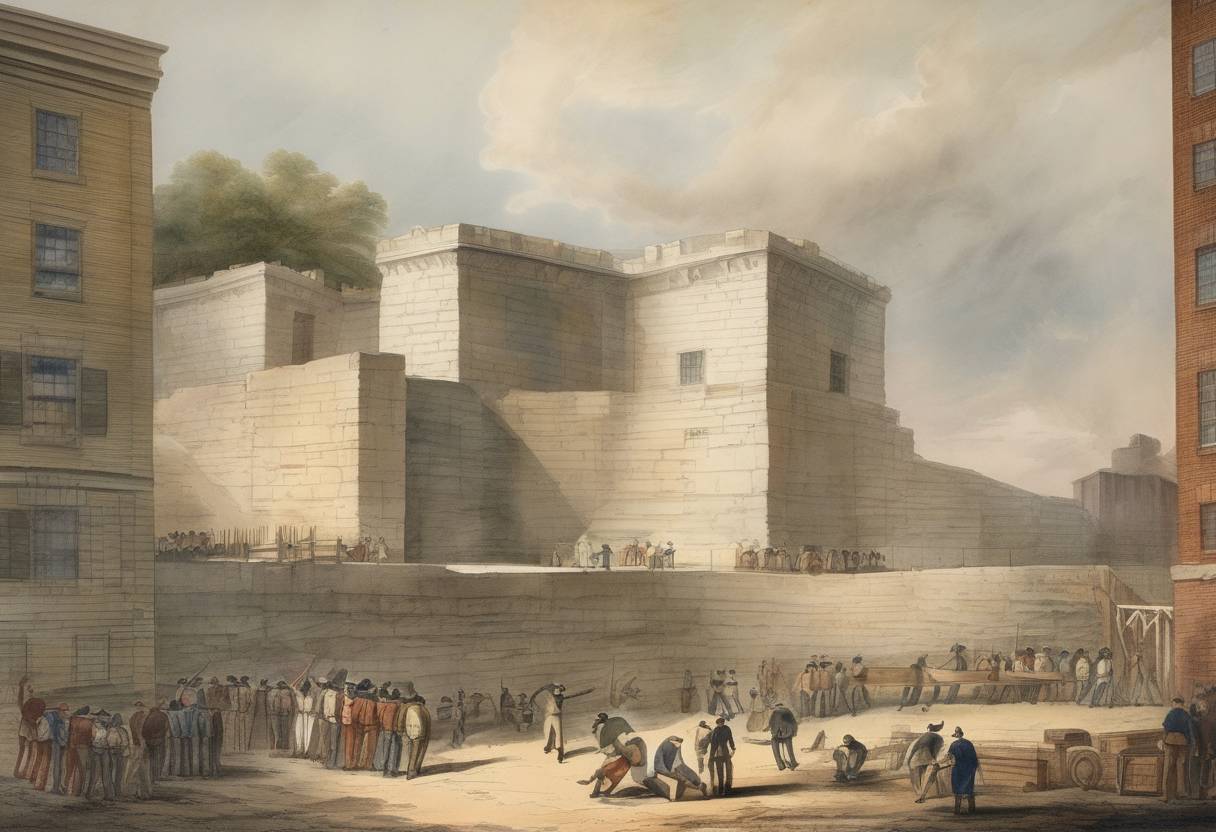
On June 11, 1825, the first cornerstone for Fort Hamilton was laid in New York City, marking the beginning of construction for what would become a significant military installation. Located at the southern tip of Brooklyn, Fort Hamilton was part of a broader effort to bolster the coastal defenses of the United States following the War of 1812. This event is a notable moment in the history of American military infrastructure.
Post-War of 1812 Defense Strategy: The War of 1812 exposed vulnerabilities in America’s coastal defenses, prompting the federal government to initiate a series of fortifications along the eastern seaboard. Fort Hamilton was part of this “Third System” of fortifications, designed to protect key ports and cities from foreign invasion.
Strategic Location: Situated at the Narrows, the entrance to New York Harbor, Fort Hamilton was strategically important. It was intended to work in conjunction with other forts, such as Fort Wadsworth on Staten Island, to control access to one of the nation’s busiest ports.
Architectural Plans: The fort was designed by military engineer Simon Bernard, a former aide to Napoleon Bonaparte. Bernard’s designs were influenced by European fortification styles, emphasizing strong, durable structures capable of withstanding artillery attacks.
Building Materials and Labor: Construction utilized local materials, including granite and brick, and employed both skilled laborers and military personnel. The process of building the fort was labor-intensive and required significant resources.
Military Role: Fort Hamilton played a crucial role in the defense of New York City throughout the 19th and early 20th centuries. It was active during the Civil War, World War I, and World War II, adapting to changing military technologies and strategies.
Modern Use: Today, Fort Hamilton remains an active military installation, serving as the headquarters for the U.S. Army’s North Atlantic Division of the Corps of Engineers. It also houses the New York City Recruiting Battalion and other military units.
Cultural Impact: The fort is a reminder of the historical importance of coastal defenses in American military strategy. It also serves as a historical site, with parts of the fort open to the public for educational purposes.
The laying of the first cornerstone for Fort Hamilton on June 11, 1825, was a foundational moment in the development of New York City’s defenses and reflects broader themes in American military history, including the adaptation to new threats and the importance of strategic infrastructure.