The Salvation Army Railway and General Booth's Patent on January 26, 1885
1885 · London, United Kingdom
The first railway designs for the 3-foot gauge steam train known as the Salvation Army Railway are patented by General Booth.
July 5, 1865
The Salvation Army was founded in London by William and Catherine Booth.
London, England | The Salvation Army
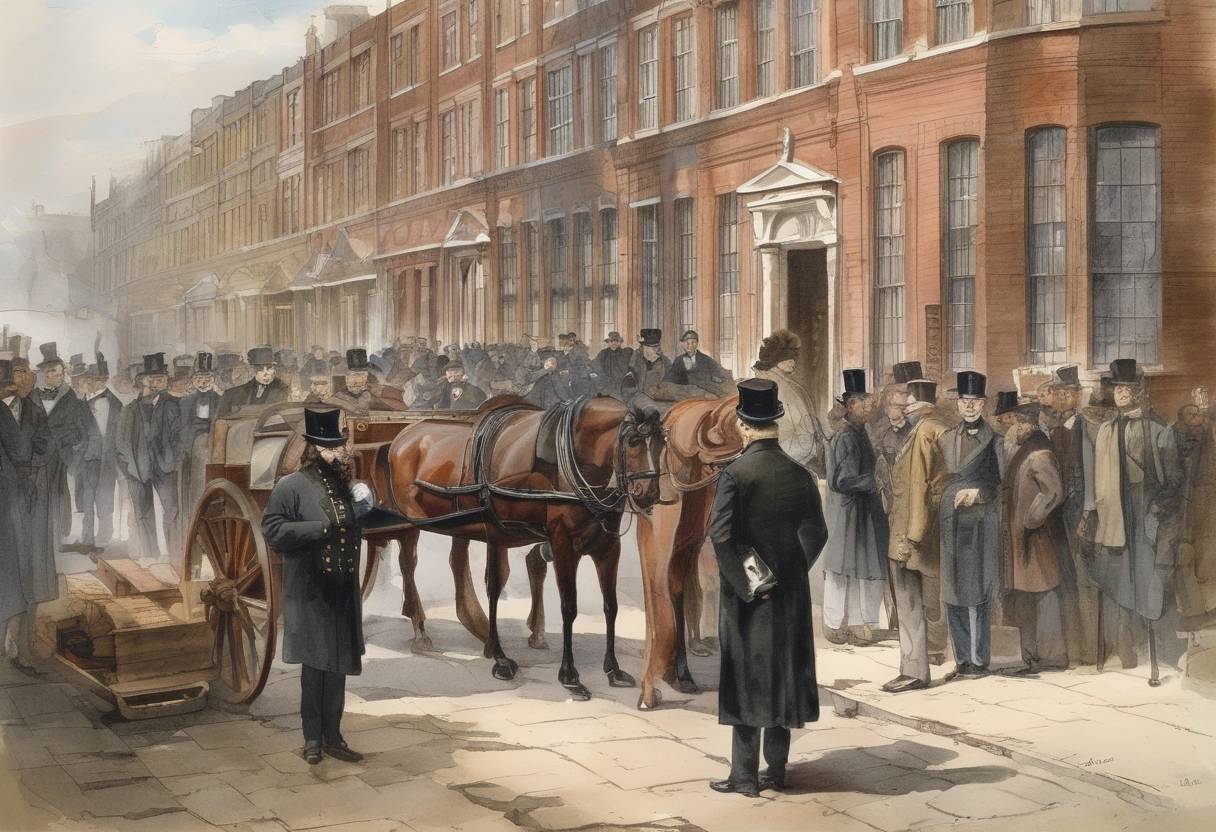
On July 5, 1865, The Salvation Army was founded in London by William and Catherine Booth. This organization emerged during a period of significant social and economic change in Victorian England, characterized by rapid industrialization and urbanization, which often led to widespread poverty and social inequality.
William Booth, originally a Methodist minister, was deeply moved by the plight of the poor and marginalized in London’s East End. He believed that traditional church services were not effectively reaching the urban poor, who were often alienated from mainstream religious institutions. Alongside his wife, Catherine Booth, who was a powerful speaker and advocate for women’s rights, they sought to create a movement that would address both the spiritual and physical needs of the impoverished.
Initially named the “Christian Mission,” the organization aimed to bring the message of Christianity to the streets, offering practical aid alongside spiritual guidance. The Booths adopted a military structure for their organization, which was reflected in the name change to “The Salvation Army” in 1878. This structure was intended to convey discipline, organization, and a sense of mission.
The Salvation Army has had a lasting impact on social welfare and religious outreach. Its innovative approach to combining evangelism with social service has influenced numerous other organizations. Today, it operates in over 130 countries, continuing its mission to provide aid and support to those in need, regardless of race, religion, or nationality.
The founding of The Salvation Army marked a significant moment in the history of social reform and religious outreach, demonstrating the power of faith-based initiatives in addressing societal issues.
Source: en.wikipedia.org