State of Emergency in Pakistan - November 3, 2007
2007 · Islamabad, Pakistan
Pervez Musharraf, the President of Pakistan, declared a state of emergency, suspending the constitution and dismissing the Chief Justice of the Supreme Court.
December 1, 1988
Benazir Bhutto was sworn in as Prime Minister of Pakistan, becoming the first woman to head the government of a Muslim-majority country.
Islamabad, Pakistan | Government of Pakistan
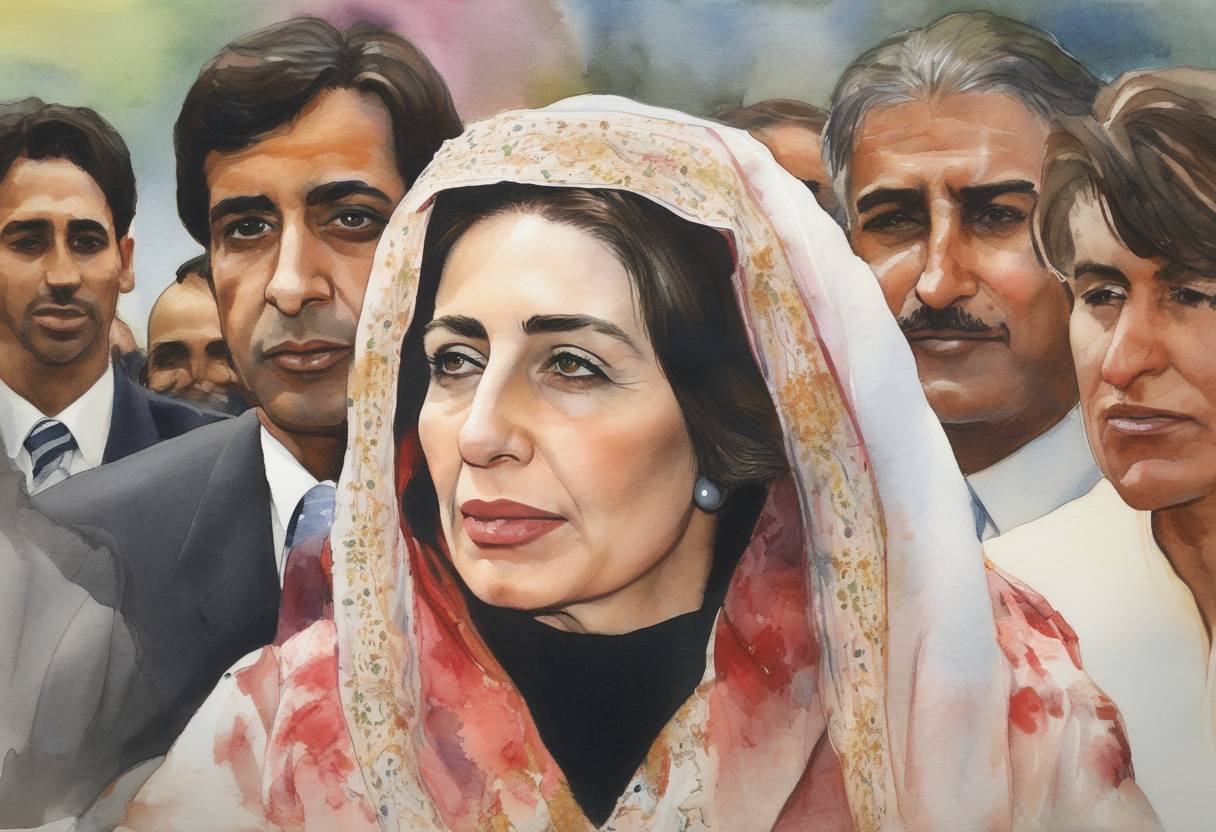
On December 1, 1988, Benazir Bhutto was sworn in as the Prime Minister of Pakistan, marking a historic moment as she became the first woman to head the government of a Muslim-majority country. This event was not only significant for Pakistan but also for the broader Muslim world, symbolizing a breakthrough in gender barriers in political leadership.
Benazir Bhutto was born on June 21, 1953, into a prominent political family. Her father, Zulfikar Ali Bhutto, was a former Prime Minister and President of Pakistan. Benazir was educated at Harvard University and the University of Oxford, where she developed her political acumen and leadership skills.
Her political journey was shaped by the tumultuous political landscape of Pakistan. After her father’s government was overthrown in a military coup led by General Muhammad Zia-ul-Haq in 1977, Zulfikar Ali Bhutto was executed in 1979. Benazir Bhutto then assumed leadership of the Pakistan People’s Party (PPP), her father’s political party, and became a symbol of resistance against military rule.
The political climate in Pakistan began to shift following the death of General Zia in a plane crash on August 17, 1988. This event paved the way for democratic elections, which were held on November 16, 1988. The PPP emerged victorious, securing the largest number of seats in the National Assembly, though not an outright majority.
On December 1, 1988, Benazir Bhutto was sworn in as Prime Minister. Her ascension to power was a momentous occasion, celebrated by many as a victory for democracy and women’s empowerment. However, her tenure was fraught with challenges, including political opposition, economic difficulties, and the complex dynamics of Pakistan’s civil-military relations.
Benazir Bhutto’s leadership was significant for several reasons:
Gender Barrier Breakthrough: Her election as Prime Minister challenged traditional gender roles in a predominantly Muslim society, inspiring women across the globe.
Democratic Transition: Her rise to power marked a critical step in Pakistan’s transition from military rule to democracy, although the path remained fraught with challenges.
Political Influence: Bhutto’s policies and leadership style left a lasting impact on Pakistan’s political landscape, influencing subsequent political developments.
Despite being dismissed from office in 1990 and again in 1996, Bhutto remained a central figure in Pakistani politics until her assassination in 2007. Her legacy continues to influence political discourse in Pakistan and beyond, symbolizing the ongoing struggle for democracy and gender equality in the region.
Source: en.wikipedia.org