Pope Stephen I Begins His Papacy - May 12, 254
254 · Rome, Roman Empire
Pope Stephen I begins his papacy.
October 14, 0222
Pope Callixtus I is martyred, marking a significant event in early Christian history. He was known for his efforts to reconcile with heretical sects and for his role in the development of the early Church's penitential system.
Rome, Roman Empire | Catholic Church
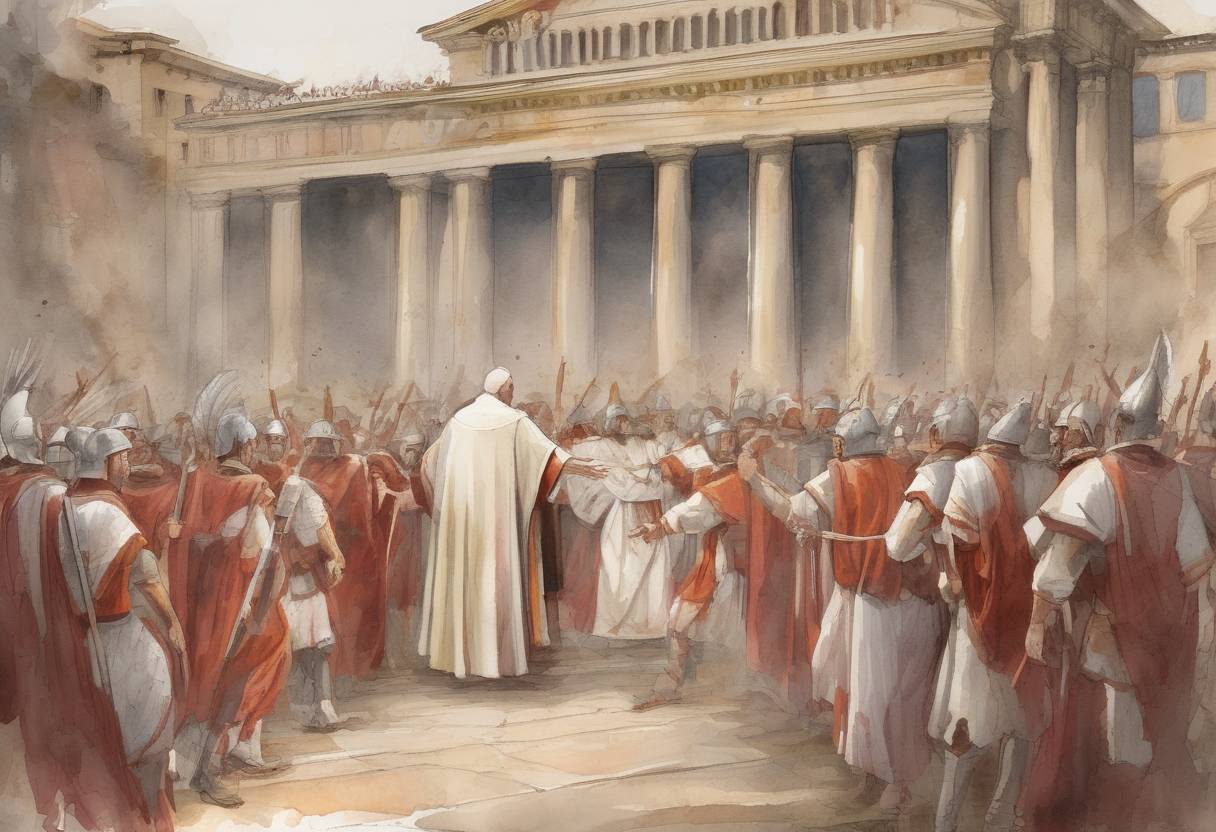
Pope Callixtus I, a significant figure in early Christian history, is traditionally believed to have been martyred on October 14, 222. His papacy, which lasted from approximately 217 to 222, was marked by efforts to address theological disputes and to establish a more inclusive and forgiving Church.
Callixtus I was born into slavery, a fact that underscores the transformative power of early Christianity, which often elevated individuals from humble beginnings to positions of great influence. He was eventually freed and became a deacon under Pope Zephyrinus, whom he succeeded as Bishop of Rome.
One of Callixtus’s most notable contributions was his attempt to reconcile with various heretical sects. During his time, the Church faced numerous theological challenges, including debates over the nature of the Trinity and the role of the Holy Spirit. Callixtus advocated for a more inclusive approach, seeking to bring divergent groups back into the fold of the Church. This approach, however, was not without controversy and led to significant opposition from more rigid factions within the Church.
Callixtus is also credited with developing the early Church’s penitential system. He introduced more lenient policies regarding the forgiveness of sins, particularly for grave sins such as adultery and apostasy. This was a departure from the stricter practices of the time, which often excluded individuals from the Church community for such transgressions. Callixtus’s policies laid the groundwork for the Church’s evolving understanding of penance and reconciliation.
The circumstances of Callixtus’s martyrdom are not well-documented, but it is traditionally believed that he was killed during a period of anti-Christian persecution. His death marked him as a martyr, and he was venerated as a saint in the early Church.
Callixtus’s legacy is significant in the context of early Christianity. His efforts to create a more forgiving and inclusive Church helped shape the development of Christian doctrine and practice. His work in establishing a penitential system influenced the Church’s approach to sin and forgiveness, which remains a central aspect of Christian theology today.
Pope Callixtus I’s martyrdom on October 14, 222, is a poignant reminder of the challenges faced by early Christians and the enduring impact of their efforts to build a unified and compassionate Church. His leadership during a formative period in Church history highlights the complexities of theological development and the importance of reconciliation and forgiveness in the Christian tradition.
Source: en.wikipedia.org