Dedication of Grant's Tomb: April 27, 1897
1897 · New York City, United States
Grant's Tomb was dedicated in New York City, commemorating Ulysses S. Grant, the 18th President of the United States and Union general in the Civil War.
July 23, 1885
Ulysses S. Grant, the 18th President of the United States, dies.
Wilton, United States | N/A
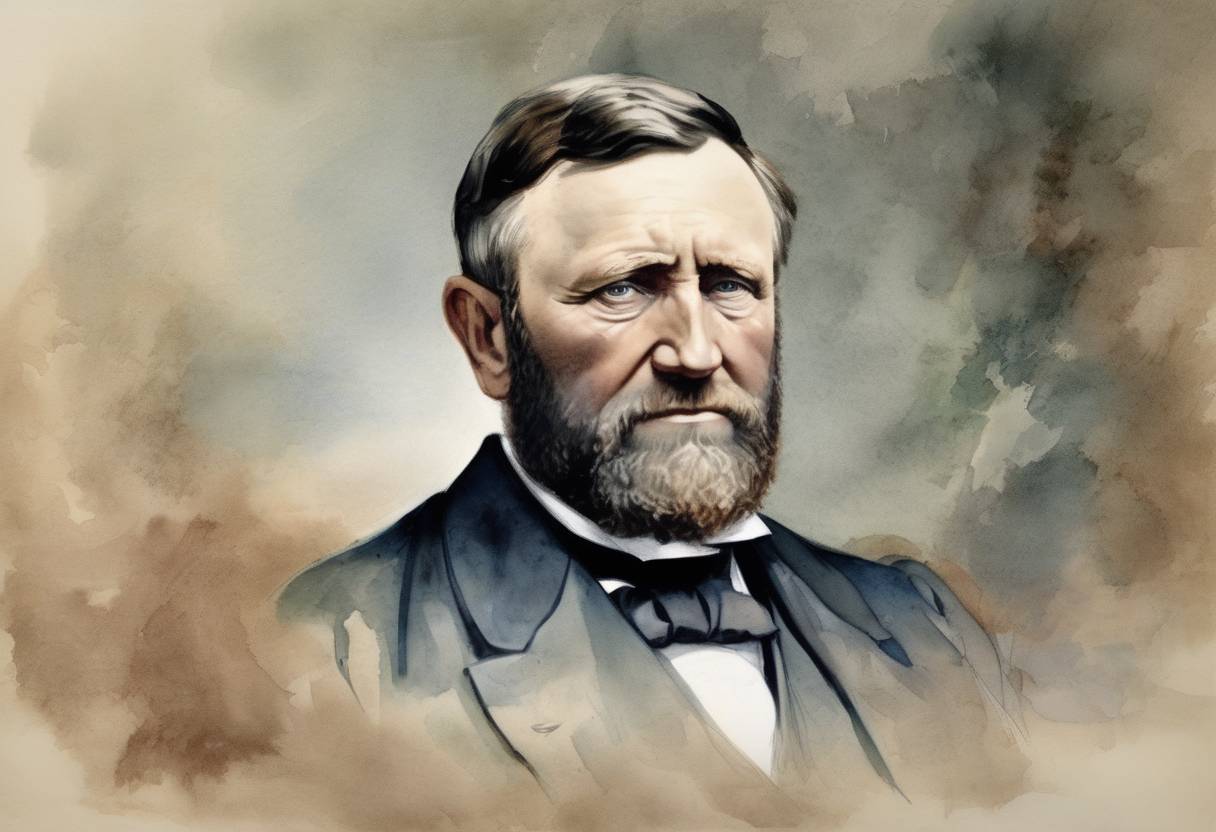
On July 23, 1885, Ulysses S. Grant, the 18th President of the United States and a prominent Union general during the American Civil War, passed away at the age of 63. His death marked the end of a significant chapter in American history, as Grant was a key figure in both the military and political arenas during a transformative period for the nation.
Ulysses S. Grant was born on April 27, 1822, in Point Pleasant, Ohio. He rose to national prominence during the Civil War, where his leadership and strategic acumen were instrumental in securing Union victories. Grant’s success at battles such as Vicksburg and his eventual appointment as General-in-Chief of the Union Army solidified his reputation as a military leader.
Following the war, Grant was elected as the 18th President of the United States, serving two terms from 1869 to 1877. His presidency was marked by efforts to stabilize the post-war nation, enforce civil rights for freed slaves, and combat the Ku Klux Klan. However, his administration also faced criticism for corruption scandals and economic challenges.
After leaving the presidency, Grant embarked on a world tour, receiving accolades from foreign leaders and dignitaries. However, his post-presidential years were marred by financial difficulties, largely due to a failed investment partnership that left him nearly bankrupt.
In 1884, Grant was diagnosed with throat cancer, a condition that would ultimately lead to his death. Despite his illness, he worked diligently to complete his memoirs, “Personal Memoirs of Ulysses S. Grant,” which were published posthumously and are regarded as a significant contribution to American literature and historical scholarship.
Grant died at his summer home in Mount McGregor, New York. His passing was met with national mourning, and his funeral in New York City was one of the largest public gatherings in the United States at that time. He was laid to rest in Riverside Park, Manhattan, where his tomb, known as Grant’s Tomb, remains a prominent historical site.
Ulysses S. Grant’s legacy is multifaceted. As a military leader, he is celebrated for his decisive actions that helped preserve the Union. As a president, his efforts to promote civil rights and rebuild the nation during Reconstruction are acknowledged, despite the controversies that plagued his administration.
Grant’s memoirs have been praised for their clarity and insight, offering a personal perspective on the Civil War and his presidency. His life and career continue to be the subject of scholarly study, reflecting his enduring impact on American history.
Source: en.wikipedia.org