NASA Launches the Mars Science Laboratory Mission
2011 · Cape Canaveral, United States
NASA launches the Mars Science Laboratory mission, with its rover Curiosity, from Cape Canaveral, Florida, to explore the Gale Crater on Mars.
June 10, 2003
The Spirit Rover, part of NASA's Mars Exploration Rover Mission, was launched from Cape Canaveral, Florida, on its way to Mars.
Cape Canaveral, United States | NASA
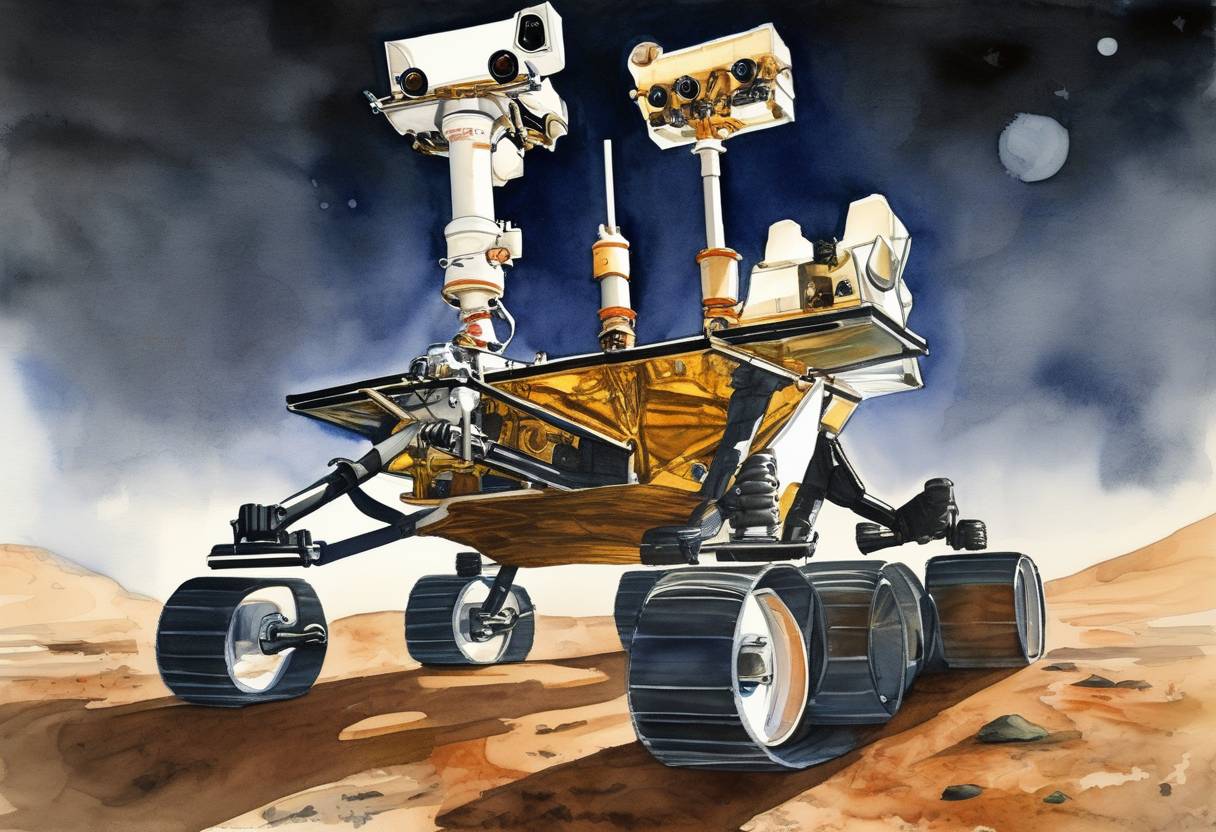
On June 10, 2003, NASA successfully launched the Spirit Rover, part of the Mars Exploration Rover Mission, from Cape Canaveral, Florida. This mission marked a significant milestone in the exploration of Mars, aiming to gather extensive data about the Martian surface and its geological history.
The Mars Exploration Rover Mission was designed to investigate the Martian terrain and search for signs of past water activity, which could provide clues about the planet’s potential to support life. Spirit, along with its twin rover Opportunity, was tasked with analyzing the composition of rocks and soil, capturing high-resolution images, and conducting various scientific experiments.
The launch was a critical step in the mission, setting Spirit on a trajectory to reach Mars. The Delta II rocket, known for its reliability, successfully propelled the rover into space, beginning its journey to the Red Planet.
Spirit traveled through space for nearly seven months before reaching Mars. It entered the Martian atmosphere and landed on January 4, 2004, in the Gusev Crater, a location believed to have once held a lake.
During its mission, Spirit made several significant discoveries:
Spirit’s mission contributed immensely to our understanding of Mars, offering insights into its past environment and laying the groundwork for subsequent missions. The data collected by Spirit continues to inform scientists and inspire ongoing exploration of Mars.
The Spirit Rover’s launch and subsequent achievements underscore the importance of robotic exploration in expanding our knowledge of the solar system and the potential for life beyond Earth.
Source: mars.nasa.gov