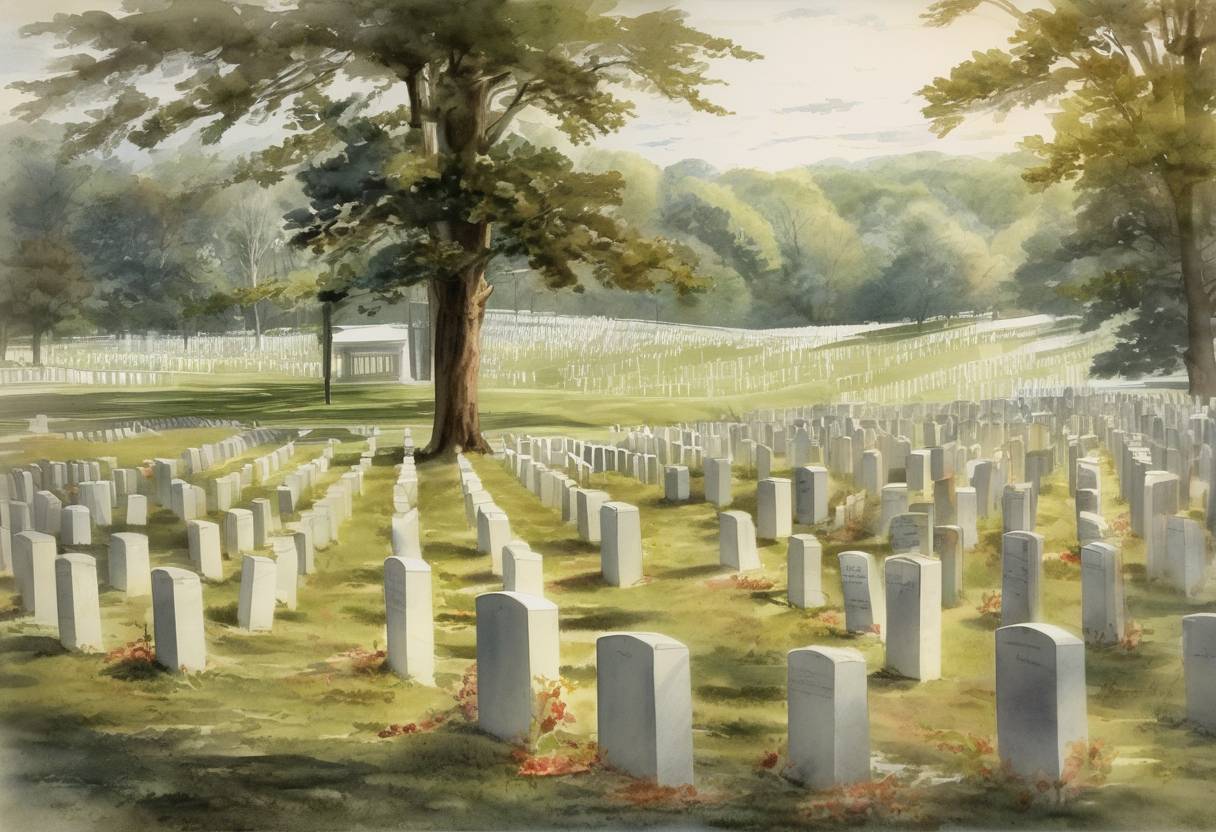
Establishment of Arlington National Cemetery
On June 15, 1864, Arlington National Cemetery was officially established when 200 acres of the grounds of Arlington House were designated as a military cemetery. This decision marked a significant moment in American history, particularly during the Civil War era.
Historical Context
Arlington House: Originally the estate of George Washington Parke Custis, the grandson of Martha Washington, Arlington House was built as a tribute to George Washington. Custis’s daughter, Mary Anna, married Robert E. Lee, the Confederate general, making the estate the Lee family home.
Civil War Impact: As the Civil War progressed, the Union sought additional burial grounds for its fallen soldiers. The proximity of Arlington House to Washington, D.C., made it a strategic choice.
Key Events Leading to the Establishment
Confiscation: During the Civil War, the Union seized Arlington House due to unpaid property taxes. The U.S. government purchased the estate at a public auction in 1864.
Burial Grounds: Quartermaster General Montgomery C. Meigs, a staunch Union supporter, played a crucial role in selecting Arlington as a cemetery. He aimed to ensure that the estate could never again serve as a residence for the Lee family.
Significance and Aftermath
Symbolism: The establishment of Arlington National Cemetery served as a powerful symbol of reconciliation and remembrance. It underscored the Union’s resolve and the sacrifices made during the Civil War.
Expansion: Over time, Arlington National Cemetery expanded beyond its initial 200 acres. It became the final resting place for soldiers from subsequent American conflicts, as well as notable figures in U.S. history.
Legacy: Today, Arlington National Cemetery is a revered national shrine, honoring the service and sacrifice of America’s military personnel. It hosts numerous memorials and ceremonies, including the Tomb of the Unknown Soldier.
The creation of Arlington National Cemetery on June 15, 1864, reflects a pivotal moment in American history, intertwining themes of conflict, memory, and national identity.