Coronation of Henry VI of England
1429 · London, England
Henry VI of England was crowned King of England at Westminster Abbey.
May 27, 1199
John is crowned King of England at Westminster Abbey, succeeding his brother Richard I.
London, England | English Monarchy
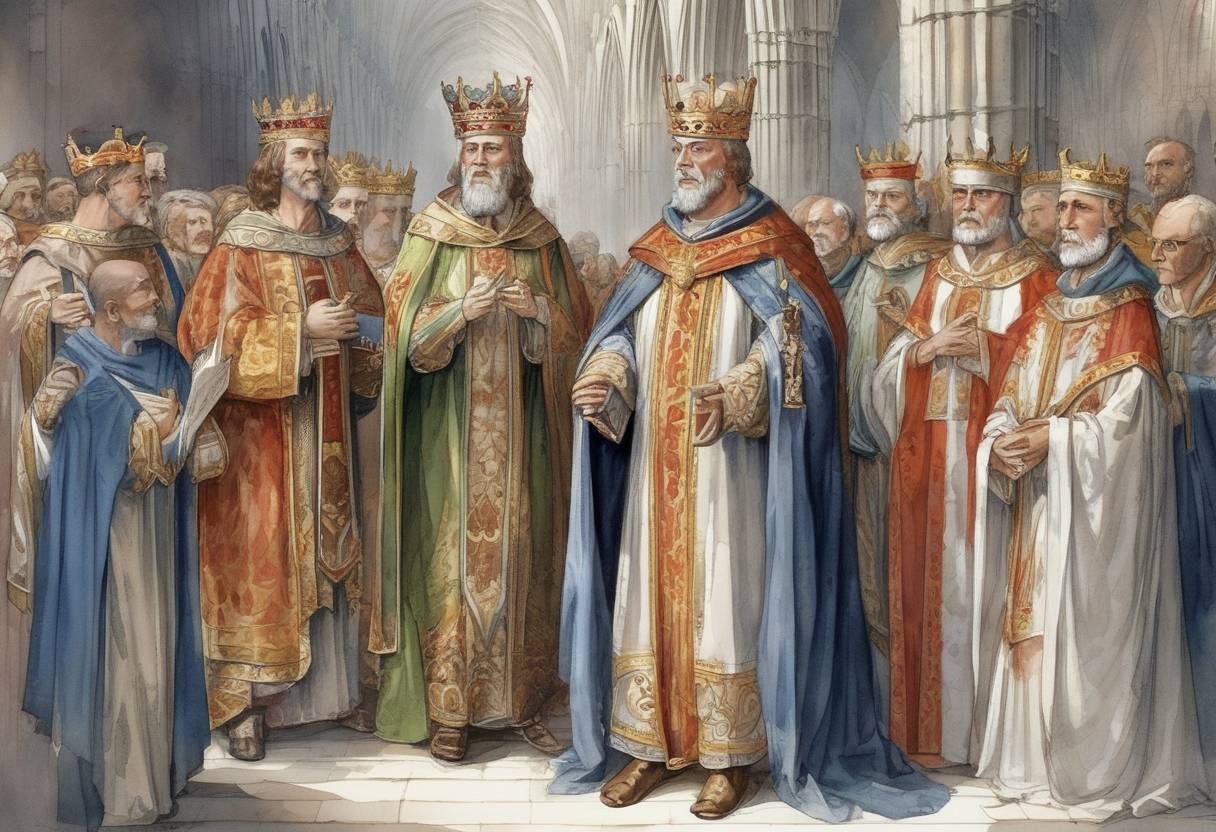
On May 27, 1199, John, the youngest son of King Henry II and Eleanor of Aquitaine, was crowned King of England at Westminster Abbey. This event marked the beginning of his reign, succeeding his brother, Richard I, also known as Richard the Lionheart.
Richard I’s Reign and Death: Richard I, known for his role in the Third Crusade, reigned from 1189 until his death in 1199. His reign was characterized by his military exploits and absence from England, as he spent much of his time abroad.
Succession: Richard I died on April 6, 1199, from an injury sustained during a siege in France. With no legitimate heirs, the succession passed to his brother John, despite some opposition from supporters of Arthur of Brittany, the son of their deceased brother Geoffrey.
Location: The coronation took place at Westminster Abbey, a traditional site for English coronations, symbolizing the continuity and legitimacy of the monarchy.
Ceremony: The coronation ceremony was a significant event, involving the anointing and crowning of John, which was meant to confer divine approval and authority upon his rule.
Initial Challenges: John’s accession was not without controversy. His claim was contested by Arthur of Brittany, leading to a period of instability and conflict, particularly in the Angevin territories in France.
Reign Overview: John’s reign (1199-1216) was marked by significant challenges, including:
Loss of French Territories: John faced military defeats that resulted in the loss of Normandy and other territories in France, weakening the Angevin Empire.
Conflict with the Nobility: His heavy taxation and arbitrary rule led to discontent among the English nobility, culminating in the signing of the Magna Carta in 1215, which sought to limit royal power and establish certain legal protections.
Relations with the Church: John had a contentious relationship with the Church, leading to his excommunication by Pope Innocent III, although this was later resolved.
Magna Carta: Perhaps the most enduring legacy of John’s reign is the Magna Carta, which laid the groundwork for constitutional governance and the development of common law.
Legacy: John’s reign is often viewed negatively due to his failures in France and his strained relations with his barons. However, his reign was pivotal in shaping the future of the English monarchy and its relationship with its subjects.
John’s coronation on May 27, 1199, set the stage for a tumultuous reign that would have lasting impacts on English governance and law.
Source: en.wikipedia.org