686 · Khaybar, Arabian Peninsula
The Battle of Khaybar took place, where Muslim forces led by the Prophet Muhammad captured the Jewish oasis of Khaybar in the Arabian Peninsula.
March 31, 0627
The Battle of the Trench (also known as the Battle of Khandaq) concluded. This was a pivotal moment during the early Islamic period where the Muslim community in Medina, led by the Prophet Muhammad, successfully defended the city against a coalition of Meccan tribes.
Medina, present-day Saudi Arabia | Muslim community of Medina
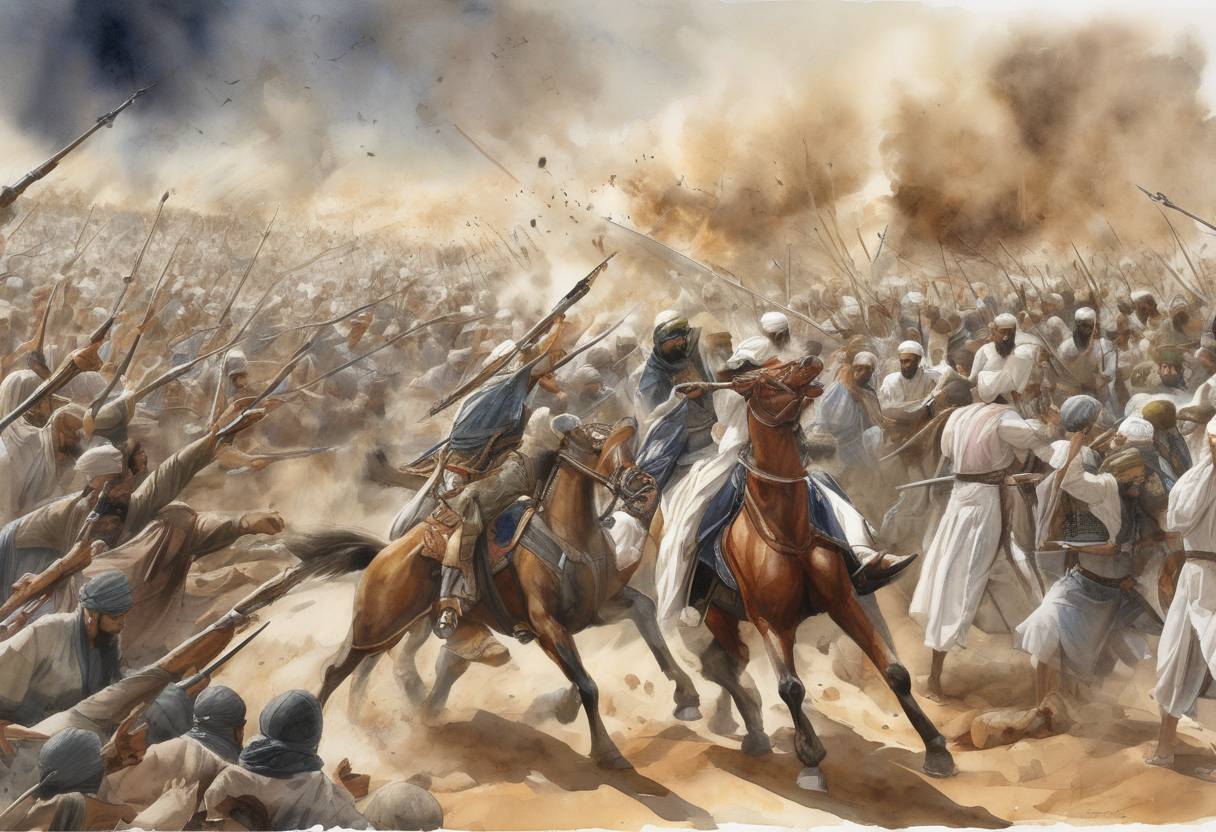
The Battle of the Trench, also known as the Battle of Khandaq, was a significant event in early Islamic history, marking a decisive moment for the Muslim community in Medina. This confrontation took place in the year 627 CE, corresponding to the 5th year of the Hijra in the Islamic calendar.
The battle was instigated by the Quraysh tribe of Mecca, who sought to eliminate the growing influence of the Prophet Muhammad and his followers in Medina. The Quraysh, along with several allied tribes, formed a formidable coalition to besiege the city. This coalition included the Banu Nadir, a Jewish tribe expelled from Medina, who sought revenge and played a crucial role in rallying support against the Muslims.
Faced with a numerically superior enemy, the Muslims, under the leadership of the Prophet Muhammad, adopted an innovative defensive strategy. Salman the Persian, a companion of the Prophet, suggested digging a trench around the vulnerable parts of Medina. This tactic was unfamiliar to Arabian warfare and proved to be a masterstroke.
On March 31, 627, the coalition forces, unable to breach the defenses and plagued by internal dissent and adverse weather, decided to withdraw. The successful defense of Medina marked a turning point for the Muslim community, solidifying their position in the region and boosting their confidence.
The Battle of the Trench demonstrated the strategic acumen of the Muslim leadership and underscored the importance of unity and innovation in overcoming seemingly insurmountable odds.
Source: en.wikipedia.org