HMS Pandora: The Sinking on August 30, 1791
1791 · Great Barrier Reef, Australia
HMS Pandora, the ship sent to capture the Bounty mutineers, sinks after running aground on the Great Barrier Reef.
April 28, 1789
The mutiny on the HMS Bounty occurred when Fletcher Christian and other disaffected crew members seized control of the ship from Captain William Bligh.
Pacific Ocean, United Kingdom | Royal Navy
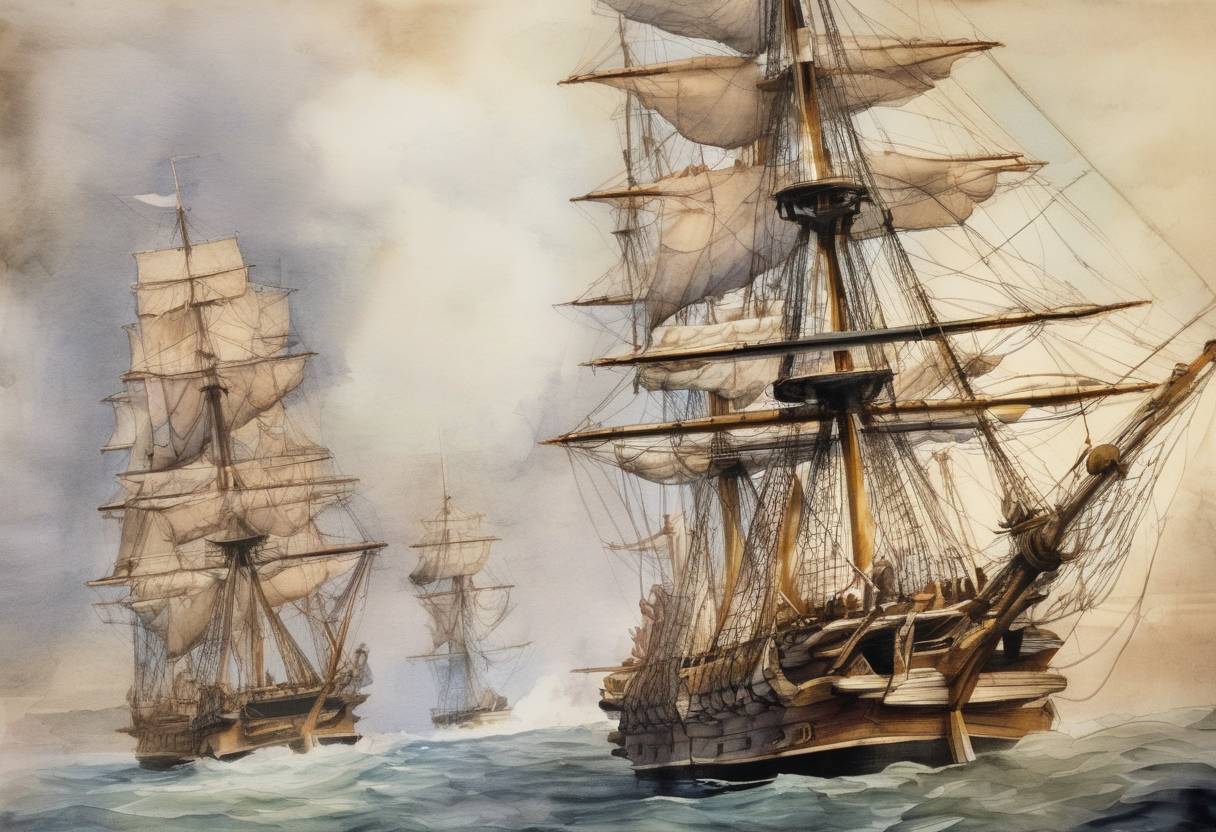
On April 28, 1789, one of the most famous mutinies in maritime history took place aboard the HMS Bounty. This event saw Fletcher Christian and a group of disaffected crew members seize control of the ship from its captain, Lieutenant William Bligh. The mutiny has since become a symbol of rebellion against oppressive authority and has been the subject of numerous books, films, and scholarly studies.
The HMS Bounty, a small British naval vessel, was on a mission to transport breadfruit plants from Tahiti to the West Indies. The British government hoped to cultivate breadfruit as a cheap food source for enslaved people in the Caribbean. The ship set sail from England in December 1787, under the command of Lieutenant William Bligh, an experienced navigator and former colleague of the famed Captain James Cook.
The journey to Tahiti was arduous, with the Bounty rounding Cape Horn and eventually taking a longer route via the Cape of Good Hope due to adverse weather conditions. The crew finally arrived in Tahiti in October 1788, where they spent several months collecting breadfruit plants.
Tensions aboard the Bounty had been simmering for some time. Bligh was known for his strict discipline and harsh treatment of the crew, which created resentment among the men. The extended stay in Tahiti, where the crew enjoyed a relatively relaxed lifestyle and formed relationships with the local people, further exacerbated the situation.
On the morning of April 28, 1789, Fletcher Christian, the ship’s master’s mate, led a group of mutineers in a surprise takeover of the vessel. They captured Bligh and loyal crew members, forcing them into a small open boat with limited supplies. The mutineers then set the Bounty on a course back to Tahiti.
Bligh’s Journey: Despite the odds, Bligh and his loyalists embarked on an extraordinary 3,600-mile journey across the Pacific Ocean to reach safety in Timor. Bligh’s exceptional navigation skills ensured their survival, and they eventually returned to England, where Bligh reported the mutiny.
The Mutineers: Fletcher Christian and the mutineers initially returned to Tahiti, but fearing capture, Christian and a small group of followers later sailed to Pitcairn Island. They settled there, effectively disappearing from the reach of British authorities for many years.
British Response: The British Admiralty dispatched HMS Pandora to capture the mutineers. The Pandora managed to apprehend some of them in Tahiti, but the ship was wrecked on the Great Barrier Reef during its return voyage. The captured mutineers who survived were brought back to England for trial.
The mutiny on the HMS Bounty has been interpreted in various ways, often seen as a struggle between authoritarian leadership and the quest for freedom. It highlighted issues of naval discipline, the harsh conditions faced by sailors, and the allure of the idyllic life in the South Pacific.
The story of the Bounty continues to captivate audiences, serving as a reminder of the complexities of human nature and the consequences of rebellion. The descendants of the mutineers and Tahitians who settled on Pitcairn Island remain there to this day, preserving a unique legacy of this historic event.
Source: en.wikipedia.org