The Edict of Worms: May 25, 1521
1521 · Worms, Holy Roman Empire
The Diet of Worms ends with the Edict of Worms, which declared Martin Luther an outlaw and heretic for his refusal to recant his teachings.
April 17, 1521
Martin Luther appeared before the Diet of Worms to respond to charges of heresy.
Worms, Holy Roman Empire | Diet of Worms
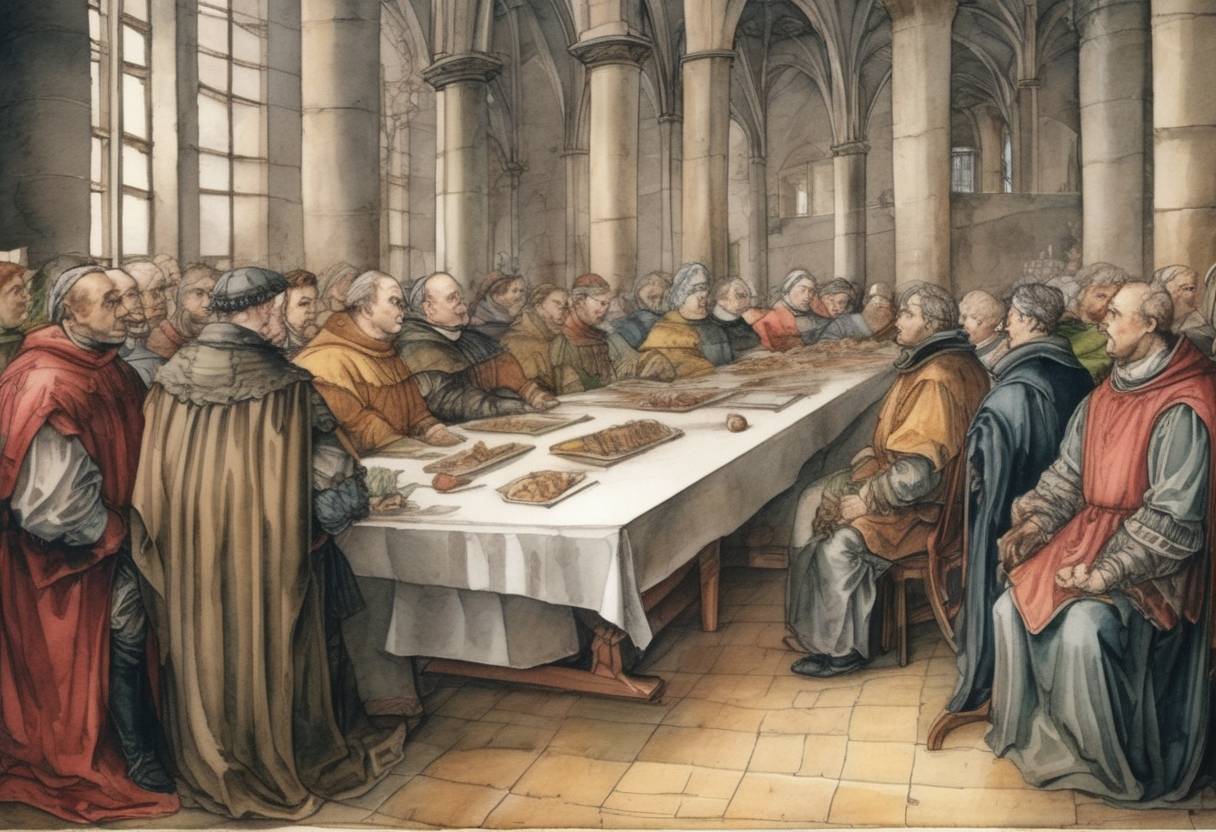
On April 17, 1521, Martin Luther, the seminal figure of the Protestant Reformation, appeared before the Diet of Worms, a critical assembly of the Holy Roman Empire. This event marked a pivotal moment in religious and European history, as Luther was called to respond to charges of heresy due to his revolutionary theological ideas and writings.
The Ninety-Five Theses (1517): Martin Luther, a German monk and theologian, famously nailed his Ninety-Five Theses to the door of the Wittenberg Castle Church in 1517. This document criticized the Catholic Church’s practice of selling indulgences and questioned the authority of the Pope, sparking widespread debate and the beginning of the Protestant Reformation.
Escalating Tensions: Luther’s ideas quickly spread across Europe, facilitated by the printing press, leading to significant tension between him and the Catholic Church. In 1520, Pope Leo X issued the papal bull Exsurge Domine, demanding Luther recant 41 of his 95 theses. Luther’s refusal to comply resulted in his excommunication in January 1521.
Summons to the Diet: The Holy Roman Emperor Charles V, seeking to maintain religious unity within his empire, summoned Luther to the Diet of Worms. This assembly was a formal deliberative body of the empire, convened in the city of Worms, located in present-day Germany.
Luther’s Appearance: On April 17, 1521, Luther appeared before the Diet, presided over by Emperor Charles V. He was presented with a collection of his writings and asked whether he would recant the heretical views they contained.
Luther’s Defense: Luther requested time to consider his response, and the following day, on April 18, he delivered his famous defense. He refused to recant unless convinced by scripture or clear reason, famously stating, “Here I stand, I can do no other. God help me. Amen.”
Edict of Worms: Following Luther’s refusal to recant, the Diet issued the Edict of Worms on May 25, 1521, declaring Luther an outlaw and heretic. This edict banned his writings and authorized his arrest, though it was not uniformly enforced across the empire.
Luther’s Protection: Despite the edict, Luther found protection under Frederick the Wise, Elector of Saxony, who arranged for his “kidnapping” and safe passage to Wartburg Castle. There, Luther continued his theological work, including translating the New Testament into German.
Impact on the Reformation: Luther’s steadfastness at Worms galvanized the Reformation movement, leading to the establishment of Protestant churches and significant religious, political, and cultural transformations across Europe.
The Diet of Worms remains a landmark event in history, symbolizing the struggle for religious reform and the assertion of individual conscience against institutional authority. Luther’s actions not only altered the course of Christianity but also laid the groundwork for modern notions of religious freedom and personal conviction.
Source: en.wikipedia.org