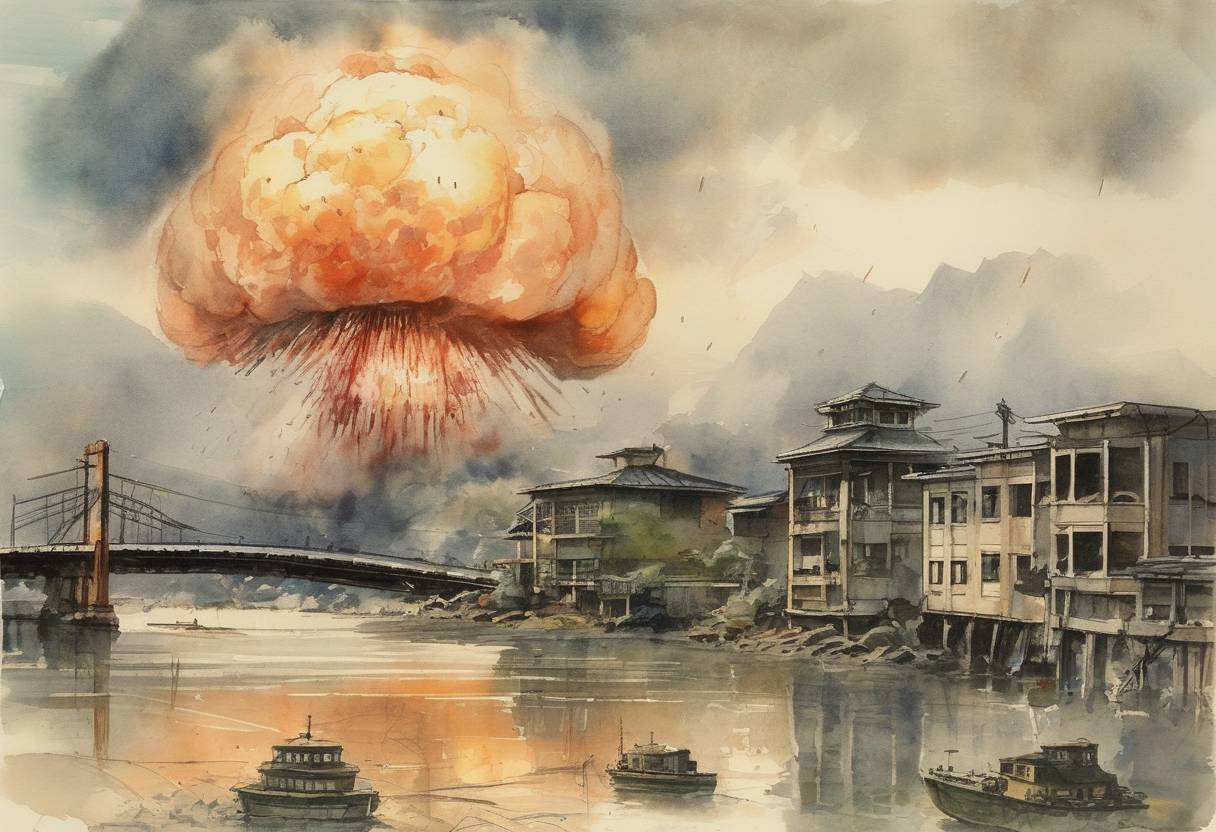
The Atomic Bombing of Hiroshima: August 6, 1945
On August 6, 1945, during the final stages of World War II, the United States dropped an atomic bomb on the Japanese city of Hiroshima. This event marked the first use of nuclear weapons in warfare and had profound implications for international relations and military strategy.
Context and Prelude
World War II Background: By 1945, World War II had been raging for six years. The Allies were seeking a decisive end to the conflict in the Pacific, where Japan continued to resist despite significant losses.
The Manhattan Project: The development of the atomic bomb was part of the top-secret Manhattan Project, a massive research and development undertaking that began in 1939. The project brought together some of the greatest scientific minds of the time, including J. Robert Oppenheimer, and was conducted at various sites across the United States.
Decision to Use the Bomb: President Harry S. Truman, who had become president after Franklin D. Roosevelt’s death in April 1945, faced the decision of whether to use the atomic bomb. The goal was to force Japan’s unconditional surrender and avoid a potentially costly invasion of the Japanese mainland.
The Bombing
The Mission: On the morning of August 6, 1945, a B-29 bomber named Enola Gay, piloted by Colonel Paul W. Tibbets, took off from Tinian Island in the Pacific. The aircraft carried an atomic bomb codenamed “Little Boy.”
The Detonation: At 8:15 AM local time, the bomb was dropped over Hiroshima. It exploded approximately 1,900 feet above the city with an estimated yield of 15 kilotons of TNT.
Immediate Impact: The explosion resulted in the immediate deaths of an estimated 70,000 to 80,000 people, with tens of thousands more dying in the following months from injuries and radiation sickness. The bomb obliterated approximately 70% of the city’s buildings.
Aftermath and Consequences
Japan’s Surrender: The bombing of Hiroshima, followed by the bombing of Nagasaki on August 9, 1945, played a crucial role in Japan’s decision to surrender. On August 15, 1945, Emperor Hirohito announced Japan’s unconditional surrender, effectively ending World War II.
Global Impact: The use of atomic bombs introduced the world to the nuclear age, fundamentally altering global military strategy and international relations. It sparked debates about the ethics of nuclear warfare and led to the subsequent arms race during the Cold War.
Legacy: Hiroshima has since become a symbol of peace and a reminder of the devastating consequences of nuclear warfare. The Hiroshima Peace Memorial, also known as the Atomic Bomb Dome, stands as a UNESCO World Heritage Site, commemorating the victims and advocating for nuclear disarmament.
The bombing of Hiroshima remains one of the most significant and controversial events in modern history, highlighting both the destructive power of nuclear weapons and the complex moral questions surrounding their use.