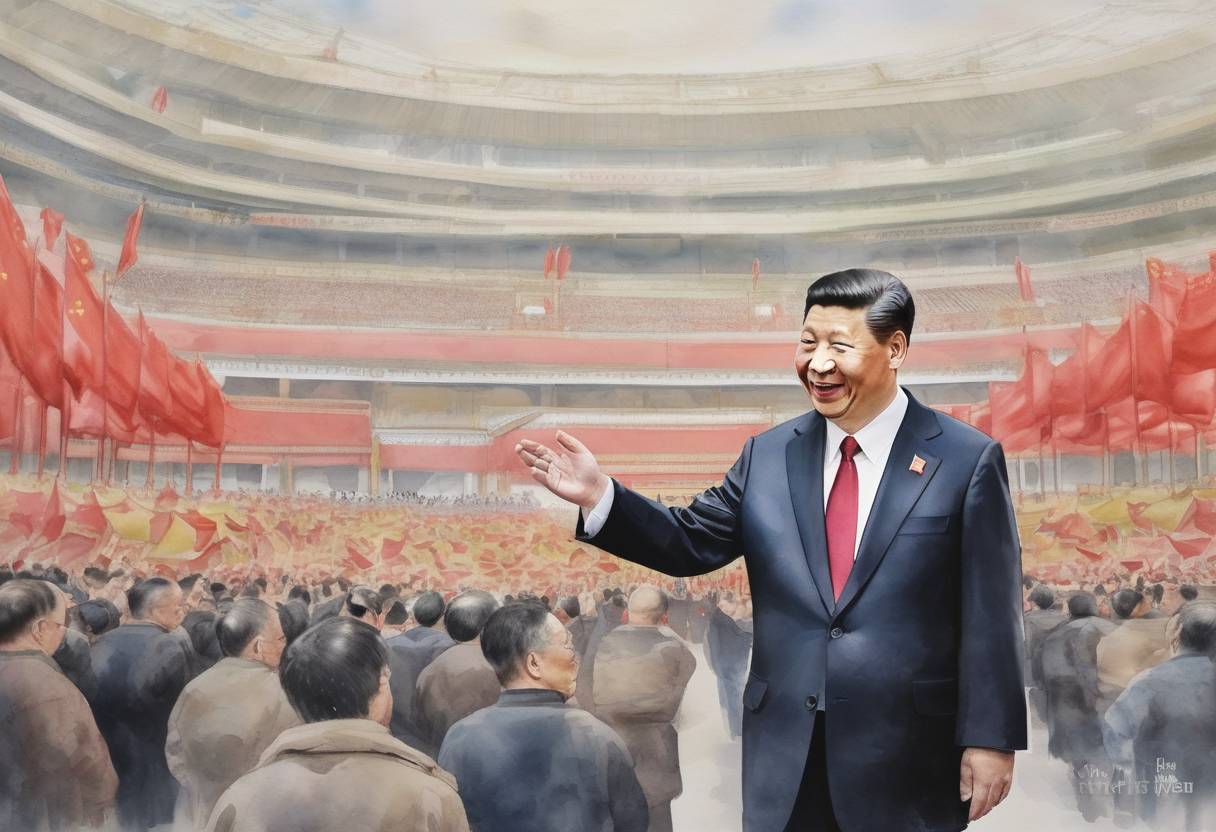
Xi Jinping’s Election as President of the People’s Republic of China
On March 14, 2013, Xi Jinping was formally elected as the President of the People’s Republic of China by the National People’s Congress (NPC), marking the beginning of his first term in this role. This event was a significant moment in Chinese politics and had implications both domestically and internationally.
Context Leading Up to the Election
Political Background: Xi Jinping’s rise to the presidency was part of a broader leadership transition within the Chinese Communist Party (CCP). In November 2012, Xi had already been appointed as the General Secretary of the CCP and the Chairman of the Central Military Commission, two of the most powerful positions in China.
Predecessor: Xi succeeded Hu Jintao, who had served as President since 2003. Hu’s leadership was characterized by a focus on economic growth and maintaining stability, but also faced challenges such as corruption and social inequality.
Selection Process: The President of China is elected by the NPC, which is China’s top legislative body. The NPC is largely seen as a rubber-stamp parliament, with decisions typically reflecting the consensus of the CCP leadership.
Key Events on March 14, 2013
Election by the NPC: Xi Jinping was elected with an overwhelming majority, receiving 2,952 votes in favor, with only one vote against and three abstentions. This near-unanimous support was indicative of his strong backing within the party.
Inaugural Speech: Following his election, Xi Jinping delivered a speech emphasizing the need for continued economic reform, anti-corruption measures, and the importance of the “Chinese Dream,” a vision for national rejuvenation and prosperity.
Significance and Aftermath
Domestic Policy: Xi’s presidency marked the beginning of a new era in Chinese politics, characterized by a more assertive leadership style. He launched a sweeping anti-corruption campaign that targeted both high-ranking officials and lower-level bureaucrats, which was popular among the public but also seen as a means to consolidate power.
Economic Reforms: Xi continued to push for economic reforms aimed at transitioning China from an export-driven economy to one focused on domestic consumption and innovation. His administration also sought to address issues such as environmental degradation and social inequality.
International Relations: Under Xi’s leadership, China adopted a more assertive foreign policy stance. Initiatives such as the Belt and Road Initiative were launched to expand China’s influence globally, while tensions with neighboring countries and the United States became more pronounced.
Constitutional Changes: In 2018, the NPC approved a constitutional amendment removing the two-term limit for the presidency, allowing Xi to potentially remain in power indefinitely. This move was seen as a significant shift in Chinese governance, consolidating Xi’s authority further.
Xi Jinping’s election as President in 2013 set the stage for significant changes in China’s domestic and international policies, with his leadership continuing to shape the country’s trajectory in the years that followed.