The Instruction for the 'Final Solution': July 31, 1941
1941 · Berlin, Germany
Hermann Göring instructed Reinhard Heydrich to prepare a plan for the 'Final Solution to the Jewish Question,' marking a significant step in the Holocaust.
January 20, 1942
The Wannsee Conference was held in Berlin, where Nazi officials discussed and coordinated the implementation of the 'Final Solution,' the plan to exterminate the Jewish population of Europe.
Berlin, Germany | Nazi Germany
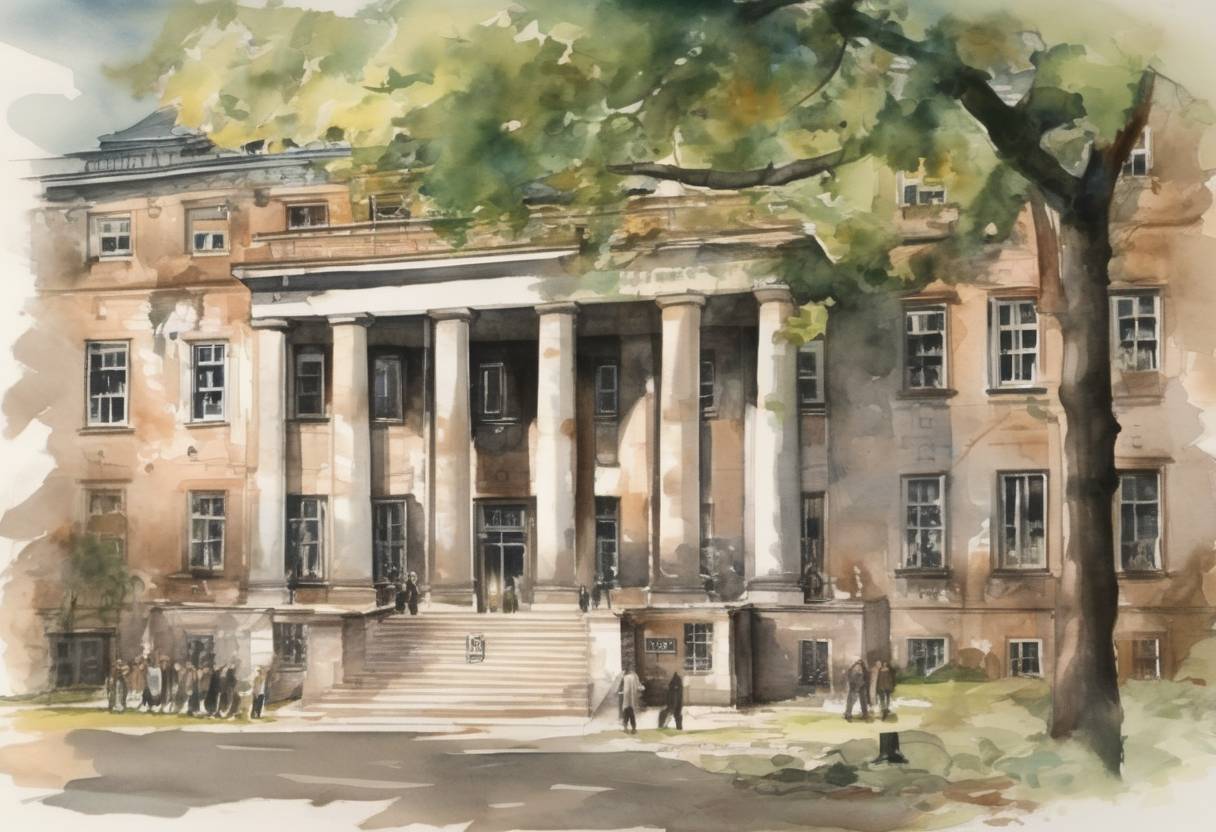
On January 20, 1942, a pivotal meeting in the history of the Holocaust took place in a villa in the Berlin suburb of Wannsee. Known as the Wannsee Conference, this gathering of senior Nazi officials was convened to discuss and coordinate the implementation of what was referred to as the “Final Solution to the Jewish Question.” This euphemism masked the horrific plan to systematically exterminate the Jewish population of Europe.
The Wannsee Conference occurred against the backdrop of World War II, during which Nazi Germany had already begun implementing anti-Semitic policies and actions. By 1942, the Nazis had established ghettos and concentration camps, and mass shootings of Jews were being carried out by Einsatzgruppen (mobile killing units) in occupied Eastern Europe. However, the Nazi leadership sought a more efficient and comprehensive approach to what they considered the “Jewish problem.”
The conference was organized by Reinhard Heydrich, the head of the Reich Security Main Office (RSHA) and a key architect of the Holocaust. Adolf Eichmann, who played a crucial role in the logistics of the Holocaust, was also present and took minutes of the meeting. In total, 15 high-ranking officials from various government departments and Nazi organizations attended, including representatives from the SS, the Gestapo, and the Ministries of Justice, Interior, and Foreign Affairs.
The meeting lasted approximately 90 minutes. Heydrich outlined the plan for the deportation and extermination of 11 million Jews across Europe, including those in neutral and Allied countries. The conference focused on the coordination of efforts across different government agencies to ensure the smooth implementation of the genocide. The minutes of the meeting, known as the “Wannsee Protocol,” did not explicitly mention killing methods but made clear the intention to annihilate the Jewish population.
The Wannsee Conference marked a significant turning point in the Holocaust. It symbolized the transition from sporadic killings to a systematic, industrialized genocide. The decisions made at Wannsee led to the expansion of extermination camps, such as Auschwitz, Sobibor, and Treblinka, where millions of Jews were murdered.
The conference is a stark reminder of the bureaucratic nature of the Holocaust, where genocide was planned and executed with chilling efficiency. It underscores the complicity of various sectors of the Nazi government in the atrocities committed during World War II.
The Wannsee Conference remains one of the most infamous meetings in history, representing the cold, calculated planning behind one of humanity’s darkest chapters. It serves as a crucial point of study for understanding the mechanisms of genocide and the importance of remembering and learning from the past to prevent future atrocities.
Source: www.ushmm.org