1494 · Rome, Italy
The Treaty of Tordesillas, sanctioned by Pope Julius II, divided the newly discovered lands outside Europe between Spain and Portugal along a meridian 370 leagues west of the Cape Verde islands.
May 4, 1493
Pope Alexander VI issued the papal bull 'Inter caetera,' which granted Spain rights to colonize the New World, drawing a line of demarcation between Spanish and Portuguese territories.
Rome, Italy | Catholic Church
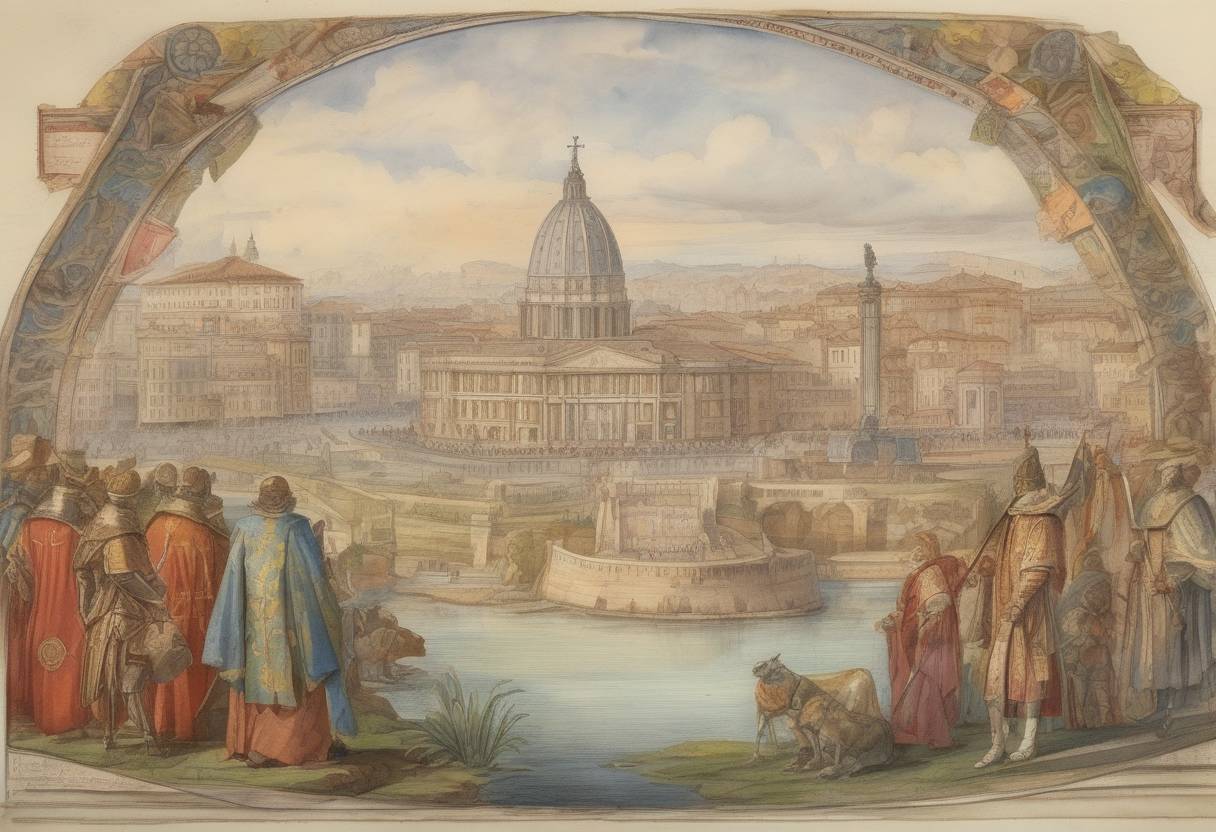
On May 4, 1493, Pope Alexander VI issued the papal bull Inter caetera, a significant document that played a crucial role in the Age of Exploration and the subsequent colonization of the New World. This papal decree was instrumental in delineating the spheres of influence between two major seafaring nations of the time: Spain and Portugal.
The late 15th century was a period of intense exploration and competition among European powers, particularly Spain and Portugal, as they sought new trade routes and territories. Christopher Columbus’s first voyage to the Americas in 1492, sponsored by Spain, heightened the urgency to establish clear territorial claims.
The issuance of Inter caetera was part of a broader negotiation process that eventually led to the Treaty of Tordesillas in 1494. This treaty further refined the demarcation line established by the papal bull, moving it slightly westward, which allowed Portugal to claim Brazil when it was discovered in 1500.
The issuance of Inter caetera and the subsequent Treaty of Tordesillas were pivotal in shaping the geopolitical landscape of the New World. They laid the groundwork for centuries of European colonization and the global spread of European cultures, languages, and religions. The decisions made during this period had lasting effects on international relations and the development of the modern world.
In summary, the papal bull Inter caetera was a foundational document in the history of European exploration and colonization, marking a significant moment in the delineation of global empires.
Source: en.wikipedia.org