The Adoption of the International Covenant on Civil and Political Rights (ICCPR)
1966 · New York City, United States
The United Nations adopts the International Covenant on Civil and Political Rights.
February 21, 1965
Malcolm X, an African American Muslim minister and human rights activist, was assassinated in New York City while preparing to address the Organization of Afro-American Unity.
New York City, United States | Nation of Islam
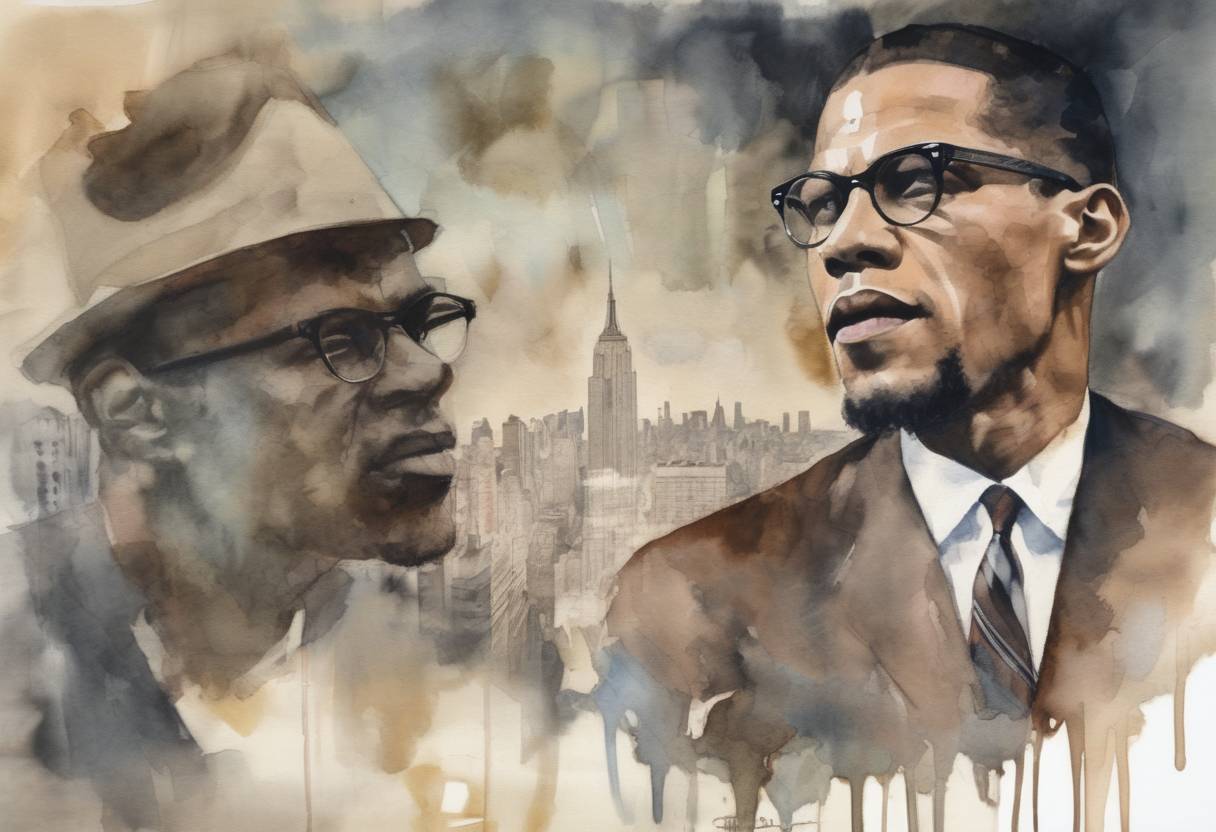
On February 21, 1965, Malcolm X, a prominent African American Muslim minister and human rights activist, was assassinated in New York City. This tragic event occurred at the Audubon Ballroom in Manhattan, where Malcolm X was preparing to address the Organization of Afro-American Unity (OAAU), a group he had founded in 1964 to promote the rights of African Americans and foster unity among people of African descent.
Malcolm X, born Malcolm Little in 1925, was a leading figure in the civil rights movement. He rose to prominence as a member of the Nation of Islam, advocating for black empowerment and the establishment of a separate black community. His views often contrasted with those of other civil rights leaders, such as Martin Luther King Jr., as Malcolm X initially promoted a more militant approach to achieving racial justice.
In 1964, Malcolm X left the Nation of Islam after ideological differences and founded the Muslim Mosque, Inc., and later the OAAU. His pilgrimage to Mecca that same year marked a significant transformation in his beliefs, as he embraced Sunni Islam and began advocating for racial unity and human rights on a global scale.
On the day of his assassination, Malcolm X was scheduled to deliver a speech at the Audubon Ballroom. As he began addressing the audience, a disturbance broke out, and in the ensuing chaos, three gunmen rushed the stage and shot him multiple times. Malcolm X was pronounced dead shortly after arriving at Columbia Presbyterian Hospital. He was 39 years old.
The assassination of Malcolm X sent shockwaves throughout the United States and the world. Three men, Talmadge Hayer (also known as Thomas Hagan), Norman 3X Butler (later known as Muhammad Abdul Aziz), and Thomas 15X Johnson (later known as Khalil Islam), were arrested and convicted for the murder. However, questions about the true circumstances and potential conspiracies surrounding his assassination have persisted over the years.
Malcolm X’s legacy continues to influence civil rights movements and discussions on racial equality. His life and work have been the subject of numerous books, films, and scholarly studies, highlighting his role as a transformative figure in the struggle for justice and equality.
Malcolm X’s assassination marked a pivotal moment in the civil rights era, underscoring the intense divisions and challenges faced by activists during the 1960s. His evolving views on race, religion, and human rights contributed to a broader understanding of the complexities of the African American experience and the global struggle against oppression.
Malcolm X remains a symbol of resilience and a powerful voice for change, inspiring generations to continue the fight for justice and equality.
Source: en.wikipedia.org