November 4, 1952

General Dwight D. Eisenhower was elected as the 34th president of the United States, defeating the Democratic candidate Adlai Stevenson.


Washington, D.C., United States | Republican Party
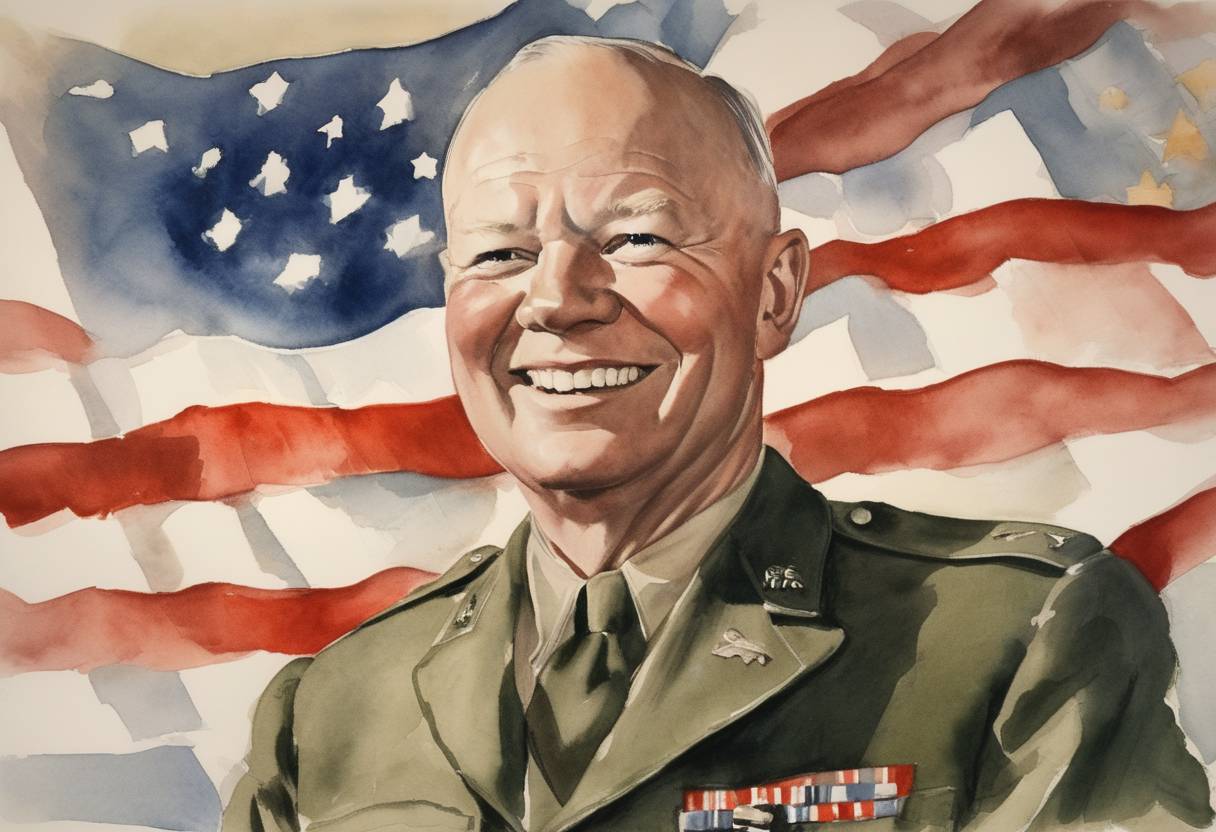
Watercolor painting based depiction of General Dwight D. Eisenhower was elected as the 34th president of the United States, defeating the Democratic candidate Adlai Stevenson. (1952)

Election of Dwight D. Eisenhower as the 34th U.S. President

On November 4, 1952, General Dwight D. Eisenhower was elected as the 34th President of the United States, defeating the Democratic candidate, Adlai Stevenson, in a significant and highly publicized election. This event marked a critical moment in American political history, reflecting post-World War II sentiments and the beginning of a new era in U.S. leadership.

Context and Background

The 1952 presidential election was held against the backdrop of the Cold War’s intensifying tensions, the Korean War, and anxieties about internal security and communism in the United States. Eisenhower, a decorated World War II general and the Supreme Commander of the Allied Expeditionary Forces in Europe, entered the political arena with immense popularity and an image of strong, decisive leadership.

Political Climate

  • Cold War Concerns: The electorate was increasingly worried about the encroaching influence of communism and the government’s ability to contain it. Senator Joseph McCarthy’s anti-communist crusade tapped into these fears, though Eisenhower carefully distanced himself from McCarthyism.
  • Korean War: Many Americans were frustrated with the stalemate in Korea and yearning for leadership that promised clear strategies and peace.

Eisenhower’s Campaign

  • “I Like Ike” Slogan: The campaign effectively utilized the catchy slogan “I Like Ike,” capitalizing on Eisenhower’s beloved public image.
  • Television and Media: This was the first election where television played a significant role, with Eisenhower’s team skillfully using this new medium to broadcast his message.

Eisenhower’s Political Positions

  • Foreign Policy: Eisenhower promised to cleanse the government of ineffective policies and seek an honorable settlement in Korea.
  • Domestic Policy: Despite being a Republican, he took moderate stances on numerous issues, winning over both conservative and liberal voters. He was seen as a unifying figure at a time of political division.

Election Results

Eisenhower won by a landslide, securing over 55% of the popular vote and winning 39 states, resulting in a substantial Electoral College victory with 442 votes to Stevenson’s 89. His victory demonstrated widespread public support and a desire to change the country’s direction post-World War II.

Aftermath and Impact

  • Korean War: Eisenhower’s administration negotiated an armistice in Korea in 1953, bringing an end to active hostilities.
  • Domestic Policies: His presidency ushered in a period of economic prosperity and significant infrastructure development, most notably the Interstate Highway System.
  • Continued Cold War Strategy: Eisenhower’s foreign policy was marked by a doctrine of containment and strength, reflected by his policy of “massive retaliation” to deter any Soviet aggression.

Eisenhower’s election was a pivotal moment, shaping the United States’ mid-century geopolitical and domestic landscape and setting precedents in campaign strategy and presidential conduct.

Source: www.history.com