The Battle of Mactan: April 27, 1521
1521 · Mactan, Philippines
The Battle of Mactan occurred, where Filipino forces led by Lapu-Lapu defeated Spanish forces led by Ferdinand Magellan, resulting in Magellan's death.
March 17, 1521
Ferdinand Magellan arrived at the island of Homonhon in the Philippines, marking the first recorded visit by Europeans to the archipelago.
Homonhon, Philippines | Spanish Expedition
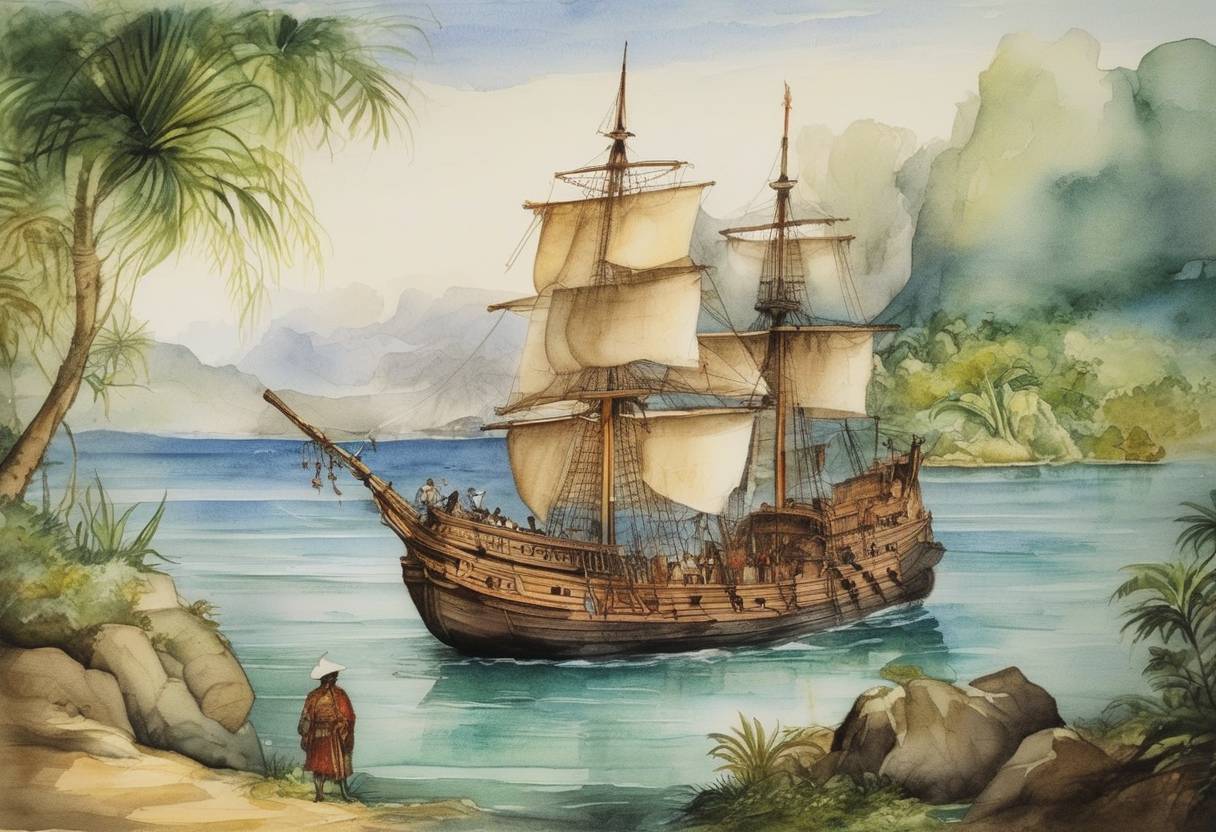
On March 17, 1521, Ferdinand Magellan, leading a Spanish expedition, arrived at the island of Homonhon in the Philippines. This momentous event marked the first recorded visit by Europeans to the Philippine archipelago.
The expedition, sponsored by King Charles I of Spain, had set sail in 1519 with the ambitious goal of finding a westward route to the Spice Islands (the Maluku Islands) in Indonesia. Departing with five ships and over 270 men, Magellan’s fleet faced numerous challenges, including treacherous weather and dangerous seas.
Upon reaching Homonhon, the crew—afflicted by scurvy and exhaustion after a demanding Pacific crossing—sought respite and replenishment. The small, uninhabited island provided fresh water and provisions, crucial for the survival of the crew. Magellan and his men were met by local inhabitants from nearby islands who, intrigued by the newcomers, offered food and supplies in exchange for goods like knives and mirrors.
The arrival was documented by Antonio Pigafetta, an Italian scholar and one of the few survivors of the expedition, whose chronicles provide detailed insights into the interactions between the Europeans and the indigenous peoples.
Magellan’s landing at Homonhon not only marked the beginning of European interaction with the Philippines but also paved the way for subsequent Spanish colonization, fundamentally altering the trajectory of the region’s history. This encounter showcased the meeting of Western and Eastern cultures, setting off a chain of events that would lead to major cultural, religious, and social transformations in the archipelago.
The expedition continued its journey, eventually resulting in Magellan’s fatal clash in the Battle of Mactan, leaving a legacy tied to both exploration and the complex colonial histories that followed.
This initial contact foreshadowed the extensive Spanish influence that began with Miguel López de Legazpi’s colonization endeavor in 1565, leading to the establishment of the Philippines as a Spanish colony. The cultural and religious imprints of these interactions are evident in the modern Philippines, where Spanish influence permeates language, religion, and customs.
Source: en.wikipedia.org