Publication of "Uncle Tom's Cabin" - March 20, 1852
1852 · Boston, United States
Harriet Beecher Stowe's novel 'Uncle Tom's Cabin' was published, becoming a significant anti-slavery work that fueled abolitionist movements in the United States.
April 2, 1845
H. W. Longfellow published 'The Song of Hiawatha,' a romantic poem by American author Henry Wadsworth Longfellow. Drawing on Native American themes and stories, the poem became one of the most popular works by Longfellow.
Boston, United States | n/a
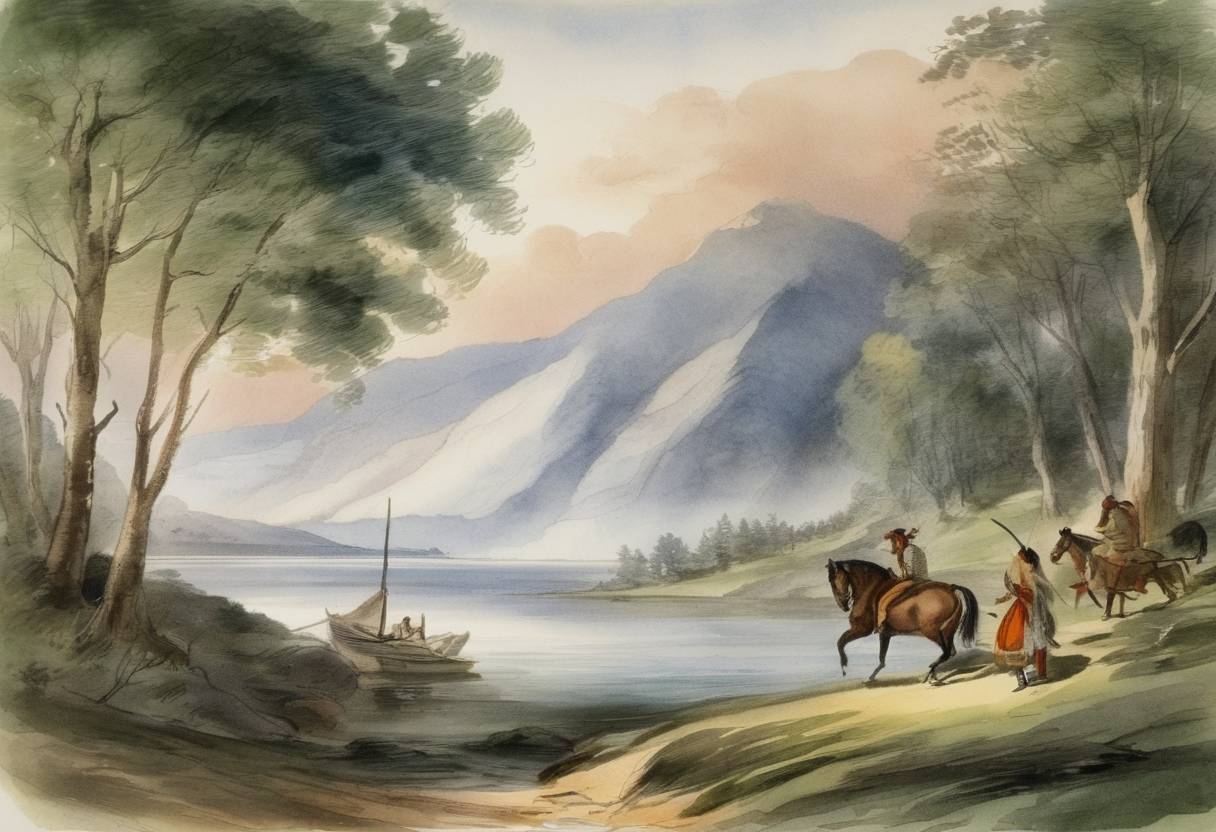
“The Song of Hiawatha” was published by American poet Henry Wadsworth Longfellow on November 10, 1855, rather than on April 2, 1845. This epic poem is notable for its use of Native American themes and stories, woven into a narrative that captures the imagination of its readers.
Before the poem’s publication, Longfellow had been deeply inspired by Henry Rowe Schoolcraft’s writings on the Ojibwe people. Schoolcraft’s works provided ethnographic and mythological data about Native American tribes, which Longfellow blended into his poetic narrative. “The Song of Hiawatha” is set along the shores of Lake Superior and the Upper Peninsula of Michigan, central to where the Ojibwe lived.
The poem consists of a series of episodic tales that revolve around the central character, Hiawatha, who is depicted as a heroic figure of great cultural importance. Longfellow drew inspiration from indigenous legends, notably the stories collected by Schoolcraft. The structure of the poem mimics the Finnish epic, “Kalevala,” employing trochaic tetrameter, which contributed to its rhythmic and melodic quality.
Upon its release, “The Song of Hiawatha” enjoyed widespread popularity among 19th-century American and European audiences. Despite its popularity, it has since faced critique for its romanticized portrayal of Native American life and has been scrutinized for numerous inaccuracies and cultural appropriations of indigenous myths.
Longfellow’s “The Song of Hiawatha” remains a significant piece in American literature, primarily for its pioneering use of Native American themes in poetry. It also reflects the 19th-century romanticization of indigenous cultures, prompting discussions on representation and historical authenticity within art and literature.
Through this poem, Longfellow contributed to the popularization and mythical imagery of Native American figures in American culture, lasting well into contemporary discussions around cultural heritage and appropriation.
Source: en.wikipedia.org