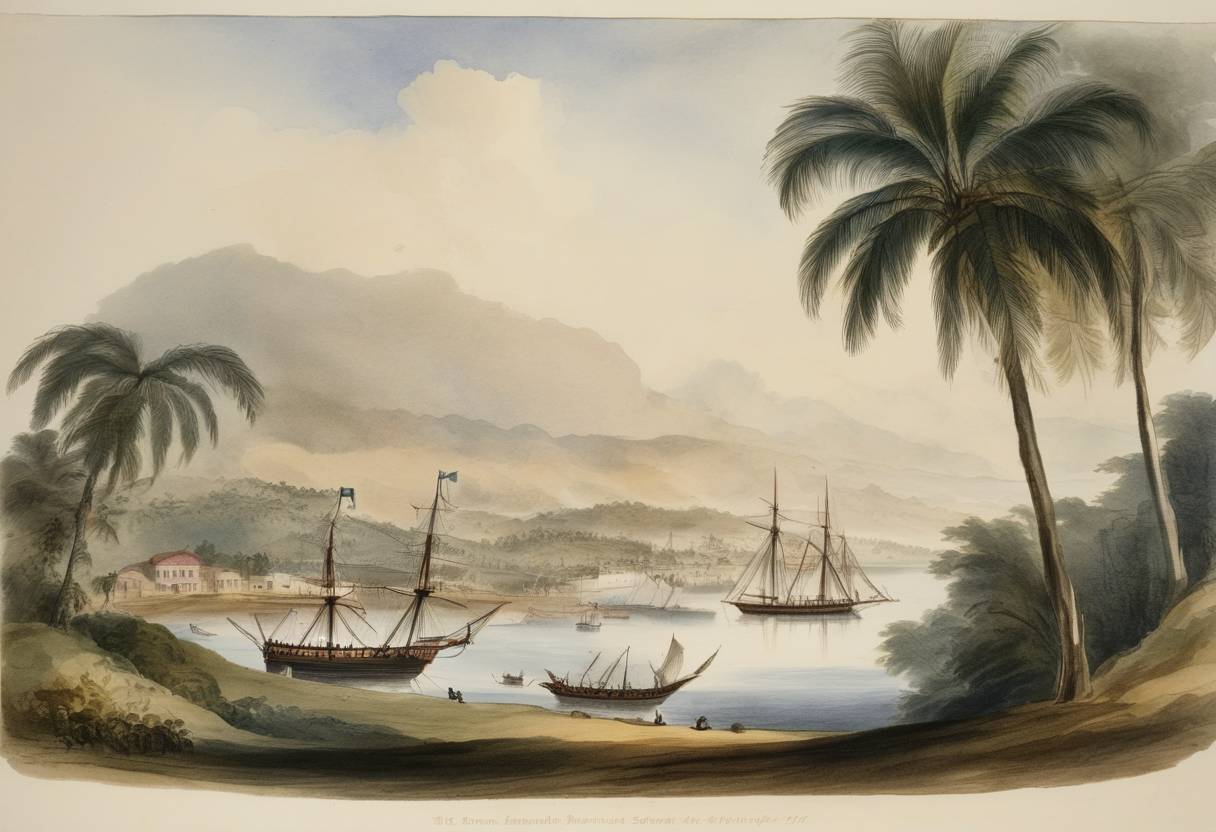
The British Invasion of Trinidad: February 18, 1797
On February 18, 1797, a British fleet commanded by Sir Ralph Abercromby successfully invaded the Spanish colony of Trinidad. This event marked a significant shift in control from Spanish to British governance, altering the Caribbean’s geopolitical landscape during a period characterized by intense colonial competition.
Context and Prelude to the Invasion
By the late 18th century, European powers were deeply engaged in expanding and consolidating their colonial empires, and the Caribbean was a critical theater for these imperial ambitions. Spain, which controlled Trinidad as part of its colonial holdings in the New World, faced increasing challenges from rival powers, particularly the British, who were seeking to enhance their strategic and economic influence in the region.
The geopolitical context was further intensified by the ongoing conflicts associated with the French Revolutionary Wars. As a key ally of France, Spain’s colonies became potential targets for the British military, which sought to weaken French-Spanish influence by capturing valuable territories.
The British Offensive
Sir Ralph Abercromby, a renowned British military commander, led the expedition against Trinidad. He had a formidable force at his disposal, comprising several ships of the line and transports carrying thousands of troops. This well-coordinated naval and land assault aimed to quickly overwhelm the Spanish defenses and seize the island with minimal engagement.
The Surrender and Its Aftermath
Faced with the superior British force and realizing the untenable position of defending the colony, the Spanish governor of Trinidad, José María Chacón, opted to surrender the island without protracted conflict. This decision ensured a relatively peaceful transfer of power, minimizing casualties and preserving local infrastructure.
The capture of Trinidad provided the British with a strategic base in the Caribbean, enhancing their naval capabilities and trade routes in the region. Trinidad remained under British control until it formally became a crown colony in 1802 with the signing of the Treaty of Amiens, which temporarily ended hostilities between Britain and France.
Historical Significance
The invasion of Trinidad is a notable example of the strategic maneuvers employed by European powers in their colonial contests. It illustrates the implications of global conflicts on regional colonial holdings and highlights the transitional nature of imperial dominion during this period. Moreover, it set the stage for Trinidad’s development under British colonial policies, which would have lasting impacts on the island’s cultural and socio-economic fabric.
Trinidad’s capture is emblematic of the broader shifts of empire during the era, reflecting how military prowess, diplomacy, and strategic interests shaped the geopolitical map of the Caribbean and the Atlantic world in the late 18th and early 19th centuries.