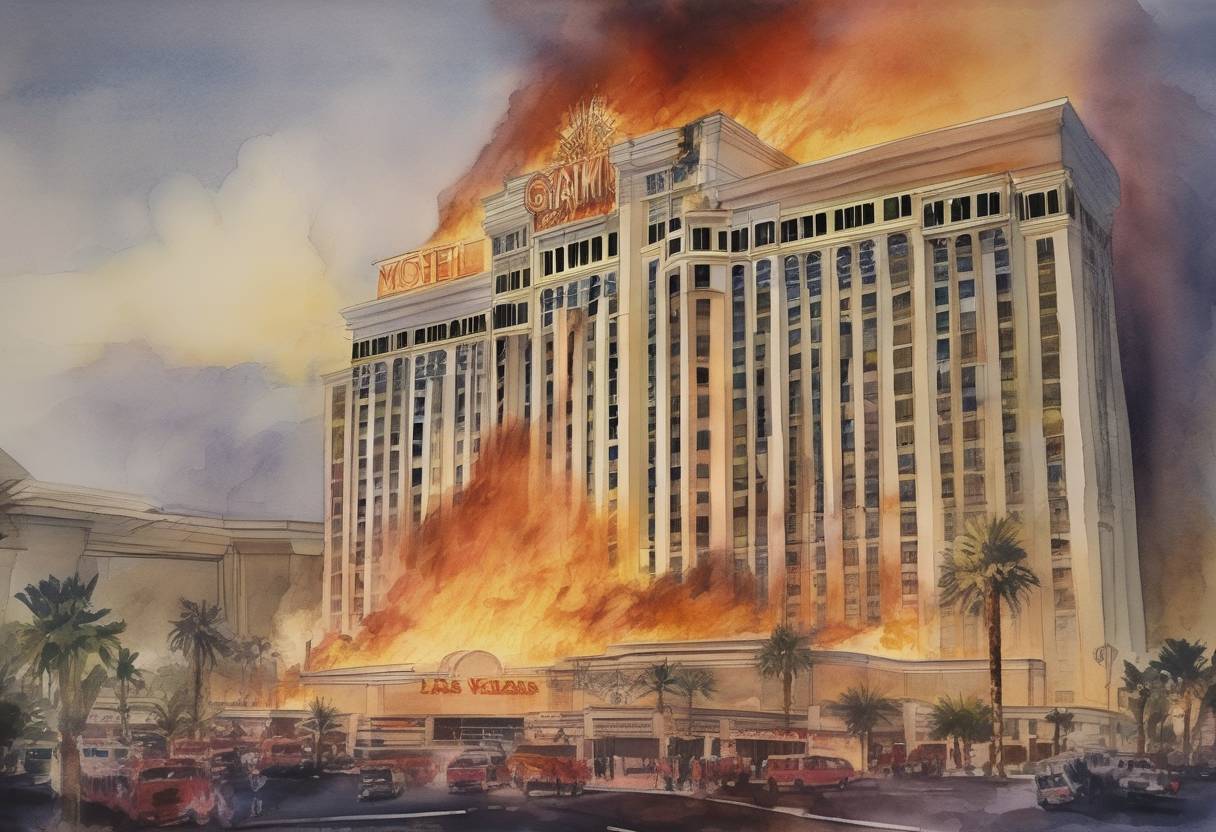
The MGM Grand Hotel Fire: November 21, 1980
On November 21, 1980, a catastrophic fire broke out at the MGM Grand Hotel and Casino in Las Vegas, Nevada, resulting in the deaths of 85 people and injuring over 700. This tragic event stands as one of the deadliest hotel fires in U.S. history and had significant implications for fire safety regulations nationwide.
Background
The MGM Grand Hotel, which opened in 1973, was one of the largest hotels in the world at the time, boasting over 2,000 rooms. Despite its grandeur, the hotel lacked several critical fire safety features, including a comprehensive sprinkler system in many areas, which was not mandated by the building codes of the time.
The Fire
The fire began in a restaurant on the ground floor of the hotel at approximately 7:07 a.m. It was caused by an electrical fault in a wall socket, which ignited flammable materials. The blaze quickly spread through the casino floor, fueled by highly combustible interior finishes and furnishings.
Key Events
- Rapid Spread: The fire spread rapidly due to the lack of sprinklers and the presence of flammable materials. Within minutes, the casino was engulfed in flames.
- Smoke Inhalation: Most of the fatalities were due to smoke inhalation rather than burns. Toxic smoke and gases spread through the hotel’s ventilation system, reaching upper floors where guests were trapped.
- Evacuation Challenges: The fire alarms and emergency communication systems were inadequate, leading to confusion and delays in evacuation. Many guests were unaware of the fire until it was too late.
Aftermath
The aftermath of the MGM Grand fire led to significant changes in fire safety regulations for hotels and high-rise buildings:
- Stricter Fire Codes: The tragedy prompted a reevaluation of fire safety codes across the United States. New regulations required the installation of sprinkler systems in all high-rise buildings, regardless of when they were constructed.
- Improved Safety Measures: Hotels were mandated to implement more rigorous fire safety measures, including better smoke detectors, fire alarms, and emergency communication systems.
- Increased Awareness: The fire raised public awareness about the importance of fire safety and emergency preparedness in hotels and other public buildings.
Broader Historical Significance
The MGM Grand Hotel fire underscored the critical need for comprehensive fire safety measures in large buildings, influencing fire safety standards worldwide. It highlighted the potential consequences of inadequate safety infrastructure and led to reforms that have since saved countless lives.
In conclusion, the MGM Grand Hotel fire was a pivotal moment in fire safety history, driving significant regulatory changes and increasing awareness about the importance of fire prevention and preparedness.