1878 · Salem, USA
The last witchcraft trial in the United States began with the trial of Lucretia Brown in Salem, Massachusetts.
February 27, 1883
Oscar Hammerstein I patents the first practical cigar-rolling machine, transforming the cigar industry and fostering innovation in industrial manufacturing processes.
New York, USA | none
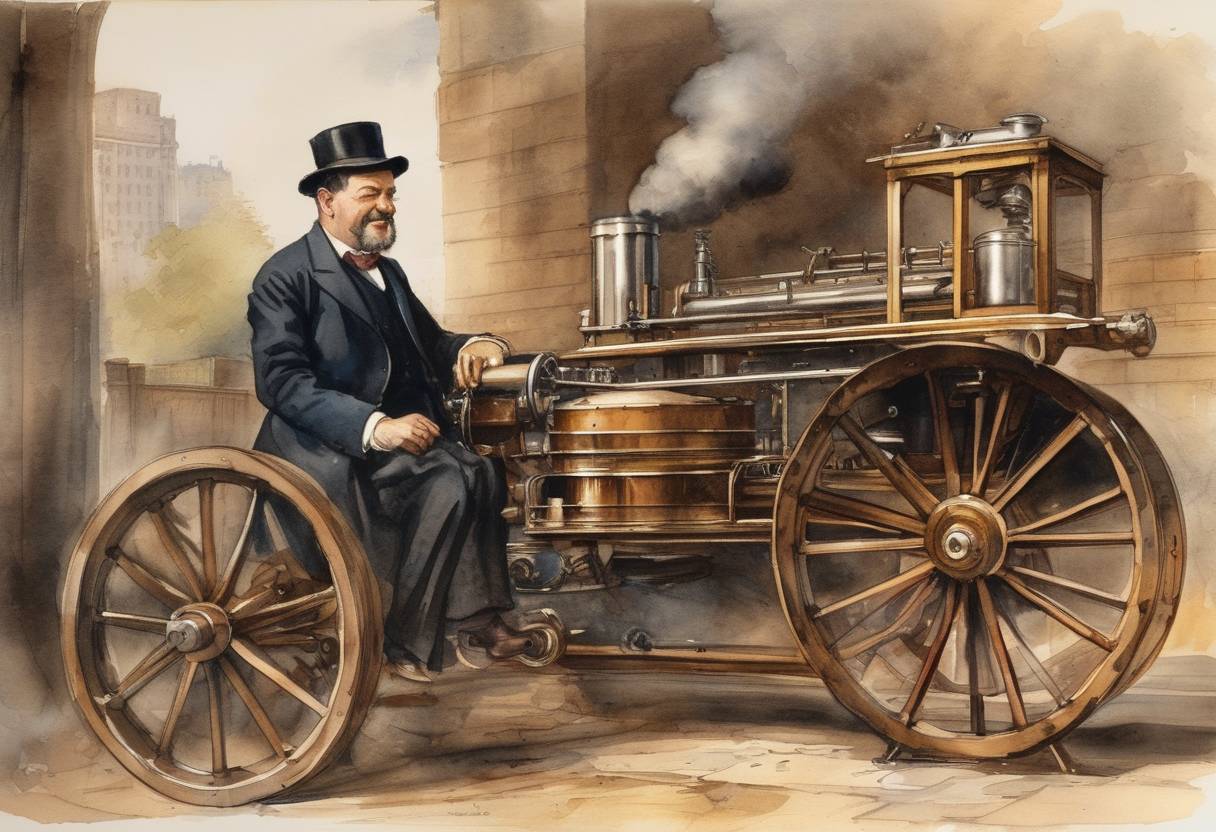
On February 27, 1883, Oscar Hammerstein I was granted a patent for the first practical cigar-rolling machine. This invention was pivotal in transforming the cigar manufacturing industry, marking a significant shift towards industrialization and mechanization in the production of cigars.
Before the advent of Hammerstein’s machine, cigar production was a manual process, relying heavily on skilled labor. This manual method was time-consuming and limited the volume of production, thereby affecting supply in the burgeoning tobacco market of the 19th century.
Hammerstein’s development simplified and accelerated the cigar-rolling process, which not only enhanced productivity but also reduced production costs significantly. By automating a key stage in the manufacturing process, his invention democratized cigar consumption by making cigars more affordable and widely available to the general public.
The introduction of Hammerstein’s machine spurred a wave of innovation within the industrial sector, particularly in manufacturing processes. The efficiency gains made through mechanization encouraged further technological developments and adoption of machinery in other aspects of production. This transformation contributed to the growth of the cigar industry, turning it into a major segment of the economy.
Moreover, the establishment of machine-based manufacturing set a precedent for other industries, highlighting the potential of technology to increase efficiency and output in various sectors.
Oscar Hammerstein I, primarily known for his contributions to the theater industry, was also a prominent inventor. His cigar-rolling machine stands out as a testament to his ingenuity and his ability to foresee the benefits of applying mechanical solutions to traditional production methods.
Although Hammerstein would later gain fame as a theater impresario, his early ventures into industrial innovation had a lasting impact on manufacturing practices, paving the way for the mechanized production processes that are standard today. Through the patent obtained on February 27, 1883, Oscar Hammerstein I’s legacy extends beyond the arts, leaving a significant mark on industrial history.
Source: en.wikipedia.org