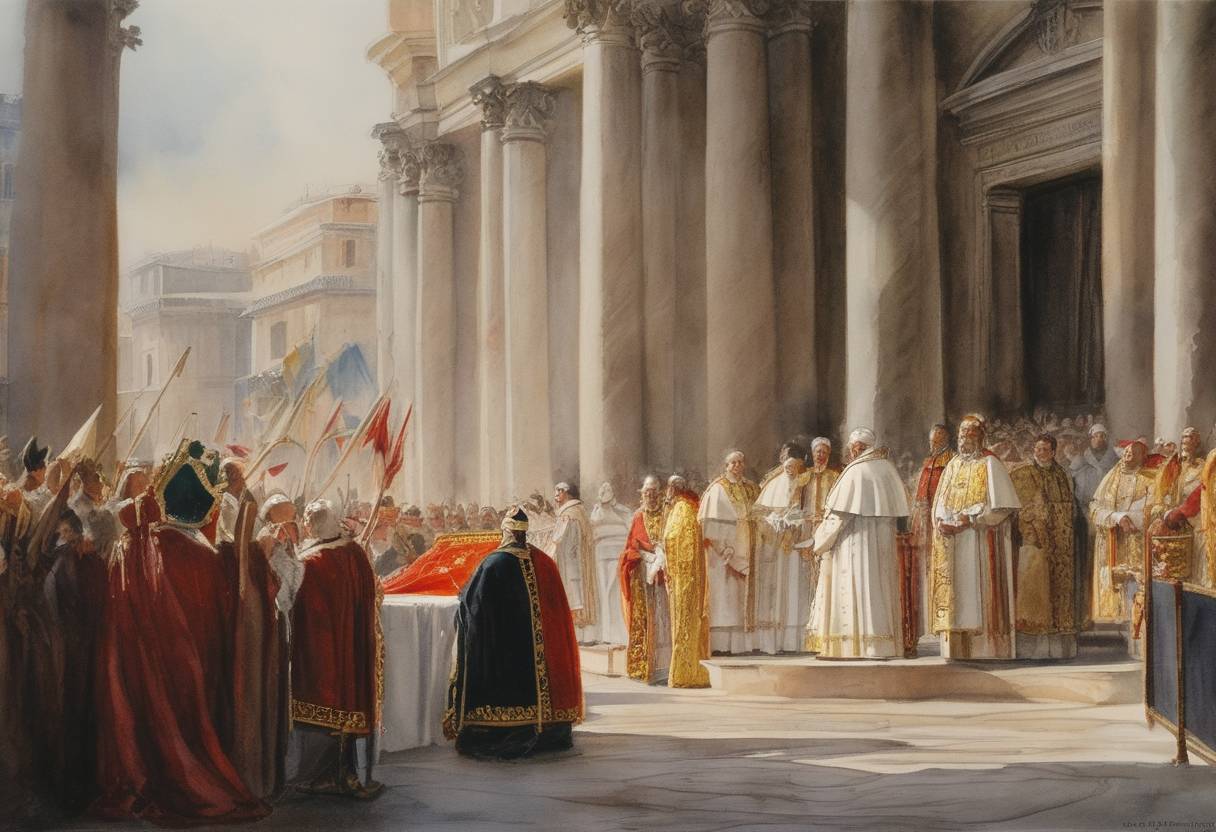
Pope Benedict IX’s Third Resignation: A Turbulent Papacy
On May 4, 1045, Pope Benedict IX resigned from the papacy for the third and final time. His tenure was marked by extreme controversy, instability, and was emblematic of the widespread corruption within the Church during the era, a period that historians often refer to as the “saeculum obscurum” or “Dark Age” of the papacy.
Background
Born Theophylactus of the Tusculani family, Benedict IX was exceptionally young when he first ascended to the papal throne in 1032, reportedly in his late teens or early twenties. His influential family, exerting considerable power over Rome, secured his election, but his youth and questionable moral conduct quickly led to widespread scandal.
Events Leading to Resignation
Benedict IX’s papacy was unstable from the onset, marked by allegations of debauchery and immoral behavior that alienated many within the Church hierarchy and the general population. His leadership prompted multiple factions to vie for control over the papal throne. This period saw three separate popes ruling concurrently due to disputes, further diminishing the papal authority.
His first resignation in September 1044 allowed for the brief papacy of Sylvester III. However, Benedict IX returned to power early in 1045. His second departure occurred shortly thereafter when he reportedly sold the papacy to his godfather, John Gratian, who became Pope Gregory VI, a transaction that showcased the blatant simony prevalent at the time.
Benedict’s final resignation in May 1045 stemmed from continued strife and conflict between competing factions, and his eventual retreat paved the way for the appointment of Clement II later that year.
Aftermath and Broader Historical Impact
Benedict IX’s erratic and scandal-ridden time as pope significantly contributed to the growing urgency for reform within the Church. The turmoil and controversies surrounding his papacy helped catalyze the eventual establishment of the College of Cardinals, aimed at ensuring more legitimate and less politically influenced papal elections.
The need for reform became even more apparent, leading to the Gregorian Reforms initiated in the latter half of the 11th century. These reforms sought to address corruption, enforce clerical celibacy, and eliminate simony and lay investiture, thereby strengthening the moral authority of the Church.
Benedict IX’s tenure remains a cautionary tale in papal history, illustrating both the vulnerabilities of ecclesiastical power when intertwined with political influence and familial alliances, and the necessity for stringent ecclesial reform to preserve the integrity of the papacy.